
The Speakership, the Sacrificial Lamb, and the Logic of Power in Uganda
"Politics is not about morality. It is about power." — Niccolò Machiavelli
06 Jun, 2026
Share
Save
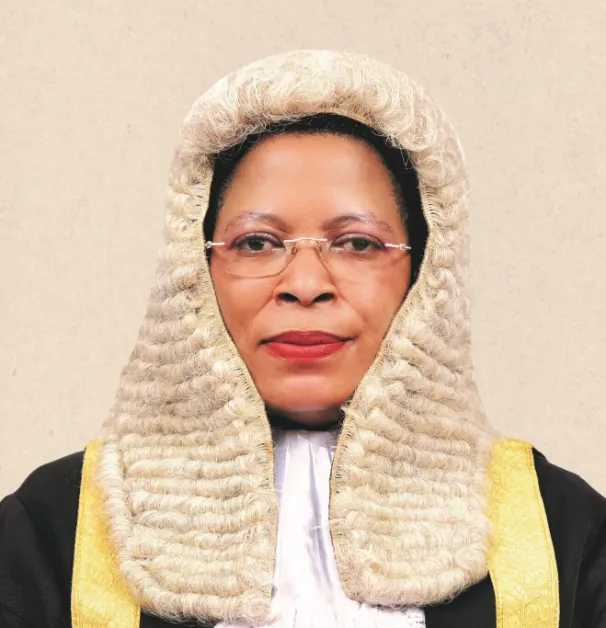
Uganda's recent speakership contest and the political fall of Anita Annet Among present one of the most fascinating case studies in contemporary African politics. To understand it, one must abandon ordinary logic and embrace political logic.
Politics is rarely a reward system. It is a system of power management.
For years, Ugandans have observed a curious pattern:
Amama Mbabazi shepherded the Public Order Management framework and later lost the premiership. Rebecca Kadaga presided over the Age Limit amendment process and later lost the speakership. Raphael Magyezi carried the burden of the Age Limit Bill and became one of the most controversial figures of that period. Anita Annet Among presided over several controversial legislative battles before eventually withdrawing from the race for Speaker of the 12th Parliament amid intense political pressure and investigations.
The simplistic interpretation is that controversial legislation destroys political careers. The deeper interpretation is that controversial legislation often creates powerful political actors who subsequently need to be managed.
The Machiavellian Question
Machiavelli warned rulers that ministers should never become more powerful than the throne itself.
In dominant-party systems, political survival depends on maintaining a delicate equilibrium. Those who successfully deliver difficult political objectives are often elevated. But when their networks, popularity, and influence begin to grow independently, they can become objects of suspicion.
This is where Anita Among's story becomes politically significant.
During her tenure, she evolved beyond the role of parliamentary referee. She became a national political force. Her influence extended through Parliament, local government networks, patronage structures, and grassroots mobilisation. Some observers even described her as one of the most powerful politicians outside the President's immediate circle.
The question, therefore, ceased to be whether she was loyal. The question became whether she had become too politically consequential.
Parliament as a Battlefield of Power
"Every state is ruled by an elite." — Vilfredo Pareto
Pareto's theory of the "circulation of elites" offers perhaps the best lens through which to view Uganda's current political moment.
According to Pareto, political systems survive by continuously replacing, rotating, and reorganising elites. When elites become too entrenched, the system refreshes itself through controlled circulation.
Seen through this framework, Anita Among's departure from the speakership race was not merely an individual event. It represented the circulation of power within Uganda's governing establishment.
Her withdrawal followed weeks of political turbulence surrounding the speakership contest. Reports indicated that she stepped aside after consultations while pledging support for the eventual party-backed candidate.
This is how elite systems often function: not through dramatic revolutions but through controlled transitions.
The Mao Paradox
The most intellectually intriguing aspect of the race was the candidacy of Norbert Mao.
Many asked why Mao entered a contest that appeared numerically difficult to win. That question misunderstands politics.
"The supreme art of politics is patience." — often attributed to Otto von Bismarck
Political contests are not always fought to be won immediately. Sometimes they are fought to shape future possibilities.
Mao's candidature transformed the debate from a simple election into a national conversation about Parliament, accountability, corruption, and political transition. His campaign ensured that the speakership race became a referendum on the direction of Parliament itself.
Even in defeat, a politician can gain visibility, legitimacy, and strategic positioning.
That is political logic.
Why Strong Parliaments Create Tension
One of the great insights of political science comes from Montesquieu, who argued that liberty survives where power checks power.
Yet history demonstrates another reality. Executives often prefer predictable legislatures. A Parliament that is too weak becomes irrelevant. A Parliament that is too strong becomes inconvenient.
A Speaker who commands an independent political base may strengthen legislative autonomy. However, that same independence can generate tension within systems that depend on centralised decision-making.
This may explain why speakership contests are rarely about procedure alone. They are often battles over who controls the political centre of gravity.
The Unstoppable Force and the Immovable Object
The commentator who compared the contest to the "unstoppable force paradox" captured an important truth.
Ugandan politics in 2026 brought two powerful realities into collision:
1. A ruling establishment seeking cohesion ahead of future political transitions.
2. Political actors whose personal influence had expanded beyond their formal offices.
When such forces meet, something must give.
The outcome of the speakership race suggests that institutional cohesion ultimately prevailed over individual political momentum. The race ended not with Anita Among's re-election but with her withdrawal and the emergence of alternative leadership.
Corruption, Parliament, and Statecraft
"Power tends to corrupt." — Lord Acton
Public frustration with Parliament has become a major political issue in recent years. Allegations of corruption, international sanctions against senior officials, and concerns about accountability have damaged public trust in the institution.
This is why the speakership contest became larger than Anita Among or Norbert Mao. It became a contest over the image of Parliament itself. Can Parliament recover public confidence? Can it function as an independent oversight institution? Or will it remain primarily an extension of executive priorities? These questions remain unanswered.
The Real Matrix
As a student of political science, I do not believe the "matrix" is simply that politicians who pass controversial laws are removed. The real matrix is more sophisticated.
In Uganda, as in many political systems, leaders are often rewarded for delivering difficult political objectives. However, once those leaders acquire independent centres of power, the system begins searching for a new equilibrium.
That is why Machiavelli remains relevant five centuries later.
The most dangerous politician is not necessarily the disloyal one. It is the politician who becomes powerful enough to matter independently.
The 2026 speakership race was therefore never just about a chair, a mace, or a parliamentary vote. It was about the eternal political question that has troubled states from ancient Rome to modern Uganda:
How does a system retain its strongest political actors without allowing any one of them to become stronger than the system itself?
Photo Credit: Wikipedia
About the author
My name is Abeson Alex, a student at St. Lawrence University, whose leadership journey reflects a deep commitment to service, integrity, and community transformation. I have held various leadership positions, including UNSA President of St. Charles Lwanga College Koboko, UNSA District Executive Council Speaker, UNSA Speaker for West Nile, and West Nile Representative to the UNSA National Executive Council. I also served as YCS Section Leader of St. Charles Lwanga College Koboko, YCS Federation Leader for Koboko District, and Koboko YCS Coordinator to the Diocese. In addition, I was a Peace Founder and Security Council Speaker for the peace agreement between St. Charles Lwanga College Koboko and Koboko Town College. I served as Debate Club Chairperson of St. Charles Lwanga College Koboko, District Debate Coordinator, and West Nile Debate Coordinator to the National Debate Council (NDC). All the above were in 2022-2023. My other leadership roles include Chairperson of the Writers and Readers Club, UNSA Representative in the District Youth Council, Students’ Advocate for Reproductive Health, and Students’ GBV Advocate for the District. Within the Church, I served as Chairperson of the Altarservers of Ombaci Chapel, Parish Altarservers Chairperson of Koboko Parish, and Speaker of the Altarservers Ministry in Arua Diocese. Current Positions: Currently, I serve as the Diocesan Altarservers Chairperson of Arua Catholic Diocese, Advisor of the Altarservers Ministry for both Ombaci Chapel and Koboko Parish, and Programs Coordinator of Destined Youth of Christ (DYC-UG). I am also a Finalist in the Global Unites Oratory Competition 2024, the current Debate Club Speaker and President of St. Lawrence University Koboko Students Association. Additionally, I am the Youth Chairperson of Lombe Village, Midia Parish, and Midia Sub-county in koboko district. I am one whose life has been revolving around ensuring that in our imperfections as humans, we can promote transparency, righteousness, and morality to attain perfection. I am inspired by the guiding words: Mobilization, Influence, Engagement, and Advocacy. I share my inspiration across the fields of Relationships, Career, Governance, Faith, Education, Spirituality, Anti-corruption, Environmental Conservation, Business & Self-Reliance, politics , Administration,Financial Literacy, Religion, and Human Rights. Thanks for the encounter.