What Is Wrong with President Museveni's Parish Development Model?
Development is not merely the transfer of funds. Development is the transfer of capacity.
06 Jun, 2026
Share
Save
To Him Who Has Much, More Will Be Given? Uganda’s Growing Inequality and the Politics of Selective Accountability.
There is a painful question many ordinary Ugandans are beginning to ask:
Why is the government so determined to recover one million shillings from the poor, yet so generous when distributing millions to those who are already privileged?
It is a question that strikes at the heart of justice, governance, and the moral direction of our nation.
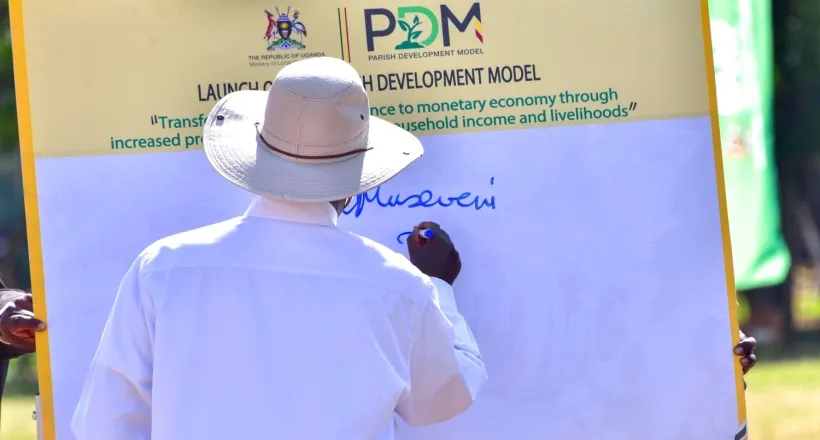
The Government of Uganda introduced the Parish Development Model (PDM) as a flagship initiative intended to lift millions of vulnerable Ugandans out of poverty through financial inclusion and enterprise development. Under the program, beneficiaries were given approximately one million shillings to invest in income-generating activities, with the understanding that the money would later be repaid after a grace period.
On paper, the idea appeared noble.
In reality, however, a critical question was ignored: Can capital alone create wealth where knowledge, mentorship, and capacity are absent?
Many beneficiaries received the money without adequate business training. Others were never sufficiently guided on investment planning, financial management, market access, risk assessment, or enterprise sustainability. The state delivered the money, but often failed to deliver the intellectual and practical tools necessary to multiply it.
Development is not merely the transfer of funds. Development is the transfer of capacity.
Today, government officials are intensifying efforts to recover these loans as the grace period expires. Across districts, local authorities have begun mobilising beneficiaries to start repayments.
Yet at the same time, public debate has been dominated by reports that members of the ruling National Resistance Movement parliamentary caucus received facilitation running into tens or even hundreds of millions of shillings following political retreats. Reports indicated that legislators received up to one hundred million shillings each, although party officials later disputed the amount and stated that each participant received twenty million shillings.
Whether it was twenty million or one hundred million, the deeper issue remains unchanged.
The contrast is impossible to ignore.
A poor farmer receives one million shillings, struggles without adequate training, faces market shocks, family emergencies, school fees, inflation, and crop failures, and is later pursued for repayment.
A politician already earning substantial salaries and allowances receives millions more in facilitation.
And then we are told that this is normal governance.
It is precisely here that the moral contradiction emerges.
The state appears harshest toward those with the least capacity to absorb economic shocks, while remaining most generous toward those already protected by privilege.
One is forced to remember the words attributed to Jesus Christ:
"For to everyone who has, more will be given... but from the one who has not, even what he has will be taken away."
The biblical statement was intended as a spiritual teaching. In Uganda, many citizens increasingly fear that it is becoming public policy.
The irony is devastating. The peasant in the village is asked to account for every coin. The student in a health training institution is told that internship allowances are unsustainable. The unemployed graduate is told that government resources are limited. The young medical student is expected to survive months of clinical training with little or no support, despite working under exhausting conditions and contributing to the health system. Yet the political class continues to enjoy privileges that many citizens can scarcely imagine.
This is not merely an economic issue. It is a philosophical one.
The French philosopher Jean-Jacques Rousseau once warned that when inequality grows excessively, laws begin to protect the powerful more than they protect justice.
Similarly, Aristotle argued that a stable state is one where wealth is neither concentrated in the hands of a few nor denied to the many. History repeatedly demonstrates that societies become unstable not because the poor are poor, but because the poor begin to believe that the system is deliberately designed against them.
Uganda stands dangerously close to that perception. The objective of public policy should not merely be debt collection. It should be a transformation. If thousands of PDM beneficiaries failed to generate the expected returns, the government should first ask why.
Were they adequately trained? Were they monitored? Were they mentored? Were markets available for their products? Were local leaders empowered to provide technical support? Did the government measure capacity before disbursement?
These questions matter because failed implementation should not automatically become the burden of the weakest citizens.
A responsible state does not simply distribute money and disappear. A responsible state accompanies citizens through the difficult journey of wealth creation.
Instead of focusing primarily on recovering one million shillings from struggling households, the government should invest equal energy into strengthening financial literacy, enterprise development, agricultural extension services, and continuous mentorship.
The goal should not be to make the poor better debtors. The goal should be to make them wealth creators.
The true success of the Parish Development Model will not be measured by how much money is recovered. It will be measured by how many families permanently escape poverty. It will be measured by how many young people find dignity in work. It will be measured by how many citizens move from survival to prosperity.
A nation cannot build lasting prosperity by widening the gap between rulers and the ruled. It cannot preach sacrifice to students while rewarding excess at the top. It cannot demand accountability only from the vulnerable while shielding the powerful from similar scrutiny.
The question Uganda must confront is not whether poor citizens should repay public funds. The real question is whether our development model is designed to empower the poor or merely discipline them.
Because if the state continues to add more to those who already have much, while taking from those who have little, then the greatest debt Uganda will accumulate will not be financial. It will be a debt of justice. And history has shown that such debts are always collected.
Even many didn't receive exactly one million Ugandan shillings because of corruption in the different parishes, and they did not report due to fear, but they will also be disturbed. The Government needs to rethink, because it's not too late.
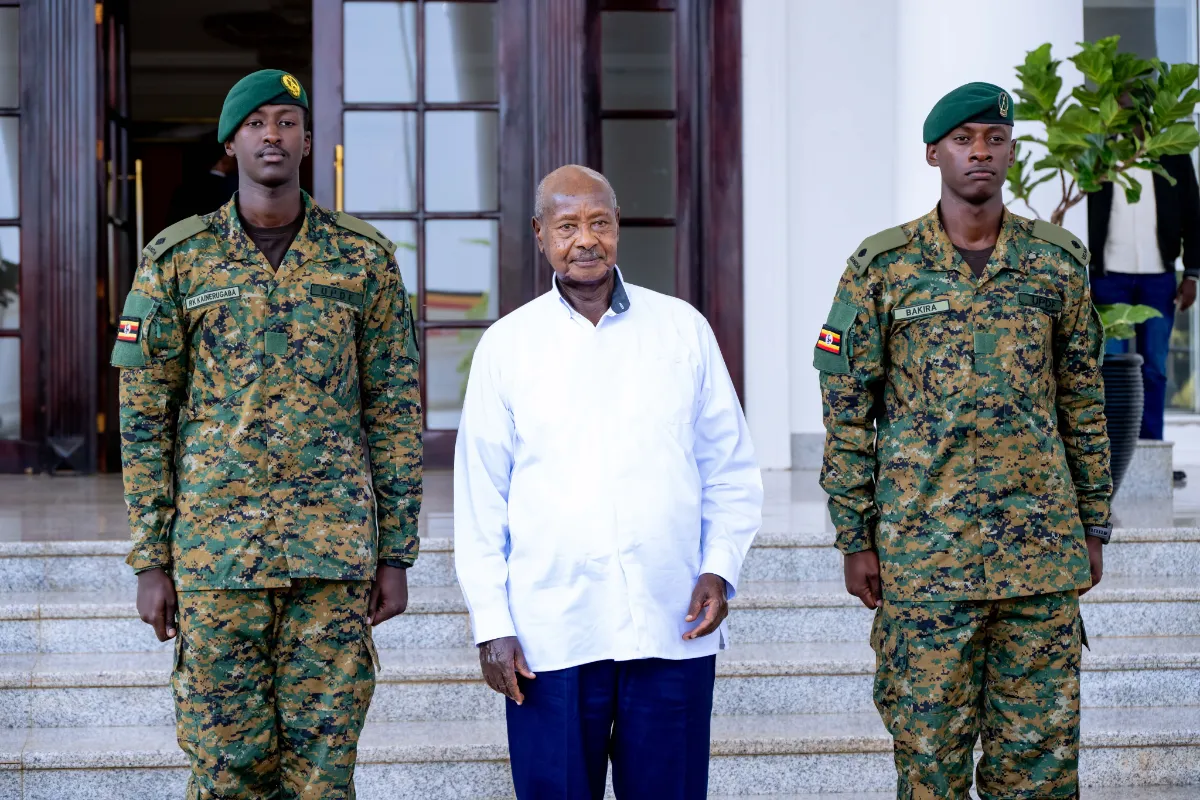
Photo Credit: National Resistance Movement
About the author
My name is Abeson Alex, a student at St. Lawrence University, whose leadership journey reflects a deep commitment to service, integrity, and community transformation. I have held various leadership positions, including UNSA President of St. Charles Lwanga College Koboko, UNSA District Executive Council Speaker, UNSA Speaker for West Nile, and West Nile Representative to the UNSA National Executive Council. I also served as YCS Section Leader of St. Charles Lwanga College Koboko, YCS Federation Leader for Koboko District, and Koboko YCS Coordinator to the Diocese. In addition, I was a Peace Founder and Security Council Speaker for the peace agreement between St. Charles Lwanga College Koboko and Koboko Town College. I served as Debate Club Chairperson of St. Charles Lwanga College Koboko, District Debate Coordinator, and West Nile Debate Coordinator to the National Debate Council (NDC). All the above were in 2022-2023. My other leadership roles include Chairperson of the Writers and Readers Club, UNSA Representative in the District Youth Council, Students’ Advocate for Reproductive Health, and Students’ GBV Advocate for the District. Within the Church, I served as Chairperson of the Altarservers of Ombaci Chapel, Parish Altarservers Chairperson of Koboko Parish, and Speaker of the Altarservers Ministry in Arua Diocese. Current Positions: Currently, I serve as the Diocesan Altarservers Chairperson of Arua Catholic Diocese, Advisor of the Altarservers Ministry for both Ombaci Chapel and Koboko Parish, and Programs Coordinator of Destined Youth of Christ (DYC-UG). I am also a Finalist in the Global Unites Oratory Competition 2024, the current Debate Club Speaker and President of St. Lawrence University Koboko Students Association. Additionally, I am the Youth Chairperson of Lombe Village, Midia Parish, and Midia Sub-county in koboko district. I am one whose life has been revolving around ensuring that in our imperfections as humans, we can promote transparency, righteousness, and morality to attain perfection. I am inspired by the guiding words: Mobilization, Influence, Engagement, and Advocacy. I share my inspiration across the fields of Relationships, Career, Governance, Faith, Education, Spirituality, Anti-corruption, Environmental Conservation, Business & Self-Reliance, politics , Administration,Financial Literacy, Religion, and Human Rights. Thanks for the encounter.