
What should the government prioritise when resources are limited?
A Budget Is a Moral Document: What Uganda’s Spending Priorities Reveal About Education, Healthcare, and the Future of the Nation.
06 Jun, 2026
Share
Save
A national budget is more than a collection of figures and expenditure lines. It is a statement of values. It reveals what a government considers important, what it is willing to invest in, and whose interests it chooses to protect.
Recent public debate in Uganda has centred on two seemingly separate issues: the funding gap for teacher training under the new curriculum and the uncertainty surrounding medical intern allowances. Yet these issues are deeply connected. Together, they expose a fundamental question that every developing nation must answer:
What should the government prioritise when resources are limited?
At a time when Uganda seeks to transform its economy and improve public service delivery, decisions about education and healthcare are not merely administrative choices—they are choices about the country's future.
The Education Question: Building a House Without Preparing the Builders
During a recent discussion, Opposition politician Ibrahim Ssemujju Nganda highlighted what many Ugandans perceive as a troubling contradiction. According to information presented before Parliament, significant funds continue to be allocated to administrative expenditures, while the Uganda National Examinations Board (UNEB) reportedly requires approximately UGX 8 billion to train teachers on the new competence-based curriculum, funding that has not been adequately secured.
Whether one agrees with Ssemujju politically is beside the point. His argument touches on a principle of sound public policy: a nation should prioritise investments that generate the greatest long-term public benefit.
Uganda's new curriculum was introduced to move learners away from memorisation and toward critical thinking, creativity, problem-solving, and practical application of knowledge. It is one of the most ambitious educational reforms in decades.
However, a curriculum is only as effective as the teachers implementing it.
Without adequate teacher training:
Students may be taught inconsistently.
Assessment standards become unclear.
Rural schools fall further behind.
Educational inequalities widen.
The objectives of curriculum reform become difficult to achieve.
In essence, introducing a new curriculum without adequately preparing teachers is like constructing a modern hospital without training doctors to operate within it. The result is predictable inefficiency.
The education sector remains one of the most powerful drivers of national development. Every successful economy—from Singapore to South Korea and Rwanda—has treated education not as consumption expenditure but as a strategic national investment.
Teacher training is not a cost. It is nation-building.
The Medical Intern Debate: Why These Interns Are Different
The second controversy concerns medical interns and the ongoing discussions surrounding their remuneration and welfare.
Many people hear the word "intern" and assume it refers to university students gaining workplace exposure. A medical internship is fundamentally different.
Medical interns are not ordinary interns. They are graduates who have already completed rigorous training in medicine, pharmacy, dentistry, or nursing. They have successfully earned their degrees and must complete a mandatory one-year supervised internship before receiving full professional licensure.
During this period, they work in emergency units, surgical theatres, maternity wards, outpatient departments, and specialised hospital units.
Unlike many interns in other sectors:
They directly manage patients.
They assist in life-saving procedures.
They work night shifts.
They carry significant responsibility.
Their decisions can affect life and death outcomes.
In many public hospitals, medical interns form a critical component of healthcare delivery. They are learners, but they are also frontline service providers.
This distinction is important. A business intern who misses work may delay paperwork. A medical intern who is absent may affect patient care. The stakes are fundamentally different.
The Economic Case for Supporting Medical Interns
The debate over medical intern allowances should not be viewed merely as a labour issue. It is fundamentally an issue of health-sector sustainability.
Medical training is among the most expensive educational investments a family can make. Many parents spend years financing tuition, accommodation, textbooks, clinical placements, and examination fees.
When graduates reach an internship, they enter a demanding period characterised by long working hours, emotional pressure, and significant financial strain.
Reducing or eliminating financial support creates several risks:
Increased brain drain.
Lower morale among healthcare workers.
Reduced attraction to medical careers.
Greater workforce shortages.
Declining quality of healthcare services.
Uganda already faces challenges related to healthcare staffing and retention. Policies that weaken support for young health professionals may produce long-term consequences that far exceed any short-term fiscal savings. A nation cannot aspire to quality healthcare while neglecting the very professionals expected to provide it.
The Question of Public Priorities
The debate surrounding teacher training and medical intern allowances raises a broader issue: how governments allocate scarce resources.
Every expenditure has an opportunity cost.
Every shilling spent in one area is a shilling unavailable elsewhere.
This does not mean administrative institutions are unnecessary. Effective governance requires functioning public institutions, legislative oversight, and operational expenditures.
However, difficult questions arise when investments in human capital appear to receive lower priority than administrative consumption.
Citizens naturally ask:
Why are essential educational reforms underfunded?
Why are healthcare workers struggling for support?
Why do sectors with direct public impact often face financial constraints while less visible expenditures continue?
These questions are not expressions of hostility toward government. They are expressions of democratic accountability.
What Do Ugandans Want?
Across political, regional, and social divides, most Ugandans desire similar outcomes.
They want an education system that equips young people with practical skills and opportunities.
They want hospitals staffed by motivated and competent professionals.
They want public institutions that function efficiently.
They want their taxes translated into visible improvements in their daily lives.
In short, citizens want government spending to produce measurable public value.
The Philosophical Question: What Is Government For?
Political philosophy offers useful perspectives on this debate.
The utilitarian tradition argues that public resources should maximise the greatest good for the greatest number. By this standard, investments in education and healthcare yield some of the highest social returns available to government.
John Rawls' theory of justice suggests that public institutions should be designed to protect those most vulnerable within society. Strong public schools and accessible healthcare are among the most effective tools for achieving this objective.
Aristotle argued that the purpose of government is the promotion of the common good. Governments derive legitimacy not from the size of their budgets but from the extent to which those budgets improve the lives of citizens.
Viewed through these lenses, funding teacher training and supporting medical interns are not special-interest demands. They are investments in the public good.
A Better Path Forward
Uganda's challenge is not merely the availability of resources. It is the prioritisation of resources.
A more strategic approach would involve:
Protecting education and healthcare expenditures as core national investments.
Ensuring full implementation of curriculum reforms through teacher training.
Guaranteeing the timely deployment and remuneration of medical interns.
Conducting rigorous audits of non-essential public expenditures.
Linking government spending to measurable developmental outcomes.
Strengthening transparency and citizen oversight in budgeting processes.
Such measures would not only improve service delivery but also strengthen public trust.
Conclusion: The Future Is Built Through People
The debate about teacher training and medical intern allowances ultimately transcends politics.
It is about the kind of country Uganda wishes to become.
Nations do not achieve prosperity through buildings alone. They achieve prosperity through educated citizens, skilled professionals, healthy communities, and institutions that place public welfare at the centre of decision-making.
Teachers shape the minds that will lead tomorrow.
Medical interns become the doctors, pharmacists, dentists, and nurses who will save lives for decades to come.
When a nation invests in them, it invests in itself.
The real question, therefore, is not whether Uganda can afford to prioritise education and healthcare. The question is whether Uganda can afford not to.
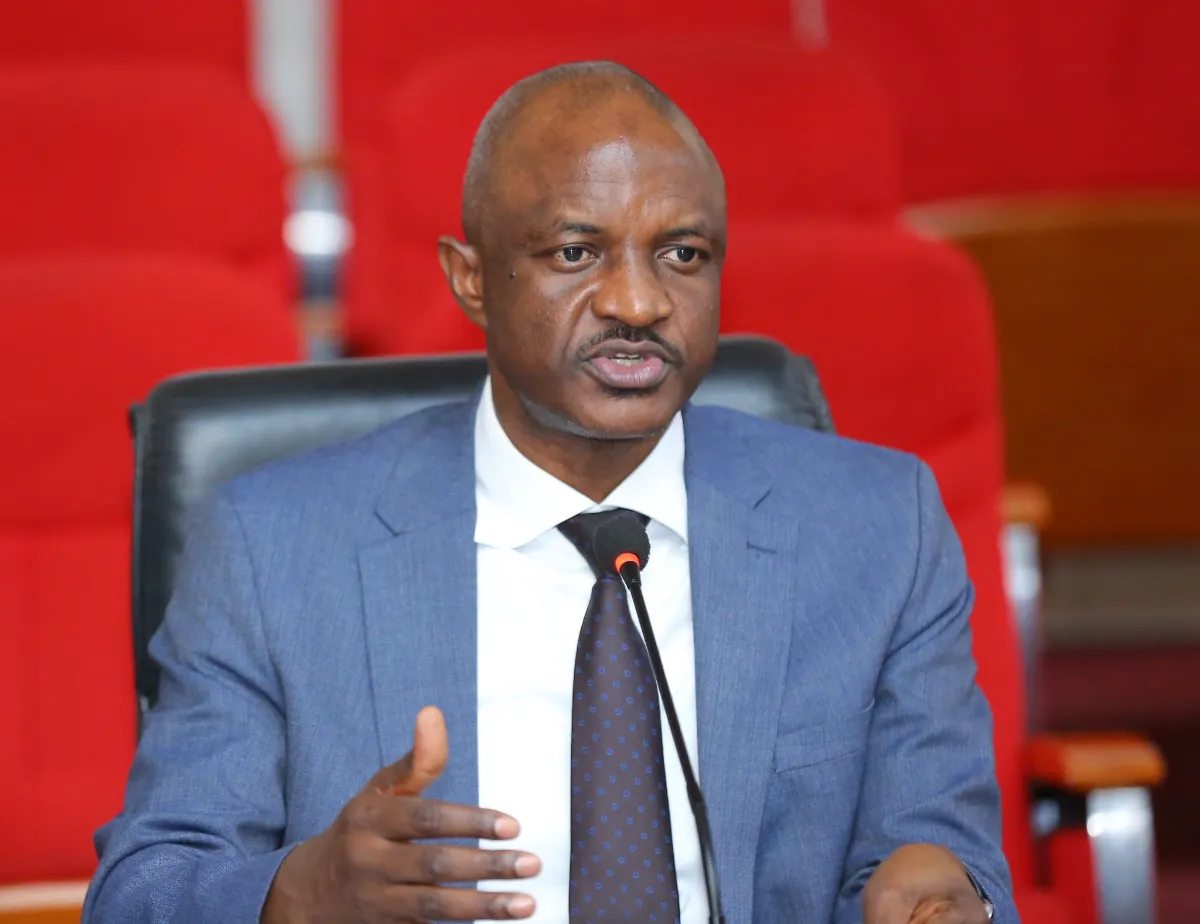
Photo Credit: Ministry of Finance, Planning & Economic Development
About the author
My name is Abeson Alex, a student at St. Lawrence University, whose leadership journey reflects a deep commitment to service, integrity, and community transformation. I have held various leadership positions, including UNSA President of St. Charles Lwanga College Koboko, UNSA District Executive Council Speaker, UNSA Speaker for West Nile, and West Nile Representative to the UNSA National Executive Council. I also served as YCS Section Leader of St. Charles Lwanga College Koboko, YCS Federation Leader for Koboko District, and Koboko YCS Coordinator to the Diocese. In addition, I was a Peace Founder and Security Council Speaker for the peace agreement between St. Charles Lwanga College Koboko and Koboko Town College. I served as Debate Club Chairperson of St. Charles Lwanga College Koboko, District Debate Coordinator, and West Nile Debate Coordinator to the National Debate Council (NDC). All the above were in 2022-2023. My other leadership roles include Chairperson of the Writers and Readers Club, UNSA Representative in the District Youth Council, Students’ Advocate for Reproductive Health, and Students’ GBV Advocate for the District. Within the Church, I served as Chairperson of the Altarservers of Ombaci Chapel, Parish Altarservers Chairperson of Koboko Parish, and Speaker of the Altarservers Ministry in Arua Diocese. Current Positions: Currently, I serve as the Diocesan Altarservers Chairperson of Arua Catholic Diocese, Advisor of the Altarservers Ministry for both Ombaci Chapel and Koboko Parish, and Programs Coordinator of Destined Youth of Christ (DYC-UG). I am also a Finalist in the Global Unites Oratory Competition 2024, the current Debate Club Speaker and President of St. Lawrence University Koboko Students Association. Additionally, I am the Youth Chairperson of Lombe Village, Midia Parish, and Midia Sub-county in koboko district. I am one whose life has been revolving around ensuring that in our imperfections as humans, we can promote transparency, righteousness, and morality to attain perfection. I am inspired by the guiding words: Mobilization, Influence, Engagement, and Advocacy. I share my inspiration across the fields of Relationships, Career, Governance, Faith, Education, Spirituality, Anti-corruption, Environmental Conservation, Business & Self-Reliance, politics , Administration,Financial Literacy, Religion, and Human Rights. Thanks for the encounter.