
A Better Bad Government
An Analysis of Uganda’s Political Journey
03 Jan, 2025
Share
Save
Power, they say, corrupts. But in Uganda, history shows that power has not only corrupted, it has brutalised, plundered, and terrorised. One time, I had a conversation with my late grandfather, Kasimba Cyrus Kasolo, about the current government. I was passionately rubbishing the regime, listing its failings, and lamenting how bad it is. But he stopped me, gently insisting that while we speak of change and dream of better leaders, we must also acknowledge the relative stability this government has brought. He shared a story from his younger days, when he fled Rwanda and settled in Uganda to escape tribal conflicts.
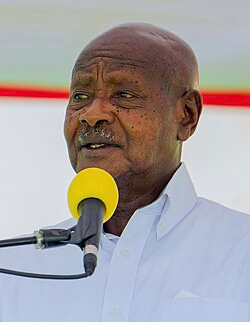
In those days, he said, soldiers would storm homes, take whatever they wanted, rape the women, and beat the men senselessly. No one dared speak out—survival was the only priority. As much as you criticise this government, he said …. don’t forget the good they’ve done in comparison to what we endured back then. His words lingered with me. Museveni’s government is far from good. Corruption runs rampant, dissent is stifled, and power is often abused. But compared to the horrors of the past, it is undeniably “the better bad government.” Hear me out to understand the paradox. We must examine Uganda’s tumultuous political history and the unique position Museveni’s regime occupies
Uganda’s post independence is a grim tale of governments that promised hope but delivered despair. Each regime seemed to compete with its predecessor in deepening the nation’s wounds. The era of Idi Amin (1971–1979) is remembered as one of Uganda’s darkest chapters.
Amin’s rule was a dictatorship fuelled by paranoia and brutality. His soldiers operated as untouchable enforcers, terrorising civilians with impunity. People disappeared without a trace. Public executions were a grim spectacle meant to instill fear. Economic mismanagement reached absurd levels, as Amin expelled Uganda’s Asian business community and redistributed their enterprises to his buddies, plunging the economy into ruin. If Amin’s fall was a relief, Milton Obote’s return to power (1980–1985) proved that Uganda’s suffering was far from over. Civil war, economic instability, and targeted violence marked Obote’s second presidency. The infamous Luwero Triangle became a mass grave, as government forces waged a brutal counter-insurgency campaign. Civilians bore the brunt of the violence, with villages razed and families destroyed.
This cycle of terror seemed unbreakable; each government, more oppressive than the last. By the time Yoweri Museveni and his National Resistance Army (NRA) marched into Kampala in 1986, Ugandans were desperate for change. Museveni promised a “fundamental change” rather than a mere change of guards. But nearly four decades later, his government, too, has fallen short of that promise.
Museveni’s rule has brought both continuity and contradiction (a paradox of progress and oppression). On one hand, it has delivered a degree of stability and progress that previous regimes failed to achieve. On the other, it has perpetuated many of the same abuses of power that have plagued Uganda’s history. Under Museveni, Uganda has seen improvements in infrastructure, education, and healthcare. Roads that were once impassable are now functional, enabling trade and movement. Schools and health centers, while far from perfect, exist in greater numbers than before. Economic growth, though uneven, has lifted millions out of extreme poverty, and a more diplomatic approach to problem solving. For a generation that lived through the chaos of Amin and Obote, these changes are significant. They represent a break from the extreme violence and state collapse that characterised previous regimes.
Museveni’s government, for all its flaws, has managed to maintain a semblance of order something Uganda’s past leaders failed to do. Yet Museveni’s government is far from a paragon of good governance; corruption remains endemic, with public funds regularly disappearing into the pockets of officials. Opposition voices are silenced through intimidation, imprisonment, or worse. Elections are marred by allegations of fraud and violence. Tribalism in its broadest sense, “make sure those don’t get the numbers” is one of the regime’s most glaring flaws in its reluctance to relinquish power.
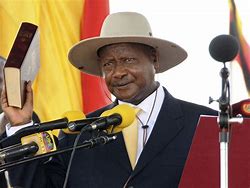
Mr Museveni has repeatedly amended the constitution to extend his rule, eroding democratic institutions. This concentration of power breeds the very authoritarianism his government once vowed to eliminate. The story my grandfather told me about his experience under previous regimes highlights an important distinction: the scale and visibility of power misuse. In Amin’s and Obote’s time, abuses of power were grotesque and indiscriminate. Soldiers acted as predators, preying on civilians with impunity. Families lived in constant fear of the state, unsure if they would survive the night. Under Museveni, power is still misused, but it is less overtly brutal. The government employs more subtle forms of control, such as economic coercion, legal manipulation, and targeted repression. This shift from physical violence to structural oppression is significant. While it does not excuse the government’s actions, it demonstrates a move away from the sheer lawlessness of the past.
To call Museveni’s government “the better bad government” is not to praise it, but to place it within the context of Uganda’s political history. Each regime has been “bad” in its own way, and the current one is no exception. Yet, compared to the horrors of Amin’s massacres and Obote’s purges, Museveni’s rule has allowed for a degree of normalcy to return to Ugandan life. This normalcy, however fragile, has given Ugandans space to rebuild. Markets function. Schools operate. Roads connect communities. These may seem like minor victories, but for a nation scarred by decades of violence, they are significant. Uganda deserves more than a “better bad government.” While Museveni’s regime is an improvement over its predecessors, it is still deeply flawed. Corruption, authoritarianism, and inequality continue to undermine the nation’s potential. Yet, it is important to acknowledge progress, however limited. Criticising the government should not blind us to the gains that have been made.
We must hold on to the hope that Uganda can move beyond this cycle of “bad governments” and finally achieve the leadership it deserves. For now, Museveni’s government is the lesser of many evils. But the dream of a truly good government, a government that serves its people with integrity, fairness, and vision, remains alive. It is up to Ugandans to keep that dream alive and demand better from their leaders, both now and in the future.
About the author
A chill guy 🧞♂️⚓️