
Beyond Affirmative Action: Reimagining Youth Participation in Governance.
Meaningful youth participation must go beyond representation and consultation.
08 Aug, 2026
Share
Save
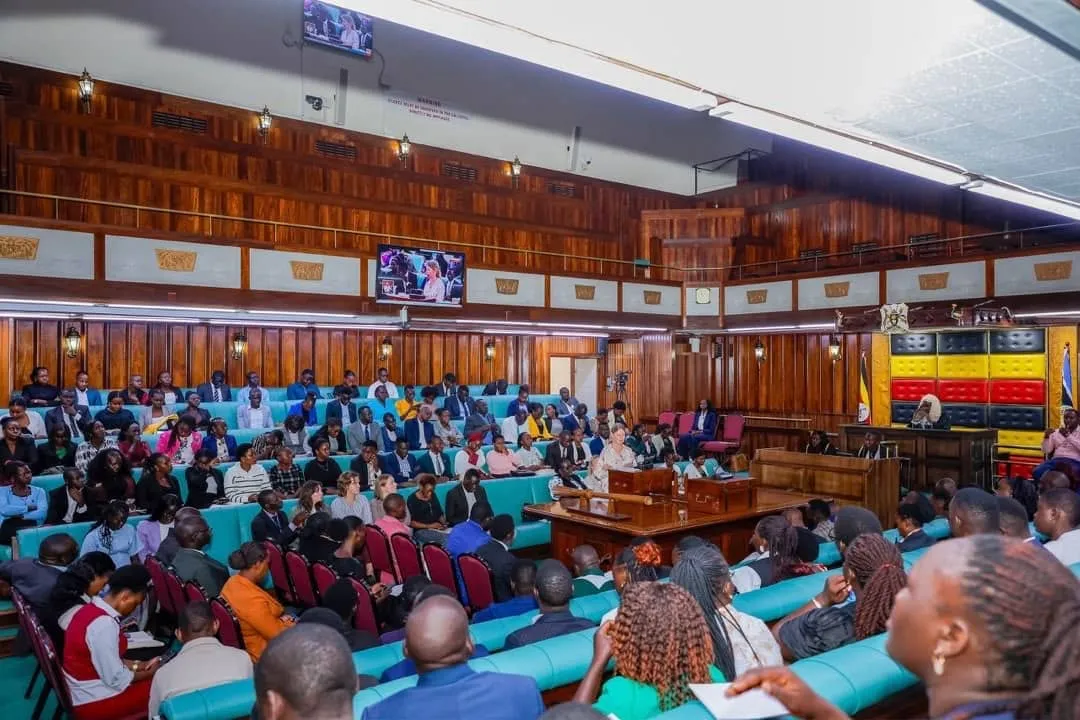
On the 7th of August 2026, as I followed the National Youth Parliament, I got inspired when it reached the part where a motion was moved for the government to meaningfully include young people to participate meaningfully in governance. Therefore, I want to share my thoughts that the government should not see young people through the mirror of affirmative action. Government should now look at the youth as an energy, as a power that exists and therefore must be given the fair ground to step up and engage in transforming society, developing it, and sustaining it.
And that means government should restructure the systems and structures that allow young people to participate, to engage, and make their voices heard. Because now, it is not about representation, but it is about engagement. It is not about consultation, but it is about the youth being empowered in larger numbers to be part of the national development that we all want to achieve.
For decades, affirmative action has played an important role in creating space for young people and other marginalised groups within political and governance structures. At the time these mechanisms were introduced, they were necessary and arguably appropriate responses to exclusion. However, society has changed, and the challenges facing young people today require us to rethink how youth participation is structured.
The government must move beyond the ideology of viewing young people primarily through the mirror of affirmative action. The question should no longer be simply how many positions have been reserved for youth, but rather whether young people are meaningfully empowered to influence decisions that shape their present and future.
Young people should not be treated merely as beneficiaries of political inclusion or as individuals given a few positions to compete for along regional and demographic lines. Such an approach can sometimes produce tokenism, where representation exists on paper but does not necessarily translate into meaningful influence or quality leadership.
What young people need is an enabling political environment based on equity, empowerment, merit and meaningful participation. Youth should be recognised not merely as a demographic category requiring representation, but as a movement, a constituency and a critical force for national development.
Meaningful youth participation must go beyond representation and consultation. Young people must be present in the rooms where decisions are made—not merely to occupy seats, but to actively engage in planning, policy formulation, implementation, monitoring and evaluation. They must be trusted with responsibilities that match their abilities, potential and aspirations.
This requires government to restructure its approach to youth participation. Youth councils at district and local-government levels must be adequately empowered and funded to perform their mandates. Youth leaders should have access to resources, information, training and institutional platforms that enable them to translate ideas into tangible development.
We must also create political spaces where young people can compete fairly, regardless of their region, background or social status. Equity does not mean lowering standards; rather, it means creating conditions where talent, competence and potential can compete fairly without structural barriers determining who gets opportunities.
The future of governance cannot be built by treating young people as spectators, mobilisers or beneficiaries. Young people must become partners in development and co-creators of policy and national progress.
Unless we revolutionise the way we understand youth participation and move beyond tokenistic affirmative action toward genuine empowerment, equity and meaningful engagement, the youth will continue to punch far below their potential.
The challenge before government is therefore not simply to include young people, but to empower them to lead, decide, innovate and transform society. That is the kind of youth participation that can turn demographic strength into developmental power.
About the author
My name is Abeson Alex, a student at St. Lawrence University, whose leadership journey reflects a deep commitment to service, integrity, and community transformation. I have held various leadership positions, including UNSA President of St. Charles Lwanga College Koboko, UNSA District Executive Council Speaker, UNSA Speaker for West Nile, and West Nile Representative to the UNSA National Executive Council. I also served as YCS Section Leader of St. Charles Lwanga College Koboko, YCS Federation Leader for Koboko District, and Koboko YCS Coordinator to the Diocese. In addition, I was a Peace Founder and Security Council Speaker for the peace agreement between St. Charles Lwanga College Koboko and Koboko Town College. I served as Debate Club Chairperson of St. Charles Lwanga College Koboko, District Debate Coordinator, and West Nile Debate Coordinator to the National Debate Council (NDC). All the above were in 2022-2023. My other leadership roles include Chairperson of the Writers and Readers Club, UNSA Representative in the District Youth Council, Students’ Advocate for Reproductive Health, and Students’ GBV Advocate for the District. Within the Church, I served as Chairperson of the Altarservers of Ombaci Chapel, Parish Altarservers Chairperson of Koboko Parish, and Speaker of the Altarservers Ministry in Arua Diocese. Current Positions: Currently, I serve as the Diocesan Altarservers Chairperson of Arua Catholic Diocese, Advisor of the Altarservers Ministry for both Ombaci Chapel and Koboko Parish, and Programs Coordinator of Destined Youth of Christ (DYC-UG). I am also a Finalist in the Global Unites Oratory Competition 2024, the current Debate Club Speaker and President of St. Lawrence University Koboko Students Association. Additionally, I am the Youth Chairperson of Lombe Village, Midia Parish, and Midia Sub-county in koboko district. I am one whose life has been revolving around ensuring that in our imperfections as humans, we can promote transparency, righteousness, and morality to attain perfection. I am inspired by the guiding words: Mobilization, Influence, Engagement, and Advocacy. I share my inspiration across the fields of Relationships, Career, Governance, Faith, Education, Spirituality, Anti-corruption, Environmental Conservation, Business & Self-Reliance, politics , Administration,Financial Literacy, Religion, and Human Rights. Thanks for the encounter.