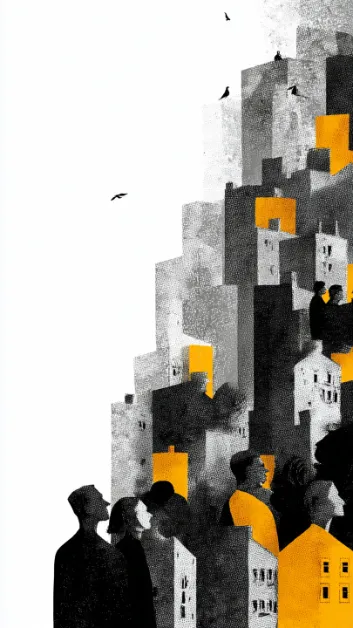
Beyond Elections: Understanding the Politics That Shape Everyday Life
Politics shapes power, resources, and daily life—from media to jobs and food. Understanding its deeper systems is key to accountability and real development.
23 Mar, 2026
Share
Save
Politics is often reduced to elections, political parties, and government offices. Yet this narrow view hides a deeper truth: politics exists wherever power determines how resources, opportunities, values, and decisions are distributed in society. From the media we consume to the food we eat, from the jobs we access to the leaders we follow, political forces influence almost every aspect of public life. To understand governance, development, and justice—especially in Africa—citizens must move beyond surface-level electoral politics and examine the broader systems that shape daily realities.
Political Culture
Political culture refers to the shared beliefs, values, and attitudes that shape how citizens relate to power, authority, and governance. It determines whether people question leaders or revere them unquestioningly, whether corruption is tolerated as normal or condemned as immoral, and whether citizens participate actively in civic life or remain passive observers. Political culture develops over time through history, education, religion, media influence, and lived experiences. In societies where political culture values accountability and participation, democracy becomes stronger. In societies dominated by fear, patronage, tribal loyalty, and apathy, political institutions struggle to function effectively.
Media Culture
Media culture describes the norms, priorities, and practices that shape how media organisations communicate with society. The media does more than report events; it frames public understanding of reality. When media culture values sensationalism, propaganda, or tribal narratives, society becomes polarised and misinformed. A healthy media culture prioritises truth, ethical journalism, investigation, and responsible public discourse. Through its influence on public awareness and opinion, media culture shapes political understanding, social values, and even national identity.
The Politics of the Media
Closely connected to media culture is the politics of the media—the influence of power, ownership, and political interests on what information reaches the public. Media institutions rarely operate in complete neutrality. Governments, corporations, political parties, and even foreign actors often attempt to control narratives to serve their interests. Ownership structures determine which voices are amplified and which are silenced. When the media becomes politicised, truth becomes vulnerable, and democratic accountability weakens because citizens cannot make informed decisions without reliable information.
The Politics of Culture
Culture—traditions, religion, language, and identity—should ideally unite societies and preserve valuable heritage. However, culture can also be politicised. The politics of culture occurs when leaders manipulate identity to gain or maintain power. Appeals to tribe, religion, or historical grievances may mobilise support, but they can also deepen divisions. Ethical politics recognises the importance of cultural identity while promoting shared national and continental values such as justice, dignity, and unity.
The Politics of Governance
Governance refers to how decisions are made, implemented, and enforced within a society. The politics of governance examines whose interests these decisions serve. Good governance is built on transparent institutions, accountable leadership, and effective public service delivery. Poor governance is marked by corruption, weak institutions, and a lack of accountability. Sustainable governance creates systems that continue to function even when leaders change, ensuring stability and long-term development.
The Politics of Leadership
Leadership is not merely about occupying positions of authority; it is about how power is exercised and to what end. The politics of leadership explores how leaders emerge, how they govern, and how they are held accountable. Leadership can either serve the public interest or prioritise personal and elite gains. Ethical leadership strengthens institutions, encourages participation, and promotes long-term national vision. When leadership becomes personalised, militarised, or controlled by patronage networks, public trust erodes, and development stagnates.
The Politics of Food
Food may seem like a basic human necessity, but it is deeply political. The politics of food concerns how agricultural policies, land ownership, distribution systems, and market structures determine who has access to food and who does not. Hunger is rarely the result of natural scarcity alone; it often reflects policy failures, economic inequality, and governance choices. When governments neglect local farmers or depend excessively on food imports, food insecurity increases. Food sovereignty emphasises the right of communities to control their food systems and prioritise local production.
The Politics of Employment
Employment opportunities are shaped by political and economic decisions. Education policy, economic planning, labour laws, and corruption influence who gets jobs and under what conditions. In many societies, employment becomes politicised when positions are distributed based on personal connections or political loyalty rather than merit. Such systems undermine fairness, discourage innovation, and deepen inequality. A healthy employment system prioritises merit, dignity of labour, and equal opportunity for all citizens.
The Politics of Job Creation
Closely related to employment is the politics of job creation. Jobs do not emerge by chance; they are the result of deliberate policies that promote investment, industrial development, entrepreneurship, and innovation. Governments that prioritise production, skill development, and infrastructure create sustainable employment opportunities. Conversely, economies that focus primarily on consumption without strengthening productive sectors struggle to absorb growing youth populations into meaningful work.
The Politics of Companies
Companies and corporations also play a political role. Through lobbying, campaign financing, and negotiations with governments, corporations influence public policy and economic decisions. When corporate power becomes excessive and regulations are weak, public interests may be sacrificed for profit. Responsible corporate governance requires a balance between profitability, ethical practices, environmental protection, and contributions to national development.
The Bigger Political Picture
When these dimensions are considered together, a powerful realisation emerges: politics is not confined to parliaments, elections, or political parties. Politics exists wherever systems determine the distribution of power, resources, opportunities, and dignity. Understanding these deeper layers of politics allows citizens to analyse governance more critically and participate more meaningfully in shaping their societies.
For Africans seeking genuine development and democratic progress, political education must go beyond campaign slogans and electoral competition. Citizens must examine the cultural, economic, institutional, and social structures that influence everyday life. When people understand the politics behind media, culture, governance, food systems, employment, and corporate power, they become better equipped to demand accountability, defend justice, and promote ethical leadership. In this deeper understanding lies the foundation for societies rooted in responsibility, unity, and sustainable development.
About the author
My name is Abeson Alex, a student at St. Lawrence University, whose leadership journey reflects a deep commitment to service, integrity, and community transformation. I have held various leadership positions, including UNSA President of St. Charles Lwanga College Koboko, UNSA District Executive Council Speaker, UNSA Speaker for West Nile, and West Nile Representative to the UNSA National Executive Council. I also served as YCS Section Leader of St. Charles Lwanga College Koboko, YCS Federation Leader for Koboko District, and Koboko YCS Coordinator to the Diocese. In addition, I was a Peace Founder and Security Council Speaker for the peace agreement between St. Charles Lwanga College Koboko and Koboko Town College. I served as Debate Club Chairperson of St. Charles Lwanga College Koboko, District Debate Coordinator, and West Nile Debate Coordinator to the National Debate Council (NDC). All the above were in 2022-2023. My other leadership roles include Chairperson of the Writers and Readers Club, UNSA Representative in the District Youth Council, Students’ Advocate for Reproductive Health, and Students’ GBV Advocate for the District. Within the Church, I served as Chairperson of the Altarservers of Ombaci Chapel, Parish Altarservers Chairperson of Koboko Parish, and Speaker of the Altarservers Ministry in Arua Diocese. Current Positions: Currently, I serve as the Diocesan Altarservers Chairperson of Arua Catholic Diocese, Advisor of the Altarservers Ministry for both Ombaci Chapel and Koboko Parish, and Programs Coordinator of Destined Youth of Christ (DYC-UG). I am also a Finalist in the Global Unites Oratory Competition 2024, the current Debate Club Speaker and President of St. Lawrence University Koboko Students Association. Additionally, I am the Youth Chairperson of Lombe Village, Midia Parish, and Midia Sub-county in koboko district. I am one whose life has been revolving around ensuring that in our imperfections as humans, we can promote transparency, righteousness, and morality to attain perfection. I am inspired by the guiding words: Mobilization, Influence, Engagement, and Advocacy. I share my inspiration across the fields of Relationships, Career, Governance, Faith, Education, Spirituality, Anti-corruption, Environmental Conservation, Business & Self-Reliance, politics , Administration,Financial Literacy, Religion, and Human Rights. Thanks for the encounter.