
Bobi Wine, the Apparent Ugandan Leading Opposition Figure, Flees to Exile
Opposition leader Bobi Wine flees into exile after a two-month cat-and-mouse pursuit with the security state of Yoweri Museveni.
15 Mar, 2026
Share
Save
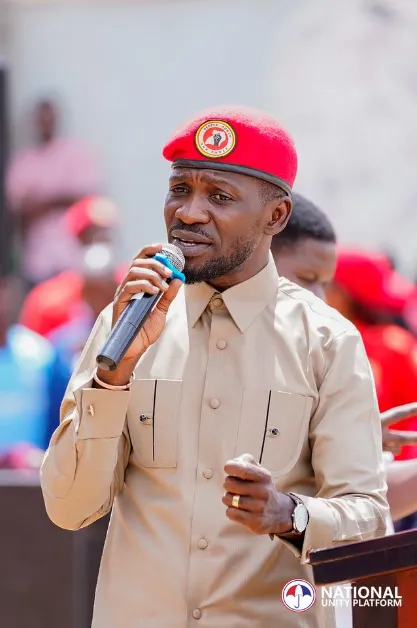
Honourable Robert Kyagulanyi [Bobi Wine], a Ugandan Marxist pop star and politician, successfully escapes into exile after two months of hiding from President Museveni’s pursuit and bloodthirsty gunmen under the orders of General Muhoozi Kainerugaba, the Chief of Defence Forces and first son.
Even though President Museveni’s security organs have repeatedly denied hunting for Bobi Wine, available reports, especially from the same security forces and courts, indicate that Bobi was a wanted man. The army has staged roadblocks on various Ugandan roads to counter Bobi Wine; however, the hunt has yielded no results.
Besides, the nine officers assigned to him during the elections were later detained and discharged from the police force for what one might call negligence—of course, they let Bobi Wine escape. Also, Gloria Grace Laker, a student and law intern at Gulu High Court, was remanded to prison for taking and sharing a photo of Bobi Wine’s trumped-up charge sheet. This is an utter misuse of power by the Museveni government.
The pop artist, who has been a thorn in Museveni’s eye since the genesis of his People Power Movement in 2017, which later became the National Unity Platform and challenged Museveni in the 2021 elections, has boldly condemned Museveni’s tyranny and brutality aimed at maiming Ugandans, and of all crimes, this is the greatest.
In the recently concluded presidential elections of January 15th, in which the internet was switched off to enable uninterrupted vote rigging, Bobi Wine’s home was surrounded by army operatives under the orders of Muhoozi; his house was ransacked, and his wife was assaulted, stripped naked, and photographed without her consent.
This farce, however, outlines the shrinking democracy under the Museveni government, which has been in power since 1986, having come into power by coup. While Museveni’s sole objective of toppling the previous criminal governments, as he refers to them, was restoring democracy, this has been futile, as Ugandans have lived to witness their once acclaimed messiah become worse than his predecessors.
Museveni has since thrived on intimidation and detention of his opponents, martial law, and abduction and murder of critics without being held to account, and while at it, he has weaponised corruption, which, as of now, is the holding pillar of his government, while service delivery is sparse.
“And at the right time, I will come back and continue with the cause,” Bobi Wine said in a video on his X.
Alas, the State continues with its raids on Bobi’s comrades’ homes, as per recent videos circulating on social media, where they swooped on Honourable Don Sherif Najja, Bobi Wine’s assistant’s home, and abducted his wife after she denied her whereabouts—this is the true picture of the Ugandan president and his son—they lack reverence for women and children.
At this point, President Museveni’s government has become so unpopular that it now thrives on fawning, and Bobi Wine’s two-month hunt by the Uganda People’s Defence Forces and Intelligence only depicts this truth further—local Ugandans have protected Bobi Wine and helped him escape the country, even when they knew that he was a wanted man.
Now Bobi Wine joins several Ugandans in the diaspora, including Kakwenza Rukirabashaija, a novelist, playwright, and lawyer; Dr Stella Nyanzi, a poet and one of Museveni’s stark critics; Professor Danson Kahyana, among others.
In his absence, Bobi Wine delegated Dr Lina Zedriga, who will be handling the on-ground party day-to-day activities until the former returns to the country.
Photo Credit: National Unity Platform
About the author
The Critique Magazine is an independent publication dedicated to critical thought, creative expression, and public debate. It serves as a platform where writers, journalists, and thinkers share perspectives on literature, politics, human rights, and social issues affecting society. The magazine encourages open dialogue and challenges conventional ideas through essays, commentary, and analysis.