The Unconditional Love of a Mother: God Is a Woman!
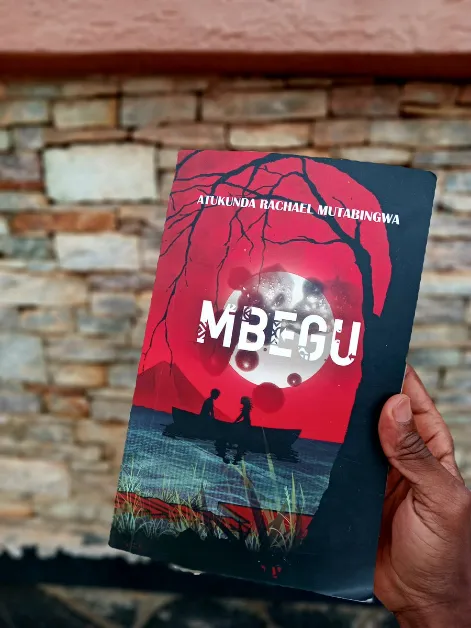
Book Review: Dissecting Atukunda R. Mutabingwa's 'Mbegu'.
04 Mar, 2026
Share
Save
Books are magical, and they serve as portals to imagination beyond our usual realm. However, each book is unique in its own way. This is because, to understand the author of Adavera, Kunda, and now Mbegu, you must appreciate her journey and resilience as a writer. I commend all writers in Africa, and to me, Atukunda R. Mutabingwa is a contemporary imaginative artist, truly unique in her own right; we should celebrate her.
With celebration, I must appreciate her eloquence and coinage of imaginative art that evokes many thematic areas of concern. This is to say, her attempt to be inclusive in her work is a bold and risky move. Her sexuality theme is a cultural battle in her country, Uganda. Where many people see it as nefarious for people of the same sex to fall in love. Curiously, I engaged with her about the reception of sexuality in her book, and she independently noted that Mbegu has received a mixed response from different readers. I would juxtapose Mutabingwa’s Mbegu boldness with Salman Rushdie's Satanic Verses. It is dangerous to protest through art; there are repercussions you must brace for. With Rushdie, his free speech cost him the loss of an eye. This was due to the decree from Khomeini, where he called on "all valiant Muslims" to kill Rushdie and his publishers. With Mutabingwa, I doubt if she will lose her eye; however, the moralists of her country might condemn and try to stamp her down, but her resilience to continue even in the face of a backlash should prevail—she must write what she likes, like Steve Biko.
With writing what she likes, Mutabingwa develops a very pertinent concern in her plot. Who is God? Is God a woman? This is portrayed throughout the text, where she equates God and creation with motherhood. Her theory reminds me of Simone Sierra’s argument in her novel The Sinner. In her novel, the theological argument of Imago Dei (Image of God) is central to the divinity of the feminine desire—that all that is created is true and God is a woman. In the same way, the holy writs, like the Bible, support the argument of creation and God being a woman.
God is described as a woman in labour (Isaiah 42:14), a mother who gives birth to the world, and one who "nurses" Her people at the breast (Isaiah 49:15; Hosea 11:3–4). The compassion and unconditional love of a mother are how we should view God, as postulated by Mutabingwa. She believes that a father requires DNA to prove that a child is theirs, but a mother hardly needs one—she knows the child is hers, and hers alone. That is the Imago Dei described in Mbegu. That a seed has been planted into the womb of a mother, and it must bloom into an offspring. Alternatively, we would understand her title in line with the demography. In demography, it is agreed upon by different researchers that it is only a woman who conceives, which is why, during population projection, we use the female population. Therefore, without women/mothers, the population collapses—and the Imago Dei is no more.
The Hebrews link biological creation to divinity. The word rechem (womb) is rooted in rachamim (mercy/compassion). Meaning that God's love is equated to motherhood, where love and compassion, protection, and guidance are the key elements. In the entire novel, we see the people of Adavera coming back to Muuna and/or Mother to pray to her/him for miracles. As a mother engrossed in compassion and mercy, she delivers. However, we should understand that many theologians (and scholars) have committed to the conclusion that God is genderless.
True, God is beyond gender according to many theologians, and the inclusivity of women must be witnessed in all religious books. It is also important to note that, in the book of Proverbs, wisdom is attributed to Sophia. Sophia refers to the personification of God as a female aspect in Gnostic theology. Therefore, during the creation of the world according to the Book of Genesis, it is attributed that wisdom—Sophia—was present. A conclusion that perhaps Mutabingwa is presenting a strong argument for who God is.
"Who is God?” is a mystery to many, but drawing from the teachings of St. Augustine of Hippo. Methinks, God is the inner light we hold within ourselves—that inner light of Lucy Nvaleroah that illuminated within her and healed everyone around her with positivity. With St. Augustine of Hippo, God is seen as the truth and wisdom. As he argued, whenever we recognise an "unchangeable truth" (like 5+3=8), then we are witnessing truth from God.
Therefore, the novel Mbegu explores the theology of God, and to meet God, we must accept the truth of death—we must not fear to die to meet Him. The “death” of fear is seen in the last chapters of the novel, as the people of Old Town accept the truth and choose to be “Life Witnesses." As argued by Plato, death is seen as the liberation of the spirit or soul from the vessel or body. However, Plato believes in reincarnation, as the spirit is reborn into a new body. The evidence of reincarnation is seen with Toni becoming Vam (sic), showcasing how imaginative Mutabingwa is with her understanding of the universe. In the bid to understand reincarnation and its theory, Dr Brian Weiss argues in his book Many Lives, Many Masters (1988) that the soul is immortal and undergoes a series of rebirths to achieve spiritual evolution.
In conclusion, to understand Atukunda R. Mutabingwa and her growth in writing, read her recent book, Mbegu.
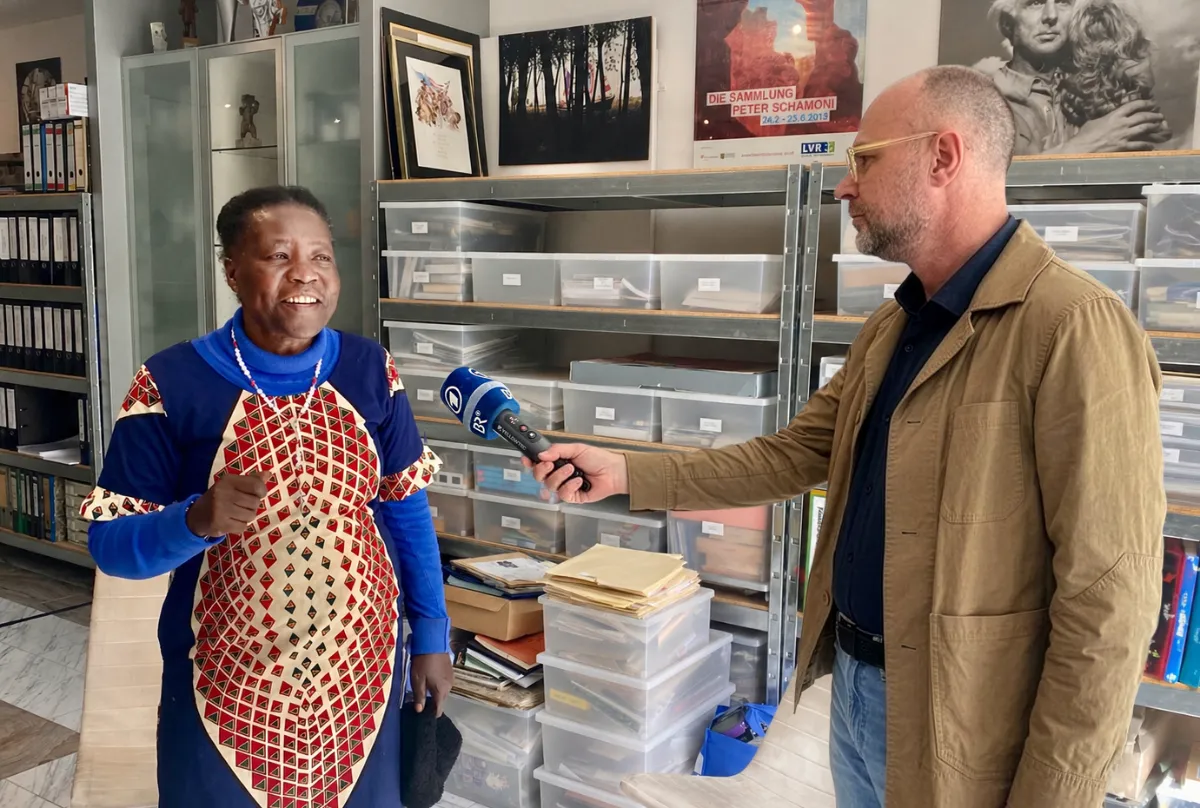
Photo Credit: Zziwa Zinabala
About the author
Born and raised in Uganda. Studied Science in Population Studies at Makerere University. He is a poet, playwright, and book reviewer. He has authored his first-ever commercial book called "The Muchwezi, The Flower & The Suitor" He is a shy person in real life; he fears looking people in the eyes. A broken person, unlucky in love and confused when he will find true Lover but passionate about People. He is an author of many unpublished poems, plays and novels due to financial constraints. When you see his books, please buy and support Him.