President Ruto's Nationwide Crackdown on Small Businesses Operating in Kenya Rattles Foreign Nationals

Internet Access, Emergency Powers, And the Structural Collapse of Rights Protection in International and Ugandan Constitutional Law.
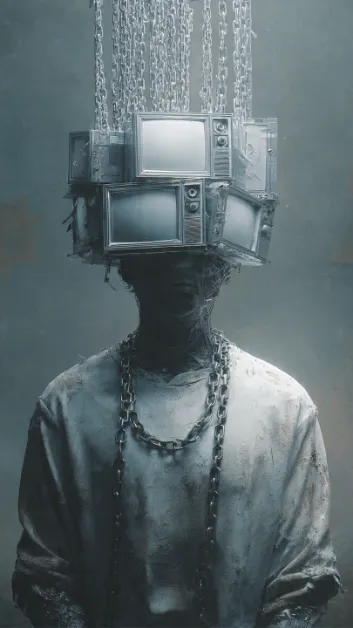
20 Jan, 2026
ABSTRACT
Although internet access is not textually recognised as a non-derogable right under international human rights law, contemporary state practice demonstrates that its suspension produces systemic violations of both derogable and non-derogable rights. This article advances the argument that internet access has evolved into a functionally non-derogable right, whose restriction is incompatible with the object and purpose of the International Covenant on Civil and Political Rights (ICCPR) and modern constitutional democracy. Drawing on international jurisprudence, UN treaty-body interpretation, regional African norms, and Ugandan constitutional law, the article demonstrates that blanket internet shutdowns—particularly during elections—constitute disproportionate, collective, and structurally rights-destructive measures that international law is presently ill-equipped to restrain.
I. INTRODUCTION: WHEN FORMAL CATEGORIES FAIL REALITY
International human rights law distinguishes between derogable and non-derogable rights, most prominently under Article 4 of the ICCPR. Internet access, falling within Article 19 (freedom of expression), is formally derogable. Yet modern state practice—especially nationwide internet shutdowns during elections and civil unrest—reveals a doctrinal failure: the suspension of internet access disables the infrastructure through which rights are exercised, monitored, and enforced.
This article argues that internet access has become functionally non-derogable: although not textually protected as such, its suspension necessarily enables indirect violations of non-derogable rights and collapses democratic governance itself.
II. THE CLASSICAL DEROGATION REGIME AND ITS HISTORICAL LIMITS
A. Article 4 ICCPR: Text and Intent
Article 4(1) ICCPR allows derogation only where a public emergency “threatens the life of the nation”, and only to the extent “strictly required by the exigencies of the situation”. Article 4(2) enumerates non-derogable rights, including the right to life (art 6) and freedom from torture (art 7.¹
In General Comment No 29, the Human Rights Committee (HRC) emphasised that derogation powers must be exceptional, temporary, proportionate, and consistent with the rule of law. ²
However, the derogation framework was constructed before the digital centralisation of civic life. It presupposed that rights could be limited without disabling the entire communicative order of society. That presupposition no longer holds.
B. The Core Structural Error
The derogation doctrine assumes that derogable rights can be suspended without undermining non-derogable rights. Internet shutdowns disprove this assumption. They operate not as targeted restrictions, but as infrastructural amputations.
International law protects rights atomistically; modern repression operates systemically.
III. INTERNET ACCESS AS A RIGHTS-ENABLING INFRASTRUCTURE
A. Article 19 ICCPR and Digital Expression
The HRC has made clear that Article 19 protects expression “through any media of one’s choice”, explicitly including internet-based communication. In General Comment No 34, the Committee warned that generic bans on internet access are incompatible with the Covenant. ³
The UN Human Rights Council has repeatedly affirmed that “the same rights that people have offline must also be protected online”. ⁴ Though formally soft law, these resolutions reflect settled interpretive consensus.
B. Internet Access as a Meta-Right
Internet access now functions as a meta-right, enabling:
political participation (art 25 ICCPR);
access to electoral information and scrutiny;
access to courts and legal remedies;
documentation of human rights abuses;
Civil society organisation and mobilisation.
A right whose suspension collapses the enjoyment of numerous others cannot coherently remain categorised as merely optional.
IV. INDIRECT VIOLATIONS OF NON-DEROGABLE RIGHTS
A. Right to Life (Article 6 ICCPR)
In General Comment No 36, the HRC clarified that Article 6 imposes positive obligations to address “general conditions in society” that may threaten life, including access to emergency information and services. ⁵
Internet shutdowns foreseeably disrupt:
emergency medical coordination;
humanitarian response;
reporting of lethal force.
Where a state knowingly creates such conditions, it engages responsibility under Article 6, even absent express derogation.
B. Freedom from Torture (Article 7 ICCPR)
The HRC has consistently held that incommunicado detention facilitates torture and may itself violate Article 7.⁶ Internet shutdowns enable such conditions by silencing oversight, journalism, and legal intervention.
Thus, non-derogable rights are functionally neutralised without being textually suspended.
V. PROPORTIONALITY AND JUDICIAL REJECTION OF BLANKET SHUTDOWNS
A. Proportionality Under International Law
Restrictions under Article 19(3) ICCPR must be lawful, necessary, and proportionate. Blanket shutdowns affecting millions fail this test by definition. ³
B. Comparative Constitutional Jurisprudence
In Anuradha Bhasin v Union of India, the Indian Supreme Court held that indefinite internet shutdowns violate constitutional proportionality and that access to the internet is integral to freedom of expression and trade. ⁷ This decision is widely cited in international digital-rights scholarship.
C. Regional African Jurisprudence
In Amnesty International Togo v Togo, the ECOWAS Court held that internet shutdowns violate freedom of expression and access to information and cannot be justified by vague national security claims. ⁸
VI. AFRICAN HUMAN RIGHTS NORMS
The African Commission on Human and Peoples’ Rights has condemned internet shutdowns in Resolution 362 (2016), affirming that they violate Articles 9 and 13 of the African Charter. ⁹ While soft law, such resolutions contribute to normative crystallisation.
VII. LOCALISING THE ANALYSIS: UGANDA
A. Uganda’s Constitutional Framework
The 1995 Constitution of Uganda guarantees:
freedom of expression (art 29(1)(a));
access to information (art 41);
political participation (art 38).
Although the Constitution allows limitations under Article 43, such limitations must be demonstrably justifiable in a free and democratic society.
Nationwide internet shutdowns—implemented through executive or regulatory directives—raise serious constitutional concerns:
1. Ultra vires action (absence of clear parliamentary authorisation);
2. Disproportionality (blanket restrictions);
3. Electoral distortion, undermining Article 38 rights.
Uganda’s jurisprudence on proportionality, particularly in Charles Onyango-Obbo v Attorney General, confirms that political expression enjoys heightened constitutional protection.
B. Uganda and International Obligations
Uganda is a party to the ICCPR and the African Charter. Under Article 287 of the Constitution, ratified treaties form part of Uganda’s legal obligations. Internet shutdowns, therefore, expose Uganda to international responsibility, even where domestic remedies remain limited.
VIII. TOWARDS A DOCTRINE OF FUNCTIONAL NON-DEROGABILITY
The classical derogable/non-derogable binary is obsolete. A third category has emerged:
Functionally non-derogable rights — rights whose suspension necessarily enables violations of formally non-derogable rights and collapses democratic accountability.
Internet access satisfies this test unequivocally.
IX. DOCTORAL THESIS INTEGRATION (GUIDANCE)
This chapter naturally fits within:
Chapter II – Theoretical Framework (Derogation and Rights Interdependence)
Chapter IV – State Practice and Structural Violations
Chapter V – Uganda as a Case Study in Digital Constitutionalism
Cross-reference with:
emergency powers,
rule of law theory,
African constitutionalism.
X. CONCLUSION
Although internet access remains formally derogable, it is no longer derogable in substance. A right whose suspension determines whether life is protected, torture exposed, and democracy exercised cannot remain subject to executive convenience.
International law now stands exposed:
Either it evolves to recognise functional realities,
or it continues to memorialise rights after they have been extinguished.
REFERENCES
1. ICCPR (1966) art. 4.
2. HRC, General Comment No. 29 (2001).
3. HRC, General Comment No. 34 (2011).
4. UNHRC Res A/HRC/32/L.20 (2016).
5. HRC, General Comment No. 36 (2018).
6. HRC, General Comment No. 20 (1992).
7. Anuradha Bhasin v. Union of India (2020) 3 SCC 637.
8. Amnesty International Togo v Togo (2020) ECW/CCJ/JUD/09/20.
9. ACHPR Res 362 (2016).
10. Constitution of Uganda (1995), arts. 29, 38, 41, 43.