President Ruto's Nationwide Crackdown on Small Businesses Operating in Kenya Rattles Foreign Nationals

A personal reckoning with Uganda's Anti-Homosexuality Act and what it means to exist in a country that has made your existence a crime.
.webp)
08 Mar, 2026
There is a photograph circulating online. It is not a photograph of me, not of my face, not of my hands, not of anything that could be mistaken for art or memory. It is a photograph of my front door. My gate. The place I call home, where I sometimes stand in the morning with a cup of tea, watching the street come alive. Someone took that photograph, uploaded it to a comment section, and let the crowd do the rest. The message was not written in words. It did not need to be. The message was, "We know where you live."
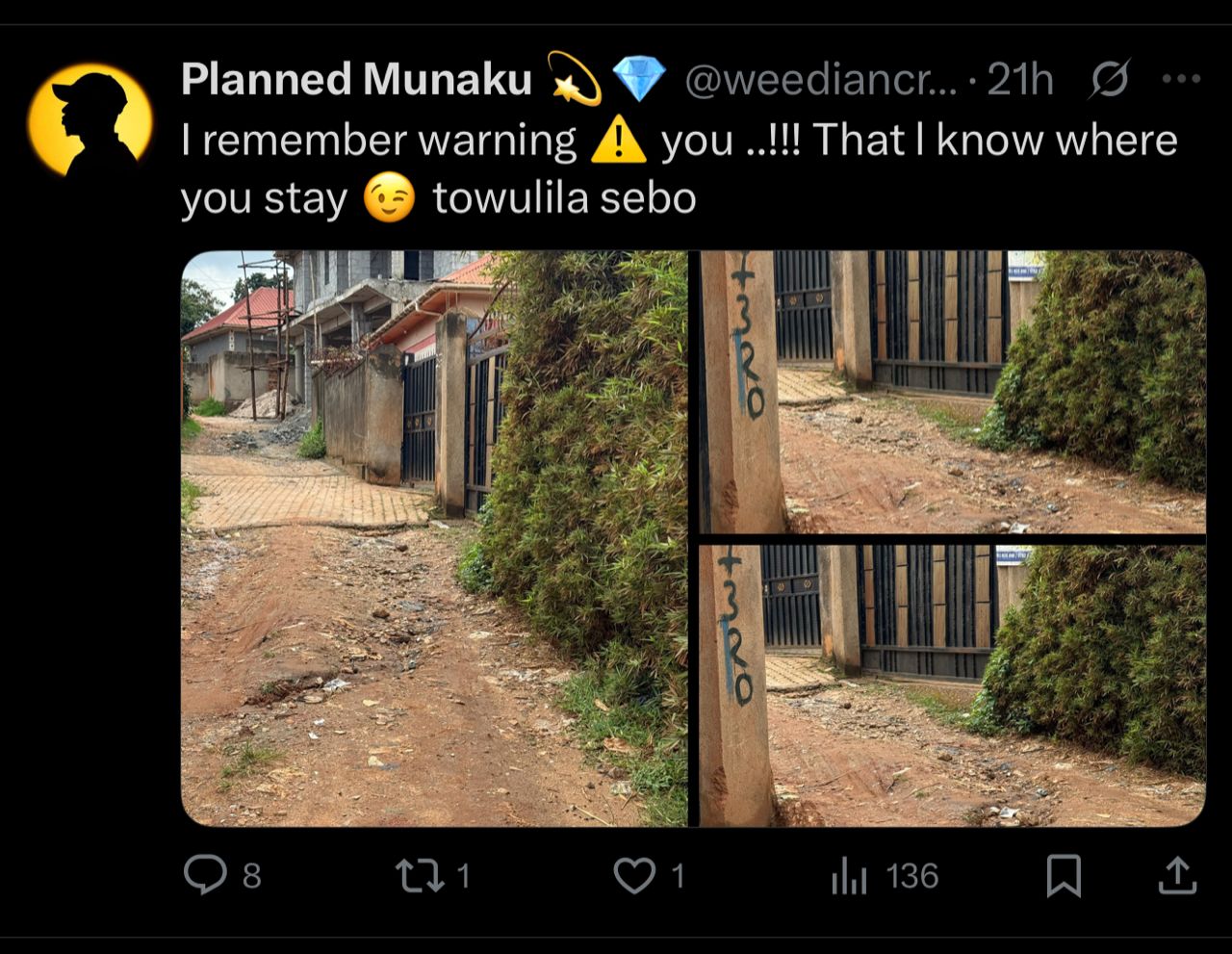
I would want you to sit with that for a moment. Not as a statistic. Not as a news headline that you scroll past on a Tuesday morning. I want you to imagine waking up and discovering that angry, emboldened strangers have mapped the outline of your private life and pinned it to the internet like a target. I want you to imagine looking at your own home and suddenly seeing it the way they see it: not as shelter, not as sanctuary, but as a location.
That is my life in Uganda now. That is the life of every LGBTQ person trying to exist in this country right now.
In May 2023, Uganda's President Yoweri Museveni signed the Anti-Homosexuality Act into law, one of the most severe pieces of legislation targeting LGBTQ people anywhere in the world. The law doesn't merely criminalise same-sex relationships. It imposes the death penalty for what it calls "aggravated homosexuality." It prescribes life imprisonment for the "offence" of homosexuality itself. It criminalises the promotion of LGBTQ rights, which means that this very article and posts I post online, in the eyes of Ugandan law, could be considered an act of criminality.
I have been an LGBTQ activist for years. I have spoken through my social media and conferences, and I have written and organised with organisations in Uganda to support LGBTQ people like me. And I want to be honest with you; I have never been as afraid as I am now. Not because I have hidden. Not because I have been silent. But the law has done something far more insidious than illegalise homosexuality. It has made me illegal. It has handed ordinary citizens a mandate to police, to report, to expose, and to attack. The law is not just a courtroom threat. It lives in every pair of eyes on the street.
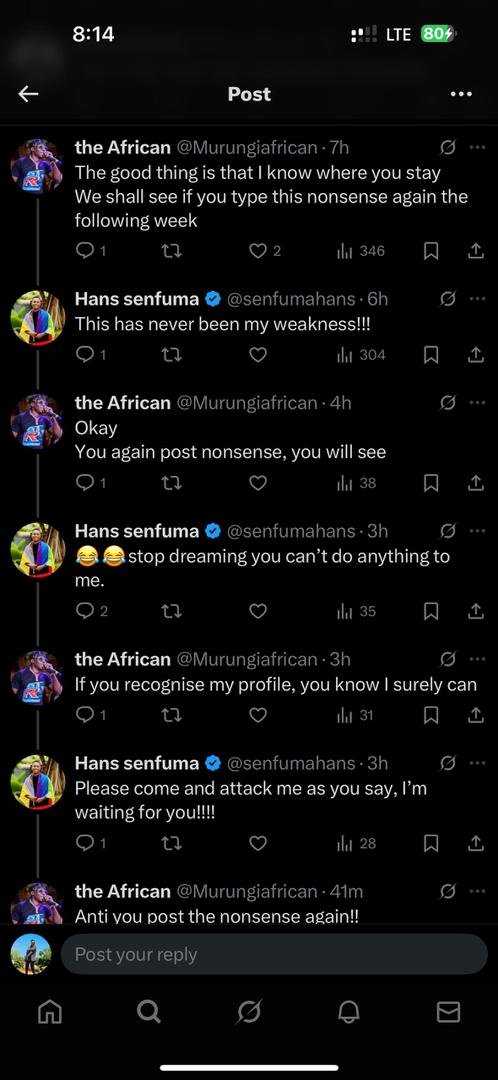
When a government puts that kind of power into the hands of a population already primed with fear, culture, and religious fervour, you do not just get arrested. You get photographs of your home posted in comment sections on social media. You get neighbours who watch your gate. You get a society that turns itself into an apparatus of surveillance, where anyone who suspects you can become your persecutor.
Wendy and Diana: Imprisoned for a Kiss
I think about Wendy and Diana a great deal. Two young women and real women, with real lives, with families and dreams and futures, who were arrested and imprisoned for sharing a kiss. Not for any crime that drew blood. Not for any act that took something from someone. They kissed. And for that, the Ugandan state decided they needed to be locked away.
I cannot tell you that story without my chest tightening. Because when I think of Wendy and Diana behind bars, I think of every other LGBTQ person in Uganda who lives knowing that the most tender, most human expression of who they are—a touch, a glance held too long, a moment of love that they thought was private—can be the thing that ends their freedom. It can be the thing that ends their life.
There is a cruelty in that which I struggle to put into words. Because it is not just the imprisonment; it is the message it sends to every young person in Uganda who is trying to understand themselves. It says, "Your love is a crime. Your body is a crime. Your existence, in its truest form, is something this nation cannot tolerate. And if you dare to let it show even for a moment, even in what you thought was a private space, we will come for you.”
People ask me sometimes—journalists, human rights workers, and well-meaning people on the other side of the world—what it feels like. And I always hesitate, because the honest answer is exhausting to explain. It is not the dramatic, cinematic fear of a single danger. It is a low, constant hum. It is the way I check my surroundings before I say certain things on the phone. It is the way I have learned to read a room: who is watching me, who is making notes, and who might know someone who might report me. It is a calculus I run every single day, almost unconsciously now, and that calculus takes something from me that I will never get back.
After the photograph of my home appeared online, I did not sleep properly for weeks. I would lie in the dark and listen to sounds outside that I had never paid attention to before. A car slowing down. A dog barking somewhere distant. The click of a gate. My home, the one place in the world that should feel inviolable, that should be mine, had been made foreign to me. They had not broken in. They had not touched anything. But they had reached through a screen and taken something that cannot be given back: the feeling of safety inside my own walls.
And I am one of those with an online platform. I have people who know my name, who would notice if I disappeared. I think every day about the LGBTQ Ugandans who have none of that, who are living this fear in complete isolation, who cannot speak, who cannot reach out, and who are enduring unimaginable things in silence because silence is the only thing keeping them alive.
What I desperately need the world to understand is that LGBTQ Ugandans are not a political abstraction. We are not a debating point in someone else's cultural war. We are human beings who were born into this land, who love this land, who have families and ambitions and scars and inside jokes and all the ordinary textures of human life. We did not choose to be a target. We simply chose, as every person eventually must, to be honest about who we are.
I am a gay man. I have known this about myself for as long as I have known anything about myself. There was no choice in it, just the same quiet recognition that every person has when they understand, in whatever form, who they are and who they love. And for that recognition for simply being willing to live truthfully in my own skin. I have been made to feel like a criminal in Uganda, the country I call home.
The Anti-Homosexuality Act did not create homophobia in Uganda. But it supercharged it. It gave institutional permission to every form of cruelty that had previously existed in the shadows. It told every person who wanted to hurt us that the state was on their side. And in doing so, it has made Uganda a fundamentally more dangerous place not just for LGBTQ people, but for any Ugandan who believes in justice, in human dignity, and in the idea that a government should protect its people rather than license their persecution.
I want to be clear about something: I am afraid. I say that openly, without shame, because I think there is a particular dishonesty in the image of the fearless activist, the person who stands in front of injustice with a straight back and no trembling. I tremble. There are mornings when I wake up, and the weight of all of it sits on my chest like something physical. I have thought about leaving. I will not pretend I have.
But I also think about the people who cannot leave. The young person in a small town who has no passport, no savings, no network, and no options. The woman whose family would rather see her dead than see her be who she is. The man who has lost his job, his housing, and his community because someone found out. These people are my people. And if I disappear, I become one more absence in a country that is already full of absences, people who fled, people who were silenced, and people who were made to vanish.
So, I stay. And I write. And I speak. And I try to make the world outside Uganda understand that what is happening here is not a cultural matter, not an internal affair to be respected at a polite diplomatic distance. It is a human rights catastrophe unfolding in slow motion, and the people living inside it need the world to see them.
I am not naive enough to believe that international condemnation alone will change a government that has demonstrated, again and again, its willingness to weaponise its own citizens' suffering for political gain. But I know that visibility matters. I know that when LGBTQ Ugandans see that the world knows their names, that people in London and New York and Nairobi and Paris are watching, it does something to the loneliness. It makes the silence a little less total.
I am asking you not to look away. I am asking you to remember Wendy and Diana. I am asking you to remember that somewhere in Kampala right now, a young person is staring at the wall of a room they are afraid to leave, wondering if anyone outside that room knows they exist. They do exist. They matter. Their lives have the same weight as every other life on this planet, and no government, no law, and no mob with a camera phone should be allowed to tell them otherwise.
As for me, I am still here. The photograph of my home is still out there somewhere, floating in the digital ether, a small act of intimidation by people who hoped it would be a large one. My gate is still the same. My window still catches the morning light the same way it always did.
I refuse to let them take that from me, too. I’m "gay," and that’s final.
Hans Senfuma is an LGBTQ rights activist and campaigner based in Kampala, Uganda. He has worked for years to document the human rights situation facing LGBTQ Ugandans and to advocate for decriminalisation and legal protection. He continues his work despite ongoing personal threats and intimidation.