
The Officer Who Makes the Office: Why Uganda Must Professionalise Leadership.
The future of Uganda cannot depend entirely on who wins elections; it must also depend on how well those who win are prepared to serve.
27 Nov, 2026
Share
Save
The office does not make the officer; it is the officer who makes the office. There is a fundamental question that continues to trouble my understanding of governance in Africa, particularly in Uganda: Why do we insist on professional training for almost every occupation, yet treat leadership as an exception? A person aspiring to become a teacher must enrol in a recognised teacher-training institution, acquire the necessary knowledge and competencies, and eventually qualify to teach.
A person aspiring to become a doctor must undertake years of medical education and clinical training before being entrusted with the responsibility of treating patients. An engineer must study engineering, while a lawyer must undertake legal education before being admitted into professional practice. These professions recognise a fundamental principle: responsibility requires preparation, knowledge and competence.
But what happens when it comes to leadership? In many of our communities, leadership is treated as an opportunity that one can assume primarily through political mobilisation, popularity, personal influence or appointment. An individual may ascend to a leadership position without having undertaken any systematic education in governance, public administration, institutional management, public finance, policy formulation or ethical leadership.
Once appointed or elected, the individual is expected to learn through experience, supplemented by occasional workshops and refresher training. This raises a fundamental governance dilemma: Why should the people entrusted with managing public institutions, making policies, allocating resources and determining the future of communities be among the least systematically prepared for the responsibilities they assume?
The leadership crisis is fundamentally a governance crisis. I strongly believe that one of Africa’s persistent governance challenges is the crisis of leadership. We frequently discuss corruption, institutional inefficiency, poor service delivery, unemployment, political instability and underdevelopment.
However, we sometimes fail to interrogate the human factor behind these challenges: the quality, preparation and competence of those entrusted with leadership. Institutions do not operate independently of the people who manage them.
Policies do not implement themselves. Public resources do not automatically translate into development. Every institution requires individuals who understand its mandate, appreciate their responsibilities and possess the competence to make decisions in the common interest.
An inadequately prepared leader may misunderstand the institution they lead, mismanage resources, undermine accountability mechanisms and make decisions without appreciating their long-term implications. Consequently, we cannot sustainably reform governance while neglecting the systematic preparation of the people who exercise authority.
The ancient Greek philosopher Plato, in his philosophical work The Republic, advanced the argument of the philosopher-king. He believed that those who govern should possess wisdom, knowledge of the good and a deep understanding of justice. In his view, political authority should be entrusted to individuals who have undergone rigorous intellectual and moral formation. Plato’s argument was not simply that educated people should rule. Rather, he challenged the assumption that political power should be pursued for personal ambition.
He envisioned leaders whose knowledge, discipline and understanding of justice would enable them to govern in the interest of society. I agree with the fundamental principle behind Plato’s argument, although I would approach its practical application differently.
Leadership should not become the exclusive privilege of philosophers, university graduates or an intellectual elite. Every citizen should retain the opportunity to participate in democratic leadership, irrespective of their social or educational background.
However, the responsibility of leadership must come with an obligation to acquire the necessary knowledge and competencies. A leader should understand the principles of governance, constitutionalism, public administration, financial accountability, human rights, conflict resolution, institutional management and ethical decision-making. Being a citizen is a qualification for participating in public life; it should not automatically be treated as evidence of preparedness to manage public institutions.
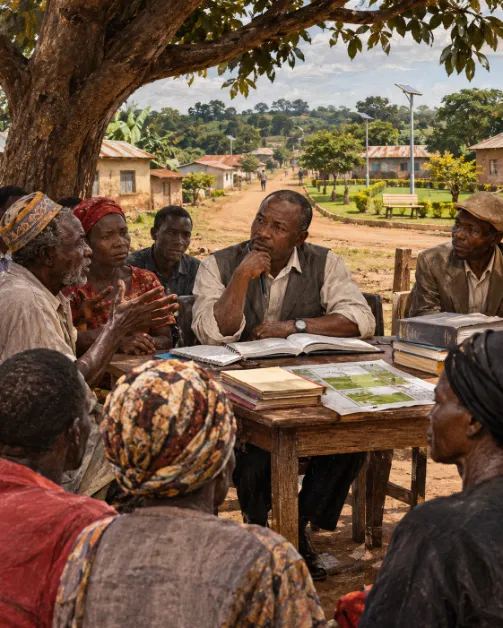
One of the mistakes we make is concentrating leadership development at the highest levels of government while neglecting the structures where leadership begins. In Uganda, leadership starts within communities.
From Local Council I to Local Council III, leaders interact directly with citizens, participate in local decision-making, mobilise communities and contribute to the delivery of public services.
These positions may appear small in the national political hierarchy, but their significance in community governance cannot be underestimated. A Local Council I chairperson, for example, must understand community mobilisation, dispute resolution, local governance structures, public accountability and the rights of citizens.
Yet how systematically do we prepare these individuals before entrusting them with such responsibilities? We should begin asking ourselves whether leadership education is ought to be an integral component of our local governance architecture.
Consider what is unfolding in Bamutakudde Village in Kyampisi Sub-county, Mukono District. In July 2026, the investigative journalist Solomon Serwanjja, a former news anchor, recipient of the BBC World News Komla Dumor Award, Executive Director of the African Institute for Investigative Journalism and a PhD candidate, contested as an independent for the LC1 chairpersonship. He won by a single vote, 106 to 105. He did not treat the office as a political trophy or a stepping stone. He treated it as a professional responsibility.
Within weeks of taking office, he convened a three-day retreat with his entire LC1 committee, facilitated by experts including a university professor and a UNICEF consultant, to draft a five-year strategic plan complete with annual budgets and clear performance indicators. He opened an official village bank account so that every shilling of community resources could be tracked. He established a five-member Council of Elders precisely to limit the power of the chairperson and enforce accountability.
Residents under his leadership mobilised murram and labour to upgrade village roads; the Mukono District Chief Administrative Officer visited, publicly praised the initiative and pledged technical support. A resident donated private land, and Bamutakudde opened its first community park, a green space with streams and trees where people now meet, rest and deliberate. Twelve solar street lights were installed in partnership with a private firm at half the usual cost, ending years of darkness on the main paths, with plans for fifty more.
Youth were organised into a landscaping and gardening company that received tools and created immediate jobs, with a target of employing at least fifteen young people in flower and compound work. Digital resident identity cards linked to a village communication system were rolled out to improve security and mobilisation. In one maternal health camp, the village hosted more than four hundred mothers from across the sub-county, distributing mama kits and safe-water filters and training on kangaroo care for premature babies. Tree-planting drives, regular community clean-ups and skills training in electrical work, plumbing, catering and beekeeping have become routine. Serwanjja’s own words capture the shift: it is time for educated and professional people to return to these grassroots positions rather than leave them to those without the preparation required for the work.
This is not an abstract theory. It is leadership made concrete, thrown into flesh and blood in one ordinary Ugandan village. The difference is not merely that Serwanjja is educated; it is that he approaches the office with the same seriousness a doctor brings to a clinic or an engineer to a bridge.
He understands that the LC1 chairperson is the first point of contact between citizens and the state, the person who must resolve disputes, monitor government programmes such as the Parish Development Model, mobilise labour, safeguard resources and plan for the future of households that have nowhere else to turn.
Because he possesses both the intellectual tools of investigative journalism and a deliberate commitment to public administration, the village is visibly changing: safer roads, light at night, organised youth employment, transparent finances, a public green space, digital records and a culture of collective work. Other villages can see what is possible when the person who occupies the office already understands the responsibilities attached to it.
I propose that Uganda considers establishing a structured and progressive leadership education and certification framework for individuals aspiring to occupy public leadership positions. This should not create barriers that exclude citizens because of poverty or limited formal schooling. Instead, it should establish minimum competency standards that every public leader must satisfy, delivered through accessible, affordable community-based and distance-learning programmes.
At the grassroots level of LC1 and LC2, candidates should demonstrate basic literacy, civic awareness and an understanding of community governance, conflict resolution, human rights, transparency and basic public financial literacy. At LC3, the requirements should rise to recognised certification in public administration, local government finance, development planning and administrative law.
At higher levels, the demands should become still more rigorous, with continuous professional development, ethical standards and performance assessment. A competent doctor or engineer who wishes to lead must still acquire the distinct competencies of public leadership; professional expertise and leadership competence remain complementary but different capabilities.
Education alone is never enough. Uganda and Africa have seen highly credentialed individuals fail the tests of integrity and public spirit. Therefore, any professionalisation of leadership must deliberately cultivate moral responsibility, servant leadership, respect for constitutionalism and commitment to the common good. Continuous development, ethical codes and accountability mechanisms must accompany formal training. Leadership must be understood as a public trust rather than a personal entitlement.
Concerns that educational requirements could shut out rural or historically disadvantaged citizens are legitimate and must be answered by making the training genuinely accessible. The goal is not to manufacture an academic elite.
The goal is to produce competent, ethical and accountable public servants who can turn villages such as Bamutakudde into living proof that governance improves when leaders are prepared. The tragedy of our system is not simply that some leaders lack academic qualifications; it is that we have never institutionalised the idea that leadership itself requires deliberate preparation.
We cannot continue demanding professional competence from teachers, doctors, engineers and lawyers while treating the management of public institutions as something that can be mastered through political experience alone. The office does not make the officer. The officer makes the office. But the officer must first understand the responsibilities, principles and institutional obligations attached to the office. If we want better governance, we must invest in better-prepared leaders.
The future of Uganda cannot depend entirely on who wins elections; it must also depend on how well those who win are prepared to serve. Perhaps it is time for Uganda and Africa at large to stop treating leadership as an occupation that requires no professional preparation and begin treating it as a discipline that demands continuous intellectual, ethical and practical development.
The question is no longer whether Uganda needs better leaders. The question is whether we are prepared to build a system that deliberately produces them. Leadership is not merely the privilege of occupying an office; it is the responsibility of possessing the knowledge, character and competence to serve the people.
About the author
My name is Abeson Alex, a student at St. Lawrence University, whose leadership journey reflects a deep commitment to service, integrity, and community transformation. I have held various leadership positions, including UNSA President of St. Charles Lwanga College Koboko, UNSA District Executive Council Speaker, UNSA Speaker for West Nile, and West Nile Representative to the UNSA National Executive Council. I also served as YCS Section Leader of St. Charles Lwanga College Koboko, YCS Federation Leader for Koboko District, and Koboko YCS Coordinator to the Diocese. In addition, I was a Peace Founder and Security Council Speaker for the peace agreement between St. Charles Lwanga College Koboko and Koboko Town College. I served as Debate Club Chairperson of St. Charles Lwanga College Koboko, District Debate Coordinator, and West Nile Debate Coordinator to the National Debate Council (NDC). All the above were in 2022-2023. My other leadership roles include Chairperson of the Writers and Readers Club, UNSA Representative in the District Youth Council, Students’ Advocate for Reproductive Health, and Students’ GBV Advocate for the District. Within the Church, I served as Chairperson of the Altarservers of Ombaci Chapel, Parish Altarservers Chairperson of Koboko Parish, and Speaker of the Altarservers Ministry in Arua Diocese. Current Positions: Currently, I serve as the Diocesan Altarservers Chairperson of Arua Catholic Diocese, Advisor of the Altarservers Ministry for both Ombaci Chapel and Koboko Parish, and Programs Coordinator of Destined Youth of Christ (DYC-UG). I am also a Finalist in the Global Unites Oratory Competition 2024, the current Debate Club Speaker and President of St. Lawrence University Koboko Students Association. Additionally, I am the Youth Chairperson of Lombe Village, Midia Parish, and Midia Sub-county in koboko district. I am one whose life has been revolving around ensuring that in our imperfections as humans, we can promote transparency, righteousness, and morality to attain perfection. I am inspired by the guiding words: Mobilization, Influence, Engagement, and Advocacy. I share my inspiration across the fields of Relationships, Career, Governance, Faith, Education, Spirituality, Anti-corruption, Environmental Conservation, Business & Self-Reliance, politics , Administration,Financial Literacy, Religion, and Human Rights. Thanks for the encounter.