The Strength of a Leader Lies in Letting Go
Why clinging to power weakens nations—and letting go heals them
04 Dec, 2025
Share
Save
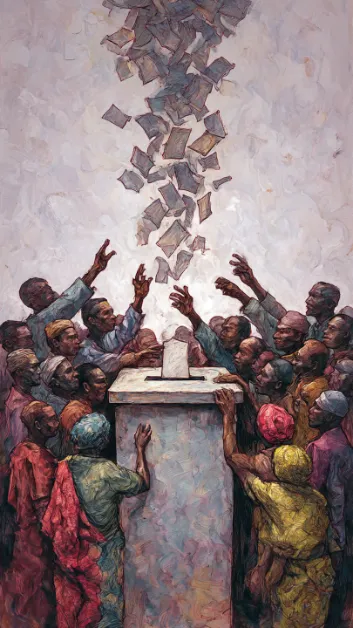
History often deceives us into believing that strength in leadership is defined by control, military might, and the ability to suppress dissent. Yet true strength lies not in domination, but in restraint; not in fear, but in trust; not in ruling forever, but in knowing when to leave.
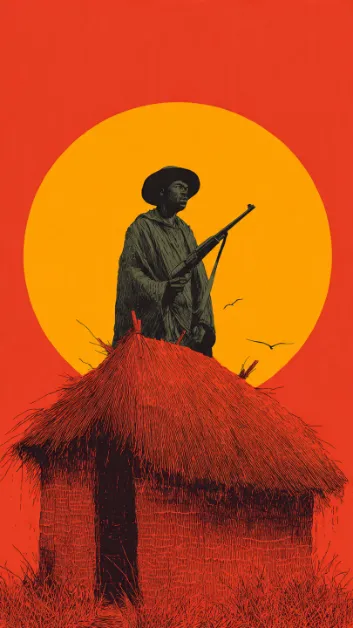
In Uganda today, the narrative of strength has been distorted. President Yoweri Museveni is often portrayed as one of Africa’s strongest leaders—feared for his military background and longevity in power. But this perception of strength, built on historical fear and military discipline, has trapped the nation in a cycle of silence. People no longer critique out of ignorance but out of caution. History has conditioned Ugandans to endure rather than to engage.
Redefining Strength and Leadership
A truly strong leader is not the one who commands the army, silences critics, or manipulates institutions to stay in power. The strongest leader is one who listens, acts on the will of the people, and leaves power peacefully when the time comes. Such a leader walks freely among citizens without the need for an armoured convoy, because respect and love protect more effectively than guns ever can.
Leadership, at its moral core, is selflessness—the ability to see beyond oneself and one’s legacy. It is not about preserving one’s power but about preserving the nation’s dignity. Leadership is not measured by how long one stays in power, but by how well one prepares the people to live without them.
The Myth of “Protecting the Gains”
Uganda’s political class often justifies indefinite rule under the rhetoric of “protecting the gains of the revolution.” But what gains are worth protecting if the citizens are disgruntled, impoverished, and uncertain of their future? What gains exist when education declines, poverty deepens, and economic inequality widens, benefiting foreigners more than nationals?
The true protection of gains does not come from staying in power but from building systems that can function beyond one person. It is not the years in office that safeguard development, but the strength of institutions, the rule of law, and peaceful transitions. A nation that fears change has already lost its freedom.
Peace as the Ultimate Legacy
Peace is not the absence of war but the presence of justice and confidence in governance. A peaceful handover of power is the ultimate expression of leadership maturity. It ensures continuity without conflict and unity without coercion. Infrastructure can be rebuilt after a war, but national trust, once broken, takes generations to restore.
Therefore, the greatest protection of Uganda’s gains would be a peaceful transition of power—one that reassures the nation of stability, unity, and the preservation of progress. Peace is the ultimate infrastructure, and it cannot be built on fear or repression.
Unity in Diversity, Not Division in Fear
What gains exist when Ugandans are divided along political, ethnic, or social lines? Unity in diversity has been replaced by suspicion and silence. True leadership nurtures collective identity, not selective loyalty. The dream of national unity can only thrive when every citizen, regardless of background, feels seen, heard, and valued.
Conclusion: The Courage to Let Go
History will not remember the number of years a leader stayed in power, but the quality of the years they served. It will not remember the size of their convoy, but the warmth of their people’s trust. The strongest leader is not the one who rules longest but the one who leaves power freely, peacefully, and proudly, knowing the nation is stronger in their absence.
The legacy of greatness is not written in buildings or armies, but in the hearts of free, united, and hopeful citizens.
About the author
My name is Abeson Alex, a student at St. Lawrence University, whose leadership journey reflects a deep commitment to service, integrity, and community transformation. I have held various leadership positions, including UNSA President of St. Charles Lwanga College Koboko, UNSA District Executive Council Speaker, UNSA Speaker for West Nile, and West Nile Representative to the UNSA National Executive Council. I also served as YCS Section Leader of St. Charles Lwanga College Koboko, YCS Federation Leader for Koboko District, and Koboko YCS Coordinator to the Diocese. In addition, I was a Peace Founder and Security Council Speaker for the peace agreement between St. Charles Lwanga College Koboko and Koboko Town College. I served as Debate Club Chairperson of St. Charles Lwanga College Koboko, District Debate Coordinator, and West Nile Debate Coordinator to the National Debate Council (NDC). All the above were in 2022-2023. My other leadership roles include Chairperson of the Writers and Readers Club, UNSA Representative in the District Youth Council, Students’ Advocate for Reproductive Health, and Students’ GBV Advocate for the District. Within the Church, I served as Chairperson of the Altarservers of Ombaci Chapel, Parish Altarservers Chairperson of Koboko Parish, and Speaker of the Altarservers Ministry in Arua Diocese. Current Positions: Currently, I serve as the Diocesan Altarservers Chairperson of Arua Catholic Diocese, Advisor of the Altarservers Ministry for both Ombaci Chapel and Koboko Parish, and Programs Coordinator of Destined Youth of Christ (DYC-UG). I am also a Finalist in the Global Unites Oratory Competition 2024, the current Debate Club Speaker and President of St. Lawrence University Koboko Students Association. Additionally, I am the Youth Chairperson of Lombe Village, Midia Parish, and Midia Sub-county in koboko district. I am one whose life has been revolving around ensuring that in our imperfections as humans, we can promote transparency, righteousness, and morality to attain perfection. I am inspired by the guiding words: Mobilization, Influence, Engagement, and Advocacy. I share my inspiration across the fields of Relationships, Career, Governance, Faith, Education, Spirituality, Anti-corruption, Environmental Conservation, Business & Self-Reliance, politics , Administration,Financial Literacy, Religion, and Human Rights. Thanks for the encounter.