When Did Elections Become Uganda’s Annual Death Rehearsal?
A Democracy That Bleeds Before It Speaks
29 Nov, 2025
Share
Save
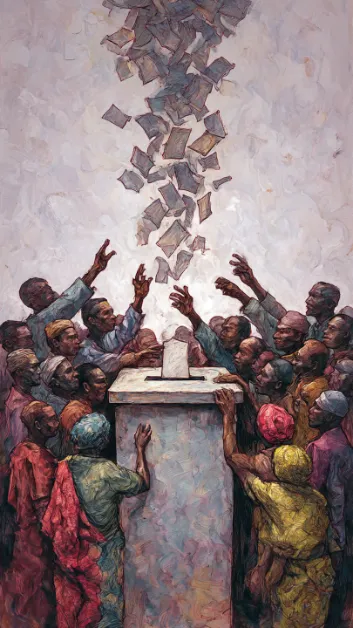
Uganda has entered that familiar season again—the season where political excitement walks hand in hand with fear and where democracy is escorted by armoured vehicles. Iganga has now offered the country another grim reminder: our elections have become less of a civic exercise and more of a national pilgrimage to the morgue.
Shortly after Bobi Wine finished addressing a crowd in Iganga, security forces opened fire—live ammunition, not warnings—turning a political gathering into a survival test. One man, Meshach Okello, didn’t make it home. Several others were left with injuries that will be carried long after the rally posters fade.
And so, the country asks:
How did elections become a journey toward the grave?
Ugandans prepare for voting the way other nations prepare for calamities.
You iron your clothes, carry your ID, and quietly review your burial options. Democracy here whispers, “Choose your leader… if you survive choosing.”
Why does gunfire appear every time politics appears?
The official explanation is always predictable—the crowd was “unruly,” the forces acted in “self-defence,” and “investigations are underway.” Ugandans can recite these lines the way schoolchildren recite the national anthem. Meanwhile, bullets continue to rain on the unarmed.
But since when did listening to a politician become an act of rebellion?
Are our security forces protecting us—or perfecting the art of intimidation?
Everywhere Bobi Wine goes, security forces trail him with suspicious enthusiasm. Their presence feels less like protection and more like an announcement: “Hope is dangerous. Keep your distance.”
They arrive faster than ambulances and shoot faster than they speak. In Uganda, a rally is not a political event—it is an obstacle course. If you attend, you pray you leave with the same number of holes you came with.
Who Will Remember Meshach Okello? And who will be next?
Meshach Okello becomes another name in the quiet, expanding graveyard of Ugandans killed during political seasons. He joins the list of citizens whose only mistake was believing they had a right to participate in their country’s future. Tomorrow, another name may join him. Elections here do not simply choose leaders; they choose victims.
What kind of democracy requires a body count to function?
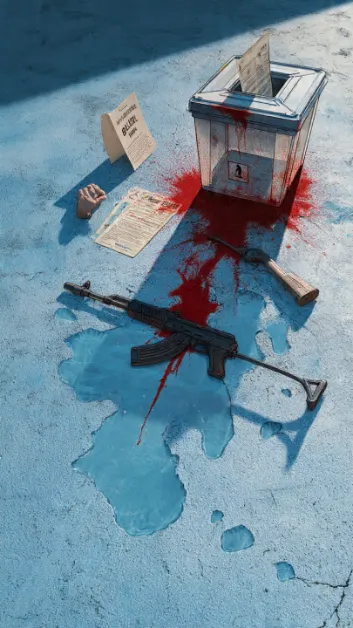
Uganda’s democracy has a unique operating system—one where the ballot and the bullet share equal authority. Where fear is a strategy, and violence is a language.
Citizens don’t just vote; they survive the voting. Leaders don’t just campaign; they command the guns. And every election season, we rehearse tragedy instead of progress.
How Long Can a Country Call Itself Peaceful While Behaving Like a Battlefield?
If attending a rally automatically places you in the crosshairs, then something fundamental has broken. Elections are supposed to be moments of national expression—not national trauma.
Until Uganda can hold rallies without bloodshed, until political choice no longer feels like a death sentence, we will continue living in a country where democracy is not practised—it is feared.
And Iganga’s message is painfully clear:
Election season is open.
Walk carefully.
Run quickly.
And pray without ceasing.
About the author
Abdullatif Eberhard Khalid (The Sacred Poet) is a Ugandan passionate award-winning poet, Author, educator, writer, word crosser, scriptwriter, essayist, content creator, storyteller, orator, mentor, public speaker, gender-based violence activist, hip-hop rapper, creative writing coach, editor, and a spoken word artist. He offers creative writing services and performs on projects focused on brand/ campaign awareness, luncheons, corporate dinners, date nights, product launches, advocacy events, and concerts, he is the founder of The Sacred Poetry Firm, which helps young creatives develop their talents and skills. He is the author of Confessions of a Sinner, Vol. 1, A Session in Therapy, and Confessions of a Sinner, Vol. 2. His poems have been featured in several poetry publications, anthologies, blogs, journals, and magazines. He is the editor of Whispering Verses, Kirabo Writes magazine issue 1 and edits at Poetica Africa.