When the Voice of Youth Becomes an Echo
Why Uganda’s National Youth Council Is Punching Below Its Weight
17 Aug, 2026
Share
Save
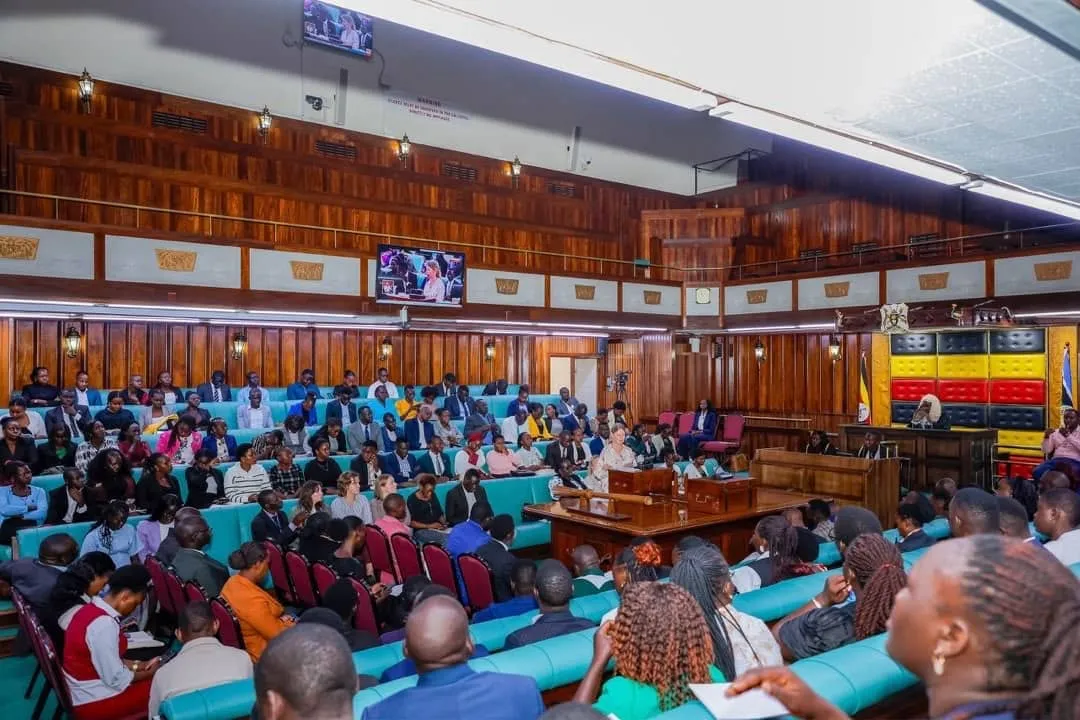
The recent 2026 Annual General Meeting of Uganda’s National Youth Council should have been a moment of reflection, accountability, dialogue, and collective determination. It was supposed to bring together youth leaders from districts across the country—the chairpersons, secretaries for finance, secretaries for female affairs, representatives of civil society, NGO leaders, and other stakeholders—to sit together and discuss the challenges confronting Uganda’s young people.
Instead, the council ended in chaos without any conversations or adopted resolutions. That should concern every young Ugandan like me who believes that youth participation matters.
The immediate reaction from many youth leaders at Nysambia Gardens has been to blame the National Executive Council. Some have alleged that hooliganic youths were deliberately brought in and intoxicated to disrupt the meeting. Others have questioned why there was no clear national work plan presented by the National Executive Council for scrutiny, discussion, and adoption so that district-level and national youth programmes could be coordinated.
Others said that the council was deliberately delayed so that it would not happen since money was already given; hence, no worries.
These allegations must be investigated rather than casually accepted as facts. But beyond the question of who caused the disorder lies a much deeper question: Why does the National Youth Council repeatedly struggle to live up to the weight of the institution it is supposed to be?
I believe the answer is bigger than one meeting, one NEC or one group of youth leaders. It is about the system in which our youth leadership operates.
The problem is bigger than the National Executive Council
The National Youth Council is arguably supposed to be the most influential institutional youth body in Uganda. Not the Uganda National Students Association. Not the National Youth Parliament, which is convened through civil society and partner organisations. Not any other youth platform.
The National Youth Council is a statutory structure of government designed to provide young people with an organised platform through which they can participate in governance, articulate their concerns, and engage the state.
It is funded. It has structures from the grassroots to the national level. It has elected representatives.
So why is it repeatedly associated with chaos rather than constructive dialogue?
Why is it associated with tokenism?
Why is it associated with commercialisation?
Why are youth leaders sometimes more concerned about facilitation than service?
And why have we seemingly failed to build a culture where a National Youth Council meeting is regarded as a serious democratic institution where the representatives of millions of young Ugandans come to deliberate?
These are questions we cannot answer by simply pointing fingers.
When leadership becomes transactional.
One of the most disturbing observations from the recent council was what happened after youth leaders received their money.
Some delegates reportedly left almost immediately, moving towards places such as the Old Kampala taxi and bus terminals, rather than remaining to participate fully in the deliberations.
That leaves me with one uncomfortable question:
Why did you come?
You came as a representative of young people from your district. You came to present the challenges affecting young people in your region. You came to listen, deliberate, and contribute to solutions.
But if receiving money becomes the moment at which participation ends, what does that say about our leadership?
This is where we must be courageous enough to question not only the system but also ourselves.
Does it mean that the quality of some of our youth leaders is declining?
I believe it does.
But I also believe that poor leadership quality is partly produced by the environment in which leadership is recruited, prepared, and rewarded.
When young people are repeatedly told that political participation means money, allowances, facilitation, and personal benefits, it becomes easy for leadership to become transactional.
Instead of asking, “What can I do for the young people I represent?” the leader begins to ask, “What am I getting from this?”
That is dangerous.
The quality of leadership begins at the grassroots
We cannot expect the National Youth Council to produce excellent national leadership when the leadership pipeline underneath it is weak.
The question, therefore, should not only be: What is wrong with the NEC?
We must also ask:
What is happening at the village, parish, sub-county, and district levels?
How are young people being prepared to become leaders?
How much civic education are they receiving?
Do they understand their spaces within local government?
Do they understand the roles of youth representatives?
Do they know how local government works?
Do they understand budgets, public policy, accountability, and advocacy?
Do they know how to peacefully demand services?
My concern is that many young people do not.
I would argue that a very large proportion of Ugandan youth do not understand the political and civic spaces available to them—from the village and parish to the sub-county and district.
And when young people do not understand these spaces, they cannot effectively demand accountability from those occupying them.
This is why sometimes young people in a district will deny that a particular person is their youth leader. The person may have been elected or appointed through a recognised process, but the people he or she supposedly represents do not know them, do not understand their mandate, and have never been meaningfully engaged.
That is a failure of civic education.
The political environment matters.
We must also be honest about the political environment in which youth leadership operates.
The NRM is a political party with a significant role in Uganda's political system. But its long political dominance has also created an environment in which political structures and state structures can sometimes appear intertwined.
This becomes problematic when political mobilisation does not sufficiently translate into civic education.
I have personally encountered situations where youth leaders are told, “There is money.”
That language matters.
When young people enter leadership hearing more about money than service, they are being socialised into the wrong understanding of leadership.
The problem becomes worse when recruitment and electoral processes are not sufficiently open and transparent.
Sometimes people working within local structures, mobilisation structures, electoral processes, or other political spaces reportedly reach out to people they already know instead of broadly announcing opportunities and allowing competent young people to participate.
The result is predictable.
We end up with leaders who may occupy positions but lack the knowledge, ability, and confidence required to articulate the concerns of the people they represent.
They cannot speak.
They cannot formulate arguments.
They cannot interrogate policy.
They cannot demand accountability.
They cannot confidently present the problems of their constituents.
And when they cannot articulate issues through dialogue, frustration can easily turn into disorder.
The tragedy of tokenism.
This is where tokenism becomes dangerous.
You can create a youth council, hold elections, give young people positions, and organise meetings, but still fail to create meaningful youth participation.
A young person sitting in a government hall does not automatically mean that young people are participating in governance.
Representation without capacity is tokenism.
Participation without influence is tokenism.
Leadership without civic knowledge is tokenism.
And facilitation without accountability can become commercialisation.
We must therefore ask ourselves whether we are building young citizens who understand governance or simply producing young people who occupy political spaces.
Why can the National Youth Parliament do better?
One institution I genuinely admire in this regard is the National Youth Parliament, often organised through Faraja Africa and its Ugandan partners.
It is not perfect, but it demonstrates what youth dialogue can look like.
Young people come together.
They articulate issues.
They debate.
They listen.
They challenge one another.
They present arguments.
They demand solutions.
They engage responsibly.
And importantly, organisations such as Faraja Africa and its partners have also taken youth empowerment beyond the conference room and into communities.
That grassroots connection is important.
The government, through the National Youth Council, has resources and institutional legitimacy that many civil society organisations do not have. So why can't the National Youth Council learn from approaches that are already working?
Why can't it institutionalise serious civic education?
Why can't it strengthen youth leadership training?
Why can't it create spaces where young people learn how to dialogue before they are expected to lead?
Why can't it organise councils where people come prepared to speak sense, present the challenges of their constituencies, and demand solutions?
The National Youth Council should not be the body learning leadership from everyone else.
It should be setting the standard.
The “New Deal” must mean something.
The current Chairperson of the National Executive Council came with a powerful promise: a “New Deal for the Youth.”
But I am perturbed.
What exactly is this New Deal?
Because if the old problems remain—chaotic councils, weak dialogue, limited civic education, poor coordination, commercialisation and weak accountability—then young people have every right to ask what has actually changed.
A new slogan cannot produce a new reality.
A New Deal must be visible in institutions.
It must be visible in the quality of youth leaders and their engagements.
It must be visible in grassroots civic education.
It must be visible in transparent planning.
It must be visible in accountability.
It must be visible in meaningful dialogue.
And above all, it must be visible in the lives of ordinary young people.
We need work plans, not just meetings
One of the legitimate concerns raised following the recent council is the absence of a clear work plan presented for scrutiny and adoption.
This is fundamental.
If districts are expected to work with national structures, there must be coordination.
A national youth leadership body should be able to say the following:
This is our annual plan.
These are our priorities.
This is our budget.
These are the programmes we intend to implement.
These are the responsibilities of the districts.
These are the mechanisms through which we will measure success.
And youth leaders should have an opportunity to scrutinise, question, amend, and adopt such plans.
That is what institutional democracy looks like.
Accountability does not require violence.
But there is another side of this conversation that young people must hear.
If you come to a National Youth Council meeting because you want accountability, do not destroy the space in which accountability is supposed to happen by being unruly and noisy.
Do not become violent.
Do not become chaotic.
Do not allow people to manipulate your legitimate grievances into disorder.
Peaceful dialogue is not weakness. Silence and calmness are a strategy.
It is strength.
The current mayor of Arua City, His Lordship Alionzi Lawrence Dangote, has spoken about how colonisation was facilitated through the quality of conversations and negotiations that took place peacefully and intellectually, including the Berlin Conference.
The lesson I draw is simple: the quality of a conversation can shape the future of societies.
If we want to change the lives of young Ugandans, we must improve the quality of our conversations and the culture of engagement at the National Youth Council.
The loudest person is not necessarily the strongest leader.
The most violent person is not necessarily the most courageous.
And the most chaotic room is not necessarily the room producing the most powerful demands.
Most times the strongest demand is made by people sitting quietly, presenting evidence, asking difficult questions, and refusing to be distracted from the issues.
The head must not be rotten.
If the National Youth Council is supposed to lead the youth structures of Uganda, then its head cannot be disorganised.
The other youth bodies should complement and support the National Youth Council.
The National Youth Council should be setting the standards of organisation, discipline, diplomacy, accountability, and constructive engagement.
And if the head is weak, the entire body suffers.
But we should also understand that the head cannot function properly if the entire leadership pipeline is weak.
That is why reform must begin from the grassroots.
We need civic education.
We need youth leadership training.
We need transparent elections and recruitment.
We need leaders who understand their mandates.
We need leaders who can speak.
We need leaders who can listen.
We need leaders who can disagree without becoming enemies.
We need leaders who can demand accountability without destroying institutions.
We need leaders who understand that public office is a responsibility before it is a privilege.
Should politicians be legally bound to their manifestos?
This raises another fundamental question.
Should political leaders be held legally accountable for failing to implement their manifestos?
There is certainly a case for stronger accountability mechanisms, but we should be careful about turning every political promise into a simple legal contract. Governments face changing circumstances, budget limitations, and unforeseen events.
However, political promises should not disappear after elections.
There should be stronger mechanisms for citizens to track them.
Leaders should report periodically.
Budgets should be scrutinised.
Performance should be measured.
Citizens should know what was promised, what was achieved, what was not achieved, and why.
A manifesto should not be a campaign document that expires on election day.
It should become a public accountability document.
Young people must also change
Ultimately, we cannot demand better leaders while refusing to become better citizens.
Young people must stop allowing themselves to be mobilised only by money.
We must stop treating every political gathering as an opportunity to collect fees.
We must stop allowing politicians to define our worth by what they give us.
We must demand knowledge.
We must demand transparency.
We must demand accountability.
But we must also prepare ourselves to lead.
If you want to become a youth leader, learn public policy.
Understand your local government.
Read budgets.
Understand the Constitution.
Know your mandate.
Know the problems affecting your constituents.
Learn how to debate.
Learn how to negotiate.
Learn how to organise.
Learn how to disagree peacefully.
And when you finally enter that council hall, remember why you are there.
You are not there merely as Abeson, John, Mary, or David.
You are there because someone entrusted you with their voice.
There is still hope.
I remain deeply concerned by what happened at the recent National Youth Council.
But I am not hopeless.
There is still hope.
The National Youth Council can be transformed.
The youth leadership pipeline can be strengthened.
Civic education can be expanded.
Work plans can be developed and scrutinised.
Leaders can become more accountable.
Young people can learn to participate responsibly.
And the culture of political participation can move from transaction to service.
My appeal to the National Executive Council is simple: sit down and reflect deeply on the direction of Uganda's young people.
If the promise is a New Deal for the Youth, then let that New Deal be demonstrated through action.
My appeal to youth leaders is equally simple: when you come to council, come prepared to represent.
Come with the problems of your people.
Come with evidence.
Come with solutions.
Come ready to listen.
Come ready to challenge.
Come ready to demand accountability.
But most importantly, come peacefully. If you want your voices and cries to be heard, avoid noise and hooliganic approaches; it is the patient and the peaceful speakers who always win the mind games.
And my appeal to young people across Uganda is this:
Do not surrender your political spaces to chaos.
Do not allow money to become the measure of your leadership.
Do not allow manipulation to replace civic consciousness.
Do not believe that the system is so rotten that nothing can change.
Systems are changed by people who understand them, organise within them, challenge them peacefully, and build better alternatives.
The National Youth Council is too important to become another stage for political chaos.
It is too important to become a marketplace for facilitation.
It is too important to become a theatre of tokenism.
It must become a serious institution of youth representation, civic education, accountability, and democratic dialogue.
Because Uganda does not merely need young people occupying leadership positions. Uganda needs young people who understand why those positions exist. And if we truly want a New Deal for Uganda's youth, then perhaps the first thing we must change is not the young people sitting in the council hall.
We must change the culture of leadership that brought them there.
About the author
My name is Abeson Alex, a student at St. Lawrence University, whose leadership journey reflects a deep commitment to service, integrity, and community transformation. I have held various leadership positions, including UNSA President of St. Charles Lwanga College Koboko, UNSA District Executive Council Speaker, UNSA Speaker for West Nile, and West Nile Representative to the UNSA National Executive Council. I also served as YCS Section Leader of St. Charles Lwanga College Koboko, YCS Federation Leader for Koboko District, and Koboko YCS Coordinator to the Diocese. In addition, I was a Peace Founder and Security Council Speaker for the peace agreement between St. Charles Lwanga College Koboko and Koboko Town College. I served as Debate Club Chairperson of St. Charles Lwanga College Koboko, District Debate Coordinator, and West Nile Debate Coordinator to the National Debate Council (NDC). All the above were in 2022-2023. My other leadership roles include Chairperson of the Writers and Readers Club, UNSA Representative in the District Youth Council, Students’ Advocate for Reproductive Health, and Students’ GBV Advocate for the District. Within the Church, I served as Chairperson of the Altarservers of Ombaci Chapel, Parish Altarservers Chairperson of Koboko Parish, and Speaker of the Altarservers Ministry in Arua Diocese. Current Positions: Currently, I serve as the Diocesan Altarservers Chairperson of Arua Catholic Diocese, Advisor of the Altarservers Ministry for both Ombaci Chapel and Koboko Parish, and Programs Coordinator of Destined Youth of Christ (DYC-UG). I am also a Finalist in the Global Unites Oratory Competition 2024, the current Debate Club Speaker and President of St. Lawrence University Koboko Students Association. Additionally, I am the Youth Chairperson of Lombe Village, Midia Parish, and Midia Sub-county in koboko district. I am one whose life has been revolving around ensuring that in our imperfections as humans, we can promote transparency, righteousness, and morality to attain perfection. I am inspired by the guiding words: Mobilization, Influence, Engagement, and Advocacy. I share my inspiration across the fields of Relationships, Career, Governance, Faith, Education, Spirituality, Anti-corruption, Environmental Conservation, Business & Self-Reliance, politics , Administration,Financial Literacy, Religion, and Human Rights. Thanks for the encounter.