Agenda of the Stomach, Not of the People: The Crisis in Cameroon
True liberation begins when leadership feeds the nation’s conscience, not its appetite.
08 Nov, 2025
Share
Save
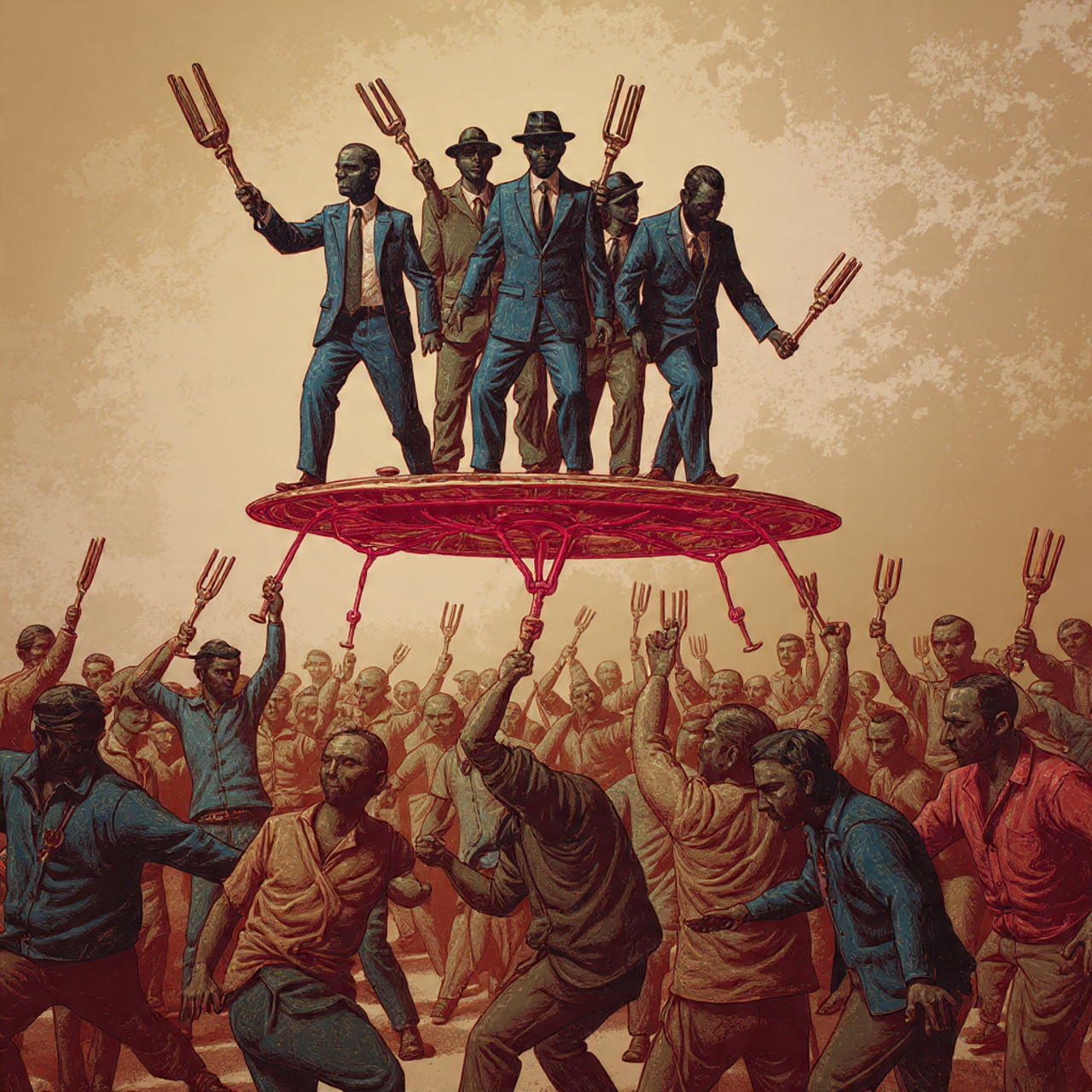
The tragedy of modern African politics is that governance has been reduced to a competition for survival rather than a mission for service. Nowhere is this more evident than in Cameroon, where leadership has long ceased to be about the people—it is now about the agenda of the stomach.
The Cameroonian crisis, both political and humanitarian, is not just the product of ethnic tensions or constitutional manipulation; it is the result of a deeper moral and intellectual decay—a leadership class driven by greed rather than governance, personal survival rather than national transformation.
Cameroon has become a state where institutions are hollow and loyalty is bought with the currency of self-interest. The executive arm of government overshadows every other organ, rendering the legislature and judiciary mere ornaments of legitimacy. When institutions serve the ruler instead of the republic, the people become subjects, not citizens.
For decades, the ruling elite has perfected the art of using poverty as a tool of control. Citizens are pacified with short-term relief instead of long-term reform, while public resources are diverted to feed private appetites. The “agenda of the stomach”—a culture where politicians seek office to eat, not to serve—has replaced the social contract with an economic transaction.
Cameroon, like many African nations, is not short of educated leaders. Universities continue to produce lawyers, economists, and technocrats—but what value is education without ethical conviction? The intellectual elite, instead of being the moral compass of society, have become instruments of patronage. They defend power, not principle; they justify failure in exchange for comfort.
The crisis in Cameroon is therefore not just political—it is existential. It represents a war between the stomach and the soul of the nation, between those who seek to feed from the system and those who seek to reform it.
Fear and poverty have silenced the masses. The ordinary Cameroonian, struggling for daily survival, has been stripped of political agency. Civic apathy has become the regime’s greatest ally. When people are too hungry to think, they are too weak to resist.
Yet, democracy cannot thrive on empty stomachs and silenced minds. Political freedom is meaningless without economic dignity. A people fed on promises and propaganda will remain loyal to their oppressors as long as they are fed, even if their rights are starved.
For Cameroon to rise again, leadership must return to its original purpose—service, not survival. The nation needs leaders who view power not as a privilege but as a responsibility. It must rebuild its institutions, depoliticise its civil service, and educate its citizens in the principles of constitutionalism and civic responsibility.
The youth must refuse to inherit the politics of the stomach. They must embrace the politics of the mind—one guided by integrity, accountability, and national interest. The new generation must understand that the struggle for democracy is not a demand for food alone, but for dignity, justice, and opportunity.
Cameroon’s crisis is a mirror reflecting the wider African dilemma—the triumph of personal gain over public good. The continent will continue to bleed until leaders abandon the politics of the stomach and embrace the politics of service.
True liberation begins when leadership feeds the nation’s conscience, not its appetite.
About the author
My name is Abeson Alex, a student at St. Lawrence University, whose leadership journey reflects a deep commitment to service, integrity, and community transformation. I have held various leadership positions, including UNSA President of St. Charles Lwanga College Koboko, UNSA District Executive Council Speaker, UNSA Speaker for West Nile, and West Nile Representative to the UNSA National Executive Council. I also served as YCS Section Leader of St. Charles Lwanga College Koboko, YCS Federation Leader for Koboko District, and Koboko YCS Coordinator to the Diocese. In addition, I was a Peace Founder and Security Council Speaker for the peace agreement between St. Charles Lwanga College Koboko and Koboko Town College. I served as Debate Club Chairperson of St. Charles Lwanga College Koboko, District Debate Coordinator, and West Nile Debate Coordinator to the National Debate Council (NDC). All the above were in 2022-2023. My other leadership roles include Chairperson of the Writers and Readers Club, UNSA Representative in the District Youth Council, Students’ Advocate for Reproductive Health, and Students’ GBV Advocate for the District. Within the Church, I served as Chairperson of the Altarservers of Ombaci Chapel, Parish Altarservers Chairperson of Koboko Parish, and Speaker of the Altarservers Ministry in Arua Diocese. Current Positions: Currently, I serve as the Diocesan Altarservers Chairperson of Arua Catholic Diocese, Advisor of the Altarservers Ministry for both Ombaci Chapel and Koboko Parish, and Programs Coordinator of Destined Youth of Christ (DYC-UG). I am also a Finalist in the Global Unites Oratory Competition 2024, the current Debate Club Speaker and President of St. Lawrence University Koboko Students Association. Additionally, I am the Youth Chairperson of Lombe Village, Midia Parish, and Midia Sub-county in koboko district. I am one whose life has been revolving around ensuring that in our imperfections as humans, we can promote transparency, righteousness, and morality to attain perfection. I am inspired by the guiding words: Mobilization, Influence, Engagement, and Advocacy. I share my inspiration across the fields of Relationships, Career, Governance, Faith, Education, Spirituality, Anti-corruption, Environmental Conservation, Business & Self-Reliance, politics , Administration,Financial Literacy, Religion, and Human Rights. Thanks for the encounter.