Civil Society and Judicial Oversight in Restraining Over-Enforcement of Pharmaceutical IP Rights in Uganda


Until we stop waiting for solutions from outside, we will keep postponing the power that already lies within us.
28 Apr, 2026
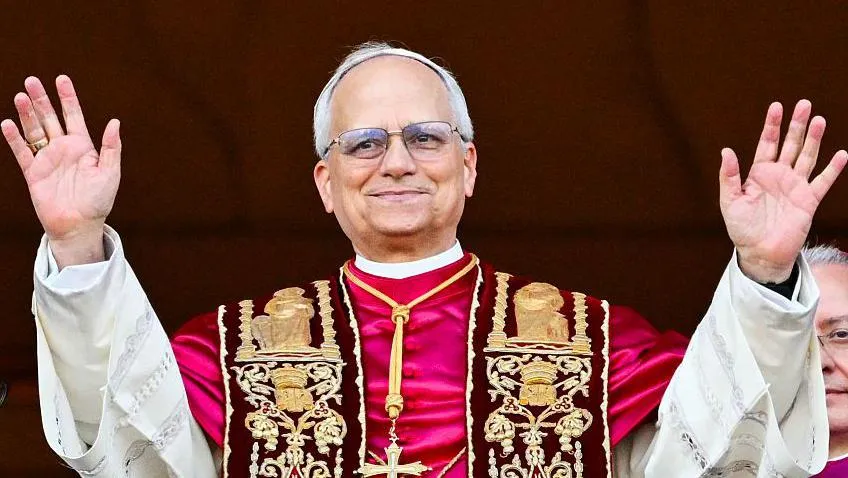
As I was resting one evening, my roommate turned to me and asked, “Now that the Pope has visited Africa, has anything really changed?” I paused, reflected for a moment, and answered, No. And that “no” is not a dismissal—it is a wake-up call.
We stand in the aftermath of what many have called a historic visit. The presence of the Pope stirred hope, drew crowds, and reminded us of the moral call to peace and unity. But as the excitement fades and normal life resumes, we are confronted with a reality that is both simple and uncomfortable: no external figure, no matter how influential, can transform our continent for us. The Pope did not come merely to sightsee or exchange pleasantries; he came as a witness to our struggles and as a voice pointing to our potential. Yet as the planes depart and the crowds disperse, we are left with a truth we can no longer avoid: peace, growth, development, and African unity are not imports.
They cannot be flown in, negotiated abroad, or delivered through well-worded speeches. They must be built—deliberately, consistently, and courageously—by Africans themselves.
For too long, we have looked outward for direction. We have waited for global summits to define our priorities, for foreign mediators to resolve our conflicts, and for international institutions to prescribe solutions to our economies. In doing so, we have slowly surrendered our agency and weakened our confidence in our own systems.
The Pope’s visit must not become a crutch—it must be a mirror. A mirror reflecting both our strengths and our failures. The “Gospel of Peace” he spoke about is not foreign to us; it is already written in our communities, embedded in our traditions, and alive in our shared history. To wait for someone from across the ocean to preach peace to us is to deny our own wisdom.
Why should we wait for outsiders to tell us that a child deserves to learn in safety? Why should we depend on external voices to remind us that our resources belong to our people? Why do we allow others to define what development and unity should look like in our own homes?
Africa’s challenges will not be solved in foreign boardrooms or distant capitals. They will be solved in our villages, our cities, our institutions—by Africans who understand the realities on the ground. This requires more than acknowledgement; it demands a fundamental shift in mindset.
We must confront and reject the structures that sustain dependency. Economic frameworks such as Structural Adjustment Programs, which were introduced as solutions, often weakened our institutions, deepened inequality, and constrained our sovereignty. These were not neutral policies—they reflected external priorities more than African realities.
What we need is financial freedom; real economic independence that allows us to set our own agenda, invest in our own people, and control our own resources. Without this, political independence remains incomplete, and our future remains externally influenced.
But beyond economics, there is a deeper responsibility: belief. We must believe in our capacity to lead, to innovate, and to solve our problems. Africa does not lack intelligence, resources, or resilience—it has lacked the collective decision to trust itself fully.
True peace must be preached in our markets, taught in our schools, and practiced in our institutions. Growth must be driven by our creativity and enterprise. Development must reflect our lived realities. And unity must be forged through our shared identity—not imposed from outside.
This is not a call for isolation, but for self-determination. We do not reject cooperation, but we must reject dependence. We do not turn away from the world, but we must stand in it with dignity and control over our own destiny.
The time for waiting is over. Let this moment mark the end of looking outward for solutions. Let it mark the beginning of thinking inward with clarity and acting with courage. Let Africa rise—not as a recipient of change, but as its source. Because in the end, no one else will build this continent for us.
ALUTA CONTINUA.
Photo Credit: BBC News
My name is Abeson Alex, a student at St. Lawrence University, whose leadership journey reflects a deep commitment to service, integrity, and community transformation. I have held various leadership positions, including UNSA President of St. Charles Lwanga College Koboko, UNSA District Executive Council Speaker, UNSA Speaker for West Nile, and West Nile Representative to the UNSA National Executive Council. I also served as YCS Section Leader of St. Charles Lwanga College Koboko, YCS Federation Leader for Koboko District, and Koboko YCS Coordinator to the Diocese. In addition, I was a Peace Founder and Security Council Speaker for the peace agreement between St. Charles Lwanga College Koboko and Koboko Town College. I served as Debate Club Chairperson of St. Charles Lwanga College Koboko, District Debate Coordinator, and West Nile Debate Coordinator to the National Debate Council (NDC). All the above were in 2022-2023. My other leadership roles include Chairperson of the Writers and Readers Club, UNSA Representative in the District Youth Council, Students’ Advocate for Reproductive Health, and Students’ GBV Advocate for the District. Within the Church, I served as Chairperson of the Altarservers of Ombaci Chapel, Parish Altarservers Chairperson of Koboko Parish, and Speaker of the Altarservers Ministry in Arua Diocese. Current Positions: Currently, I serve as the Diocesan Altarservers Chairperson of Arua Catholic Diocese, Advisor of the Altarservers Ministry for both Ombaci Chapel and Koboko Parish, and Programs Coordinator of Destined Youth of Christ (DYC-UG). I am also a Finalist in the Global Unites Oratory Competition 2024, the current Debate Club Speaker and President of St. Lawrence University Koboko Students Association. Additionally, I am the Youth Chairperson of Lombe Village, Midia Parish, and Midia Sub-county in koboko district. I am one whose life has been revolving around ensuring that in our imperfections as humans, we can promote transparency, righteousness, and morality to attain perfection. I am inspired by the guiding words: Mobilization, Influence, Engagement, and Advocacy. I share my inspiration across the fields of Relationships, Career, Governance, Faith, Education, Spirituality, Anti-corruption, Environmental Conservation, Business & Self-Reliance, politics , Administration,Financial Literacy, Religion, and Human Rights. Thanks for the encounter.