
Ruto’s Kenya, Unsafe for Critics and Activists
Samia Suluhu's government should not suck Twaha Mwaipaya's blood for his truth.
30 Oct, 2026
Share
Save
Running from one’s bloodthirsty government to Kenya for refuge is no longer sustainable; it only perpetuates one’s murder or disappearance—either way, they finally disappear or get killed, however much they run. Kenya is a graveyard for those running for their lives.
Kenya, once an abode for critics and dissidents—those who criticised injustice and the indifference of their home governments—has now become East Africa’s headquarters of abductions. Now regimes walk in uninterrupted, pick critics up, and either harm them or drive them back to their respective countries without any questions about persecution.
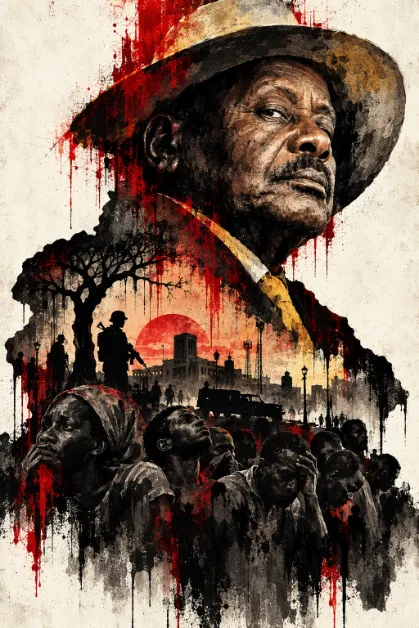
As far as human rights are concerned, East Africa today is at a crossroads, and governments continue to annihilate voices that lay bare their crimes. Repression soars, unchallenged—from fuelling war crimes in the DRC by Rwanda and crushing critics in Kigali to disappearing and illegally detaining dissidents in Kampala, Uganda, by the Museveni-Muhoozi regime, to justifying broad daylight murder of disgruntled Tanzanians by the Samia Suluhu regime—it is no better in the Federal Republic of Somalia, Burundi, South Sudan, or the DRC.
Contradictorily, East Africa is at war with its people. Leaders are so intoxicated with power that they would even kill their countrymen and women to prolong their reign, while they stick to the lie that they are protecting their countries. We do not protect a country by suppressing and dehumanising a people. A country is a country because of its people, even when we insist otherwise.
But East Africans are awakening amidst political uncertainties. They are speaking out more. They are holding their dictatorial regimes to account. Of course, speaking out alone cannot oust these regimes, but it, at least, exposes the rot. It gives the voiceless vanquished hope. Besides, it is through the spoken word that an ignorant people are awakened—and dictators detest awakened masses, since it is by awakening that masses rebel against subjugation.
While the liberation struggle continues, the fighters, critics and dissidents must live. While a dead fighter’s legacy might live on as history, a living fighter is more important—the struggle for fundamental change and liberation is not limited to reclaiming a country from wolves; it stretches to reshaping a future without the wolves, and the fighters must be part of that future.
However, it is becoming increasingly impossible for the fighters to live. The struggle itself is a contract one signs with death before committing to daring incompetent leadership. For East Africans, there is nowhere to run to. If you are a Rwandan dissident, they will behead you in Uganda. If you are a Ugandan critic in Kenya, the Kenyan security forces will conspire with the Ugandan security forces to frame you for treason, disappear you, abduct you, and drive you back to Uganda, only to be detained without charge.
For Tanzanians, it's even worse. Kenya is now Samia Hassan’s hunting ground for Tanzanian critics. The Tanzanian security forces move in whenever they like; they trail critics fleeing from their fangs, abduct them, return them to Tanzania to face persecution, or disappear them without a trace. Because of this, one can conclude that Kenya is no longer a haven for dissidents running from the oppressive hand of their rulers.
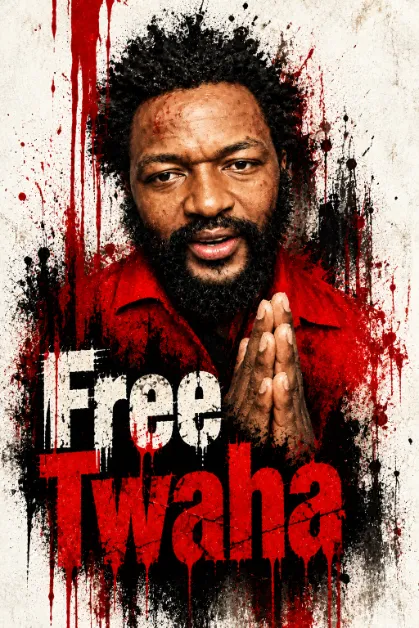
On 25 October 2026, Twaha Mwaipaya, a Tanzanian activist, Samia Suluhu’s critic and youth mobiliser for CHADEMA, the main opposition political party in Tanzania, whose leader, Tundu Lisu, is in prison on fabricated charges of treason, according to Amnesty International, was abducted in Kamulu, Machakos County, Kenya, by unknown individuals travelling in 3 vehicles, as he was in a taxi visiting his friends.
Alas, Twaha’s whereabouts are still unknown. Human rights activists continue to call upon the government of Kenya, with the assistance of the police, to trace Twaha’s whereabouts and not let his abductors sneak him out of Kenya to Tanzania to murder or torture him. Of course, Mama Samia, ever since the October 2025 elections, which were marred by lawlessness, has resorted, having learnt from her counterparts that violence and brutality prolong one’s reign, to murdering and maiming critics—thus, if Samia’s government lands on Twaha, they will suck his blood and eat his flesh to assuage their thirst and hunger.
Twaha’s incident raises a critical question: what has a democratic Kenya, giants of the East African concept of freedom of speech and expression, become? Twaha’s abduction from Kenyan soil is just a case study. Kizza Besigye, a Ugandan opposition leader and Museveni’s critic, was abducted in November 2024 by the governments of Kenya and Uganda and later presented in a Ugandan court and charged with treason. In January 2025, Maria Sarungi Tsehei (Tanzanian) was kidnapped before she was dumped by the roadside. In February 2025, Mshabaha Hamza, also Tanzanian, was abducted under similar circumstances before he was rescued by the Kenyan police.
Ruto’s Kenya, at this critical point, should recognise the fact that it is still a refuge for critics, activists and dissidents whose lives are in danger for standing up for the truth, and that conspiring with governments to trace and abduct these individuals is suicidal. But how can Ruto stand up to this reality if his own government is abducting and murdering Kenyans for speaking the truth?
About the author
The Critique Magazine is an independent publication dedicated to critical thought, creative expression, and public debate. It serves as a platform where writers, journalists, and thinkers share perspectives on literature, politics, human rights, and social issues affecting society. The magazine encourages open dialogue and challenges conventional ideas through essays, commentary, and analysis.