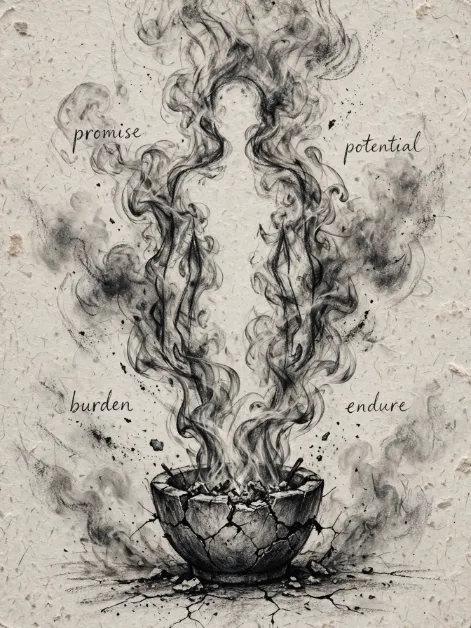

The Pandemic of Loneliness
Whom do you talk with daily, and do you talk deeply about life?
17 Oct, 2026
Share
Save
In epidemiology, a pandemic is a time when a disease, especially an infectious one, spreads across many countries at the same time. The signs and symptoms are the same, and standard operating procedures are put in place to control or manage it. In the same way, to understand what loneliness is, you must connect it to the social connection mismatch in society. When you combine a pandemic and loneliness, you get a silent cancer that is already biting our society.
To begin this assessment, in both communal and individualistic societies, man fails to choose what is truly important.
In a communal society, you live side-by-side with friends and kin. I would equate this kind of arrangement with the intergenerational solidarity theory/model by Benston and Robert (1991). The theory was geared around the linearity of society, in which adult children take care of their frail parents, with six elements governing such a community. I will only concentrate on one, that is, affectual solidarity. To understand this element in the theory, you must understand the Aerodynamic boomerang theory, which holds that an adult child will love their parent, take care of them, and support them where needed, as reciprocity. An informal structure of such an arrangement still exists in Africa, since we have not yet fully developed models or retirement homes for the elderly population. Therefore, an adult child takes good care of their mother or father.
However, the theory is plagued by the realisation of the non-linearity of life, that is, intergenerational ambivalence. This is to say, the conflict of interest of an adult child between loving their parents and the burden of taking care of them. Many believe this is where individualism comes up. A child struggling with finances truly wishes to take care of his or her parent but can't afford decent rent or a meal. Here the child must take a stand, either to take care of frail parents or survive. Many adult children would choose to survive.
Why did I begin with this theory? The theory is modelled on communities that are being torn apart by our "busyness".
I had a good friend who succumbed to COVID-19 around 2021; she was called Jane Namukasa, a woman who often checked up on me, almost daily. Sent in a text or sometimes call. One day, Jane sent me a text: "Zziwa, I think I am dying. Please, come and see me." I thought this was the regular Jane. I had not cared to even respond to the cry for help. I had not known Jane was admitted to the hospital, and Jane wanted company; Jane wanted an "affectual solidarity" so as not to feel alone. Later, after one week, a mutual friend of ours sent me a message that Jane Namukasa had died. I did not get to see her, nor to bury her. I was numb for a full month. I was so busy under my own skin and pride to check-in with Jane; Jane died alone and lonely. She was my friend; I failed her.
In the same way, I saw a promising talent in law succumb to depression earlier this week. To many, she was that happy person always smiling, exuding radiance and positivity. Whilst people were showing courage and strength, others would not detect the sensitivity of such a tragic death. Many were ignorant about mental health and how someone can die of depression.
There is a syndrome called "broken heart syndrome," and it silently eats you up, slowly, like sleep, then all at once until you are unrecognisable. It comes from extreme emotional and physical stress, thus weakening the heart. This is how I see it all. That sudden chest pain, shortness of breath straining the heart. This is how slowly depression kills or might have killed that young, promising lawyer. In Africa, people still believe that mental health is a white man's disease. That it is impossible to get depressed in Africa. That it is weak to seek company and solace. That is why this pandemic of loneliness is growing steadily, especially amongst Gen X, millennials, and Gen Z. We fail to reserve just two minutes to listen to a friend wanting company. We plan and never fulfil at all. We stay in our zone and pretend all is well.
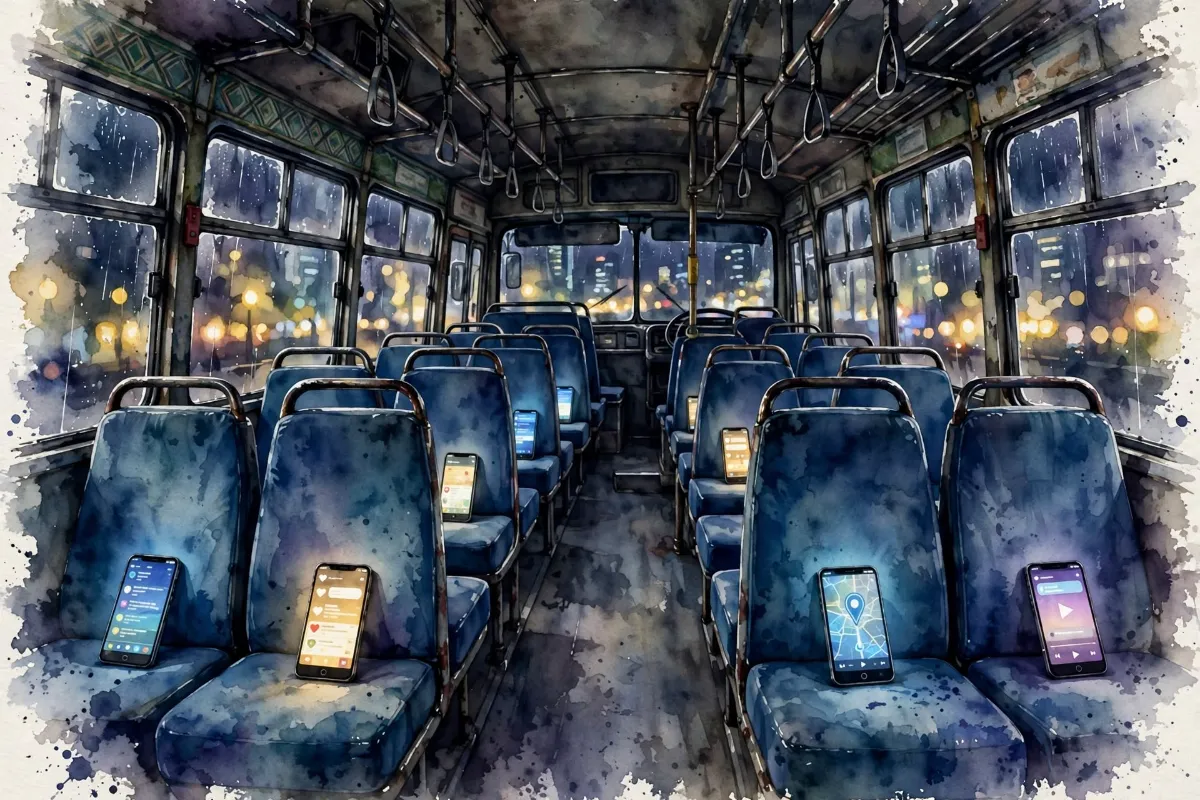
To assess this loneliness pandemic further, every single year, we lose touch with reality. We lose friends—not dead, but “cut them off”. We feel like they are useless to our high corporate lives. That the smaller the circle, the healthier it gets, but does it get healthier or lonelier? We silently lose touch and never bother to follow up and bring back the once-cherished moments. We are comfortable losing such friendship. Pride overwhelms reason. Then we succumb to the slavery of phones as company; we cherish the wildness of the night imbued in the alcohol and crawl back into our nests and weep ourselves to slumber.
Such is the “new normal”, the pandemic of loneliness slowly creeping into the minds of many. It is a cancer that crowds out reason and the togetherness of community. It kills the African spirit of Ubuntu. We have yet to understand this creeping behaviour. As you read this, sit down and check your phone. Whom do you talk with daily? Do you talk deeply about life? Or do you just talk about the fun moments and all the struggle to survive? Kill that pride; call a friend today!
About the author
Born and raised in Uganda. Studied Science in Population Studies at Makerere University. He is a poet, playwright, and book reviewer. He has authored his first-ever commercial book called "The Muchwezi, The Flower & The Suitor" He is a shy person in real life; he fears looking people in the eyes. A broken person, unlucky in love and confused when he will find true Lover but passionate about People. He is an author of many unpublished poems, plays and novels due to financial constraints. When you see his books, please buy and support Him.