
The Day Hon Blood-fist Came Back to Kasese
A Dark Satire of a Country Where Democracy Is a Ghost Story
04 Dec, 2025
Share
Save
I would be mourning, but let me tell you this: even the sun hesitates to rise here. In Kasese, light does not come gently—it sneaks, peering around corners like a survivor of its own past. Shadows gather in alleys and under trees, listening, remembering. The wind carries whispers of promises broken, of children who never returned home, of mothers who learned too early that grief does not sleep. And today, like every day in this cursed democracy, the ghosts are awake—waiting to see if history will bow, or if it will strike again.
Kasese is no stranger to death.
The mountains have seen centuries of blood, but 2016 carved a wound so deep even time walks around it carefully. The Rwenzururu palace still sits like a burned-out ribcage, the smoke long gone, but the stench of betrayal never fades.
Over 100 people died.
Families shattered.
Children orphaned.
Mothers left clutching the memories of sons who never reached adulthood.
And now—because this country is a theatre of absurdity—
“The man whose hands conducted that symphony of gunfire has returned. For votes.”
In a normal nation, this would be a nightmare.
In Uganda, it is a campaign rally.
Why did his face on a poster cast a shadow longer than his list of atrocities?
The first sign was the posters.
His face—freshly powdered, smiling as the devil had promoted him—was pasted everywhere. On shops, on electricity poles, even on a church wall, as if daring God to comment.
One child saw the poster and screamed.
Not out of fear—out of recognition.
“Isn’t this the man who made Daddy disappear?” he asked.
The mother quickly covered his mouth.
You don’t shout such things.
Not here.
Not about him.
Even the cattle in the fields refused to graze near the posters. Animals sense evil before humans admit it.
Was that a political rally or a funeral that got bored with ending and decided to run for office too?
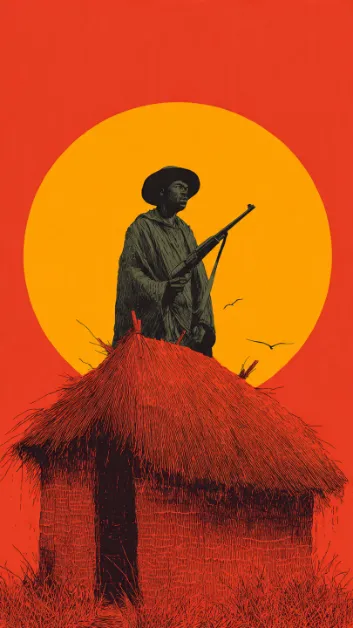
His convoy slithered into Kasese like a snake returning to the nest it once poisoned.
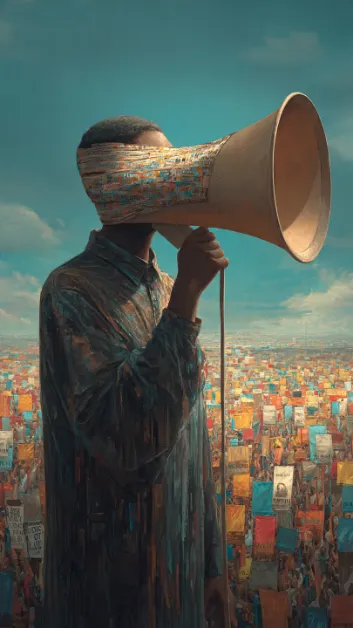
Speakers blasted campaign songs written by people who had never seen a corpse.
“MY PEOPLE!” he yelled.
A risky greeting.
If bones could stand up, his “people” would have risen from their graves to answer him.
He spoke on top of the very soil that holds the dead he helped create.
His voice echoed off the mountains, and the mountains echoed back a low, mocking rumble.
He promised peace.
Kasese remembered war.
He promised unity.
Kasese remembered body bags.
He promised development.
Kasese remembered bulldozers decorating the palace with fire.
But he smiled widely, unbothered.
A man confident that the country is too wounded, too hungry, and too tired to punish him.
What choice did the victims have—walk away, or risk becoming Part Two of his statistics?
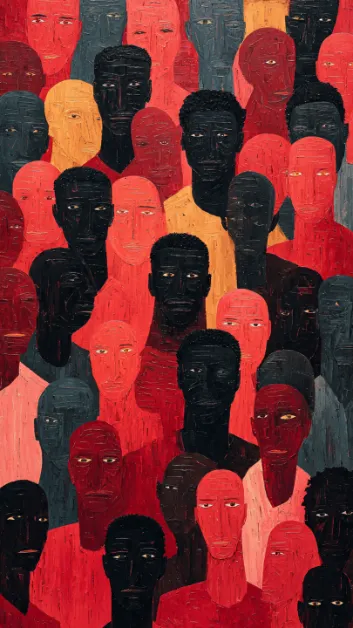
Widows stood at a distance, arms folded tightly around ghosts of husbands.
Orphans watched with the quiet understanding of children who grew up too quickly.
Survivors stood still, as stiff as tombstones.
One old man whispered:
“If he speaks long enough, maybe the ground will open and swallow him.
The dead are patient, but not endlessly.”
Another replied:
“Eh. Even hell refuses to take politicians. That is why they stay here.”
Do people laugh because the joke is funny, or because sanity packed its bags years ago?
In Kasese, humour became a survival mechanism.
A man selling roasted maize joked,
“This election is simple: choose life, or choose him.”
A Boda rider laughed nervously.
“If he wins, let us sell our houses early—no need to wait for eviction by gunfire.”
A woman at the market said,
“At least he is experienced. Experienced in reducing population.”
They laughed short laughs—the kind that sound like crying while wearing a mask.
Is this a political slogan or a punchline from a horror-comedy written by the devil himself?
His banner read:
“A NEW DAWN FOR KASESE.”
Villagers whispered:
“How many dawns does he want to darken?”
Another man shook his head:
“With this one, even a sunrise comes with a warning label.”
Was that a political message or the ultimate insult he owed the district before leaving?
At the end of the rally, Hon. Bloodfist raised his hands and declared:
“Let the past be the past!
We must move forward!”
And the heavens darkened slightly—as if offended.
Moving forward?
Tell that to the graves behind the palace.
Tell that to the mothers who still set plates for sons who never come home.
Tell that to a district that still wakes up sweating from the nightmares he authored.
He took a bow, waved, and left.
The ghosts stayed.
In Uganda, Even the Dead Can’t Rest in Peace—Because Election Season Comes Around
Democracy here is a haunted house with ballot papers.
Politicians kill you once and traumatise you forever.
Some even return for second rounds—like bad spirits with campaign budgets.
Kasese survived 2016.
It will survive this man, too.
But if he is ever elected,
may the mountains themselves rise
and vote him out with a landslide.
Literally.
About the author
Abdullatif Eberhard Khalid (The Sacred Poet) is a Ugandan passionate award-winning poet, Author, educator, writer, word crosser, scriptwriter, essayist, content creator, storyteller, orator, mentor, public speaker, gender-based violence activist, hip-hop rapper, creative writing coach, editor, and a spoken word artist. He offers creative writing services and performs on projects focused on brand/ campaign awareness, luncheons, corporate dinners, date nights, product launches, advocacy events, and concerts, he is the founder of The Sacred Poetry Firm, which helps young creatives develop their talents and skills. He is the author of Confessions of a Sinner, Vol. 1, A Session in Therapy, and Confessions of a Sinner, Vol. 2. His poems have been featured in several poetry publications, anthologies, blogs, journals, and magazines. He is the editor of Whispering Verses, Kirabo Writes magazine issue 1 and edits at Poetica Africa.