
Truth in Uganda Is a Thoughtcrime, and Thoughtcrime Is Subversion
Journalism Under Attack: Uganda fears thinkers more than thieves, because truth dismantles what corruption desperately protects.
31 Mar, 2026
Share
Save
Retrospection, just like boundaries—knowing when and where to stop—in leadership, is the fuel that drives a leader in the right direction, and without this self-reflection, a leader often drifts from the right cause.
While a leader might come across as all-righteous, there should be an open window at his back for criticism, and he should be able to let it in and accept his critics, not as his haters, but as crucial watchdogs responsible for reshaping the country’s direction. Of course, it is through this criticism that a leader revises his leadership script. It is through genuine criticism, not sycophancy, that a leader rethinks his ways.
Also, a leader should understand that criticism is freedom, too, and that, however stark his critics might be, he should not altogether shut the door on them. Alas, many leaders, like Uganda’s President Museveni—who has been in power for over forty years with the help of the military—conceive criticism as a threat far worse than the malign corruption that gnaws at their countries, and particularly in Uganda, where they lose roughly U.S. $2.3 to 2.5 billion to corruption annually, the vice, at least, is more tolerable than reproach of the Museveni regime.
While one might conclude that Ugandans are thieves, as they swindle large sums of money from the national coffers, it is shocking that the country’s largest population still struggles to have a decent meal, access clean water, or attend school. The obscene amounts of money go into the pockets of a select few: politicians, members and friends of the first family, and the regime’s praise-singers. In fact, Uganda, under President Museveni, has become a bull for those in the government to cut its meat.
Sadly, due to too much greed for the meat, what has remained of Uganda is a skin that Museveni must bequeath to his son, who is equally unwilling to let it slip off his ravenous hands. That is the tragedy of Uganda. Museveni is the sovereign power in the land, and the Ugandan population is a mere footnote.
For lovers of history, President Museveni, who has often posed as a pan-Africanist, would condemn the monster he has become to death if he were to revisit his younger self. He would criticise the corruption that has become the sternest pillar that now holds the regime still. He would rebel against the incessant abduction and murder of government critics and opposition supporters. He would condemn the cheeky UPDF that abducts and undresses women in place of their husbands, who challenge the government, and he would call out the judiciary for its lack of autonomy.
Today, Uganda is at the crossroads. The systems are dysfunctional, and the only pertinent thing is Museveni clinging to power, even when the country sinks, and those who remind him of this truth, those who refuse to dance to his drumbeats of ripped history, and those who challenge his ambivalence are subject to annihilation.
Truth in Uganda is whispered. It is spoken in exile. Truth is subversion. Those who stick with it fill prisons to the brim as true enemies of the state. Because of this, journalism that assuages victimhood is rewarded as true journalism—media outlets now veil the truth to appease the government. The government abducts, tortures, and kills its citizens, and surprisingly, journalism has to "allege". Ugandan media alleges the torture of victims, even with visible torture marks, in the name of journalistic standards, and those who avoid alleging empirical facts become potential victims of state intimidation, abduction, detention without trial, or murder.
But what remains of a country if truth to power is a threat? What do we have to call it when the country’s law protects criminals and punishes the whistleblowers? To call it for what it is: not a country, but a carcass, without dignity, that has been left to decompose without burial. Uganda, irrefutably, is that carcass.
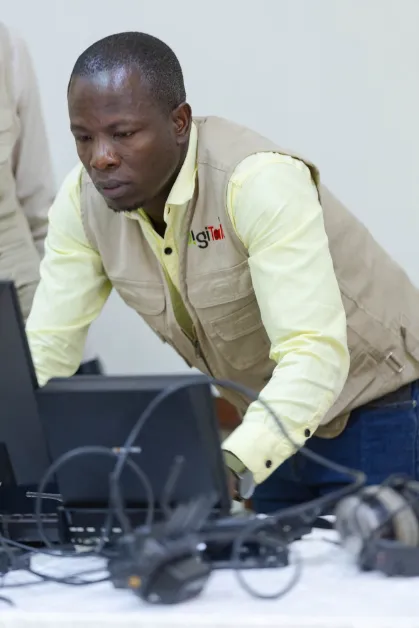
On March 29, Arnold Mukose Anthony, a human rights activist and journalist affiliated with the unorthodox Alternative DigiTalk—an online television that focuses on amplifying marginalised voices—was picked up by heavily armed security operatives after a live broadcast on Metro FM, where he had just dissected the Constitutional Court’s March 17th ruling that had nullified several sections of the Computer Misuse Act, which the government had used as a weapon to silence its critics.
After his arrest, a search warrant was issued by his captors, who searched his house and confiscated his gadgets, including phones, a laptop, and other items.
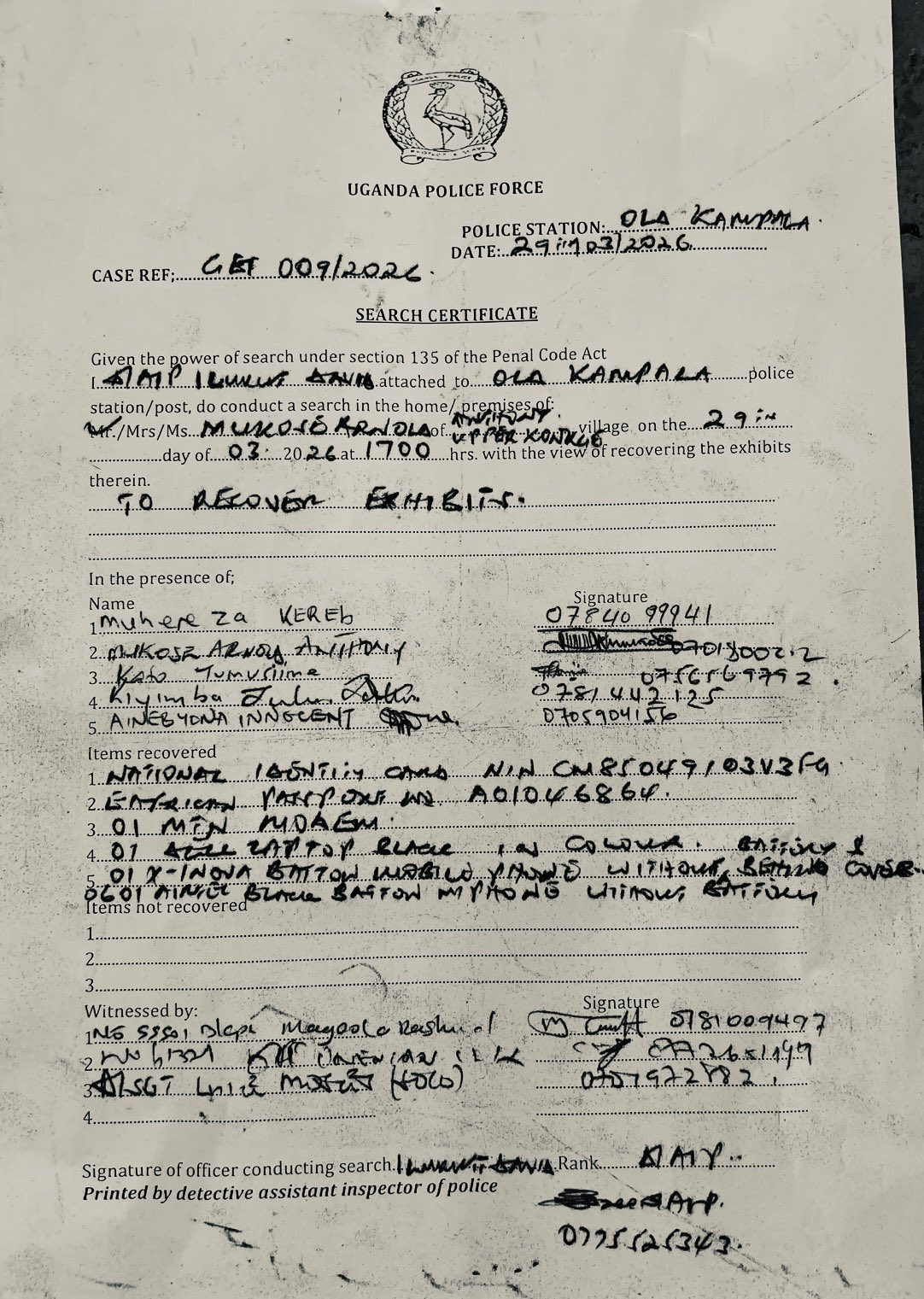
On March 30, Norman Tumuhimbise, a political writer and Mukose’s boss at Alternative DigiTalk, was also targeted. His home was raided as security operatives searched for him, but they could not find him.
DigiTalk’s only crime is thoughtcrime—they have engaged in journalism that holds the regime to account; they have called out things by their name instead of alleging, and they have hosted individuals liable to sedition—individuals who do not worship Museveni but condemn him, and this is the greatest crime under this regime.
As of today, many journalists and writers have disappeared without a trace or been arrested and tortured for criticising the Museveni government, as Museveni and his son, Muhoozi, continue to insulate themselves from vitriol, even with their dirty linens. However, there is no level of intimidation of journalists or human rights defenders that can shield Museveni’s government from scrutiny. Although they have forced Ugandans to believe that 2+2=22, the truth will always come across as 2+2=4. So, let journalism breathe without being suffocated.
Photo Credit: DigiTalk TV.
About the author
The Critique Magazine is an independent publication dedicated to critical thought, creative expression, and public debate. It serves as a platform where writers, journalists, and thinkers share perspectives on literature, politics, human rights, and social issues affecting society. The magazine encourages open dialogue and challenges conventional ideas through essays, commentary, and analysis.