
The Critique Magazine Logo
    • Popular
    • Latest
    The Critique MagazineThe Critique
    Login
    LITERATURE & ANALYSES

    When Handcuffs Become Government Policy

    Inside Uganda’s Politics of Fear, Silence, and Unlawful Detention.
    By: Abdullatif Khalid Eberhard

    11 Dec, 2025

    Share
    Save

    They say the law is blind,
    but in this country,
    the law sees too well—
    It sees your party colours,
    your hairstyle,
    your tone of voice,
    and decides whether you sleep at home
    or in a cell that smells of forgotten promises.

    Here, arbitrary arrest is not an accident—
    It is a strategy.
    A national pastime.
    A political tool is polished every election season
    like a trophy of fear.

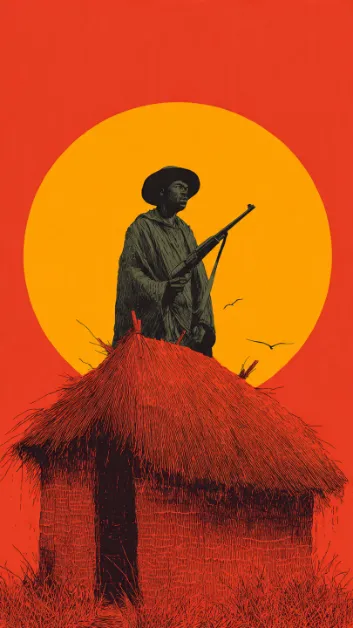
    Walk with a red beret?
    Arrest.
    Stand near a rally?
    Arrest.
    Think too loudly?
    Arrest.
    Dream of a country that works?
    My friend, that one is life imprisonment.

    Our police have become fortune-tellers—
    They arrest you for crimes
    you haven’t even imagined committing.
    Preventive detention, they call it.
    But we all know:
    It’s anxiety management for a state
    afraid of its own citizens.

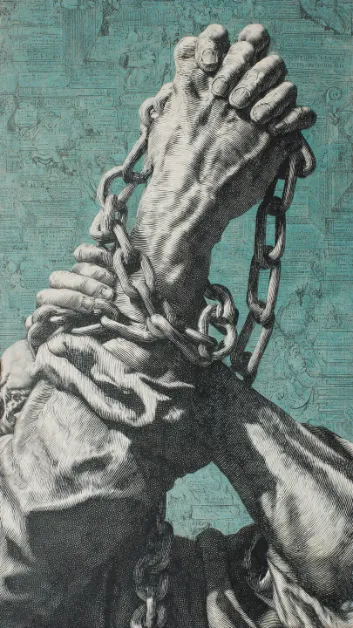
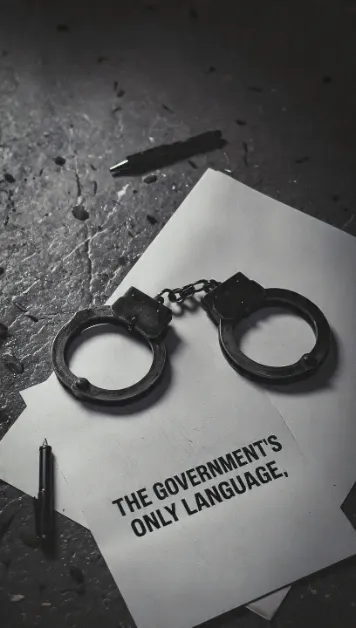
    Even the handcuffs are tired—
    asking themselves,
    “Must we clasp another innocent wrist today?”
    But duty calls,
    and tyranny never sleeps.

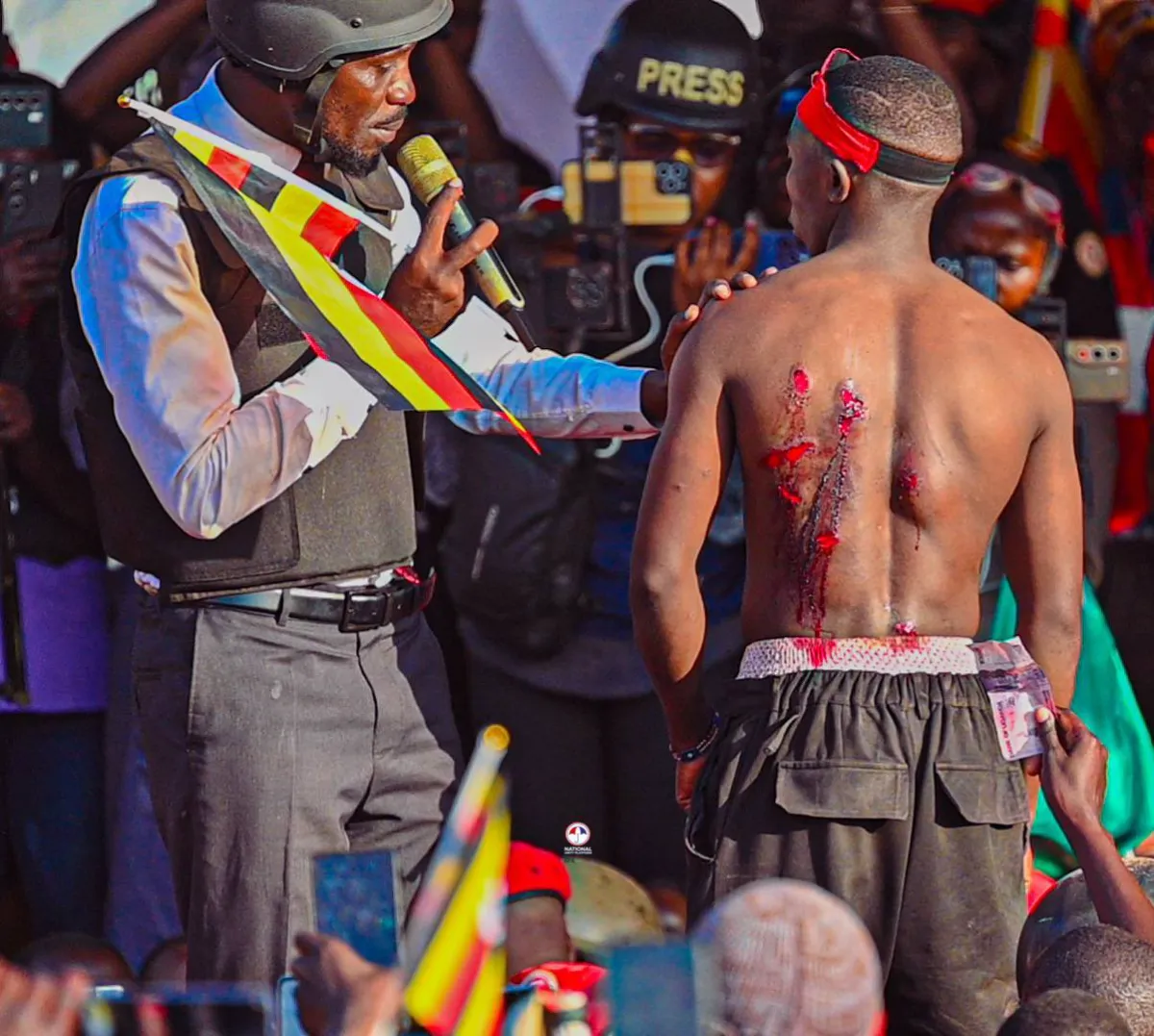
    They pick up journalists
    as if they were firewood.
    They pluck activists
    like feathers from a bird.
    They disappear opposition members
    with the efficiency of a magician
    who hates applause.

    Meanwhile, the Constitution
    sits in the corner,
    crying softly,
    whispering,
    “I wrote all your freedoms—
    Why won’t you read me?”

    But listen—
    A nation is waking up.
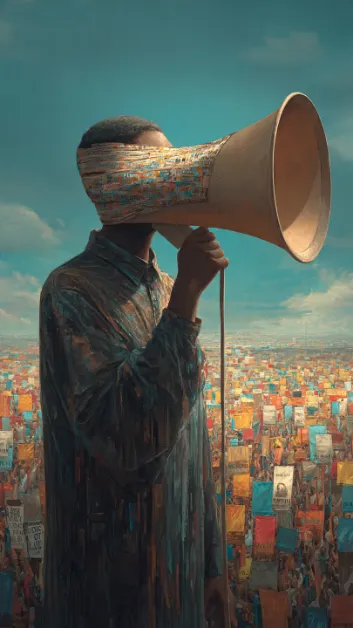
    A new generation is cleaning its throat.
    A voice is rising from Kasese to Karamoja,
    from Gulu to Masaka,
    saying:

    We are tired of fear being government policy.
    Tired of prisons being political offices.
    Tired of justice arriving in body bags.

    One day,
    the truth will knock—
    And this time it will not be arrested.
    One day,
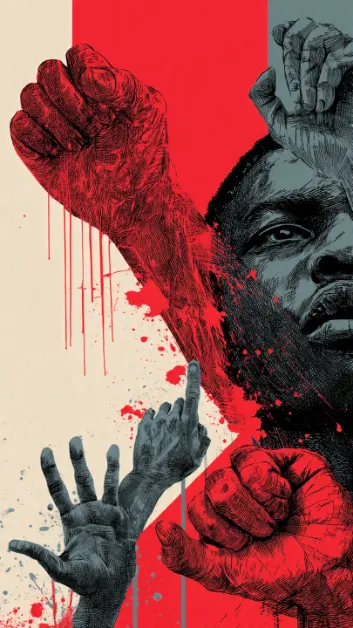
    the people will rise—
    And no tear gas will choke the sunrise.

    Because even in this land
    where freedom sleeps with one eye open,
    Hope is stubborn.
    Hope is defiant.
    Hope refuses to be detained.

    About the author

    Abdullatif Eberhard Khalid (The Sacred Poet) is a Ugandan passionate award-winning poet, Author, educator, writer, word crosser, scriptwriter, essayist, content creator, storyteller, orator, mentor, public speaker, gender-based violence activist, hip-hop rapper, creative writing coach, editor, and a spoken word artist. He offers creative writing services and performs on projects focused on brand/ campaign awareness, luncheons, corporate dinners, date nights, product launches, advocacy events, and concerts, he is the founder of The Sacred Poetry Firm, which helps young creatives develop their talents and skills. He is the author of Confessions of a Sinner, Vol. 1, A Session in Therapy, and Confessions of a Sinner, Vol. 2. His poems have been featured in several poetry publications, anthologies, blogs, journals, and magazines. He is the editor of Whispering Verses, Kirabo Writes magazine issue 1 and edits at Poetica Africa.

    💬Comments(0)

    Sign in to join the conversation

    The Critique Magazine

    Copyright Notice: All rights reserved. All the material published on this website should not be reproduced or republished without prior written consent.

    Copyright to the material on this website is held by The Critique Magazine and the contributors. Any violation of this copyright will be subject to legal proceedings under intellectual property law.

    Navigation

    HomeGlobal WatchLatestPopularSubmissionsIssues

    Magazine

    AboutThe VerdictInner Reflection

    Copyright 2026 - The Critique Magazine

    Most popular

    1

    How to Be Tough-Minded but Tender-Hearted

    Steel Wrapped in Velvet: Why True Strength Requires Both Courage and Compassion

    MUNUNUZI TIMOTHY KISAKYE

    2

    Where Power Walks Softly

    But can workplace politics ever be eliminated, or must it simply be understood?

    Abdullatif Khalid Eberhard

    3

    Prayer, Power, and the Constitution: Can the State Forbid Intercessory Worship?

    A Ugandan constitutional law discourse.

    Isaac Christopher Lubogo

    4

    Education is a privilege, a responsibility, and a call to serve

    Will education become a tool for self-enrichment alone, or will it serve as a force for community transformation?

    ABESON ALEX

    5

    Fouled prayers for Dr Besigye and political prisoners: Has the god from Rwatikura usurped the power of the Almighty God?

    Uganda's Struggle for Freedom: Exposing the Regime’s Abuse of Power

    Mwene Businge

    6

    Reproductive Organ Transplantation, Organ Markets, and the Crisis of Consent

    Legal, Ethical, and Governance Implications of Deceased-Donor Womb Transplantation with Particular Reference to Uganda.

    Isaac Christopher Lubogo

    7

    They Photographed My Home: But I Still Have to Live in It.

    A personal reckoning with Uganda's Anti-Homosexuality Act and what it means to exist in a country that has made your existence a crime.

    Hans Senfuma

    8

    Bobi Wine, the Apparent Ugandan Leading Opposition Figure, Flees to Exile

    Opposition leader Bobi Wine flees into exile after a two-month cat-and-mouse pursuit with the security state of Yoweri Museveni.

    The Critique Magazine

    9

    The Unconditional Love of a Mother: God Is a Woman!

    Book Review: Dissecting Atukunda R. Mutabingwa's 'Mbegu'.

    Zziwa Zinabala

    10

    The Quiet Bias of Attention: A Reflection on Leadership and Human Worth

    The measure of leadership is not how it treats the powerful, but how it treats those who have no power at all.

    ABESON ALEX