
Character as a Catalyst: Julius Nyerere’s Servant Leadership and His Role in Youth-led Peace Building in Africa
Julius Nyerere’s Servant Leadership in Practice
24 Oct, 2025
Share
Save
Introduction
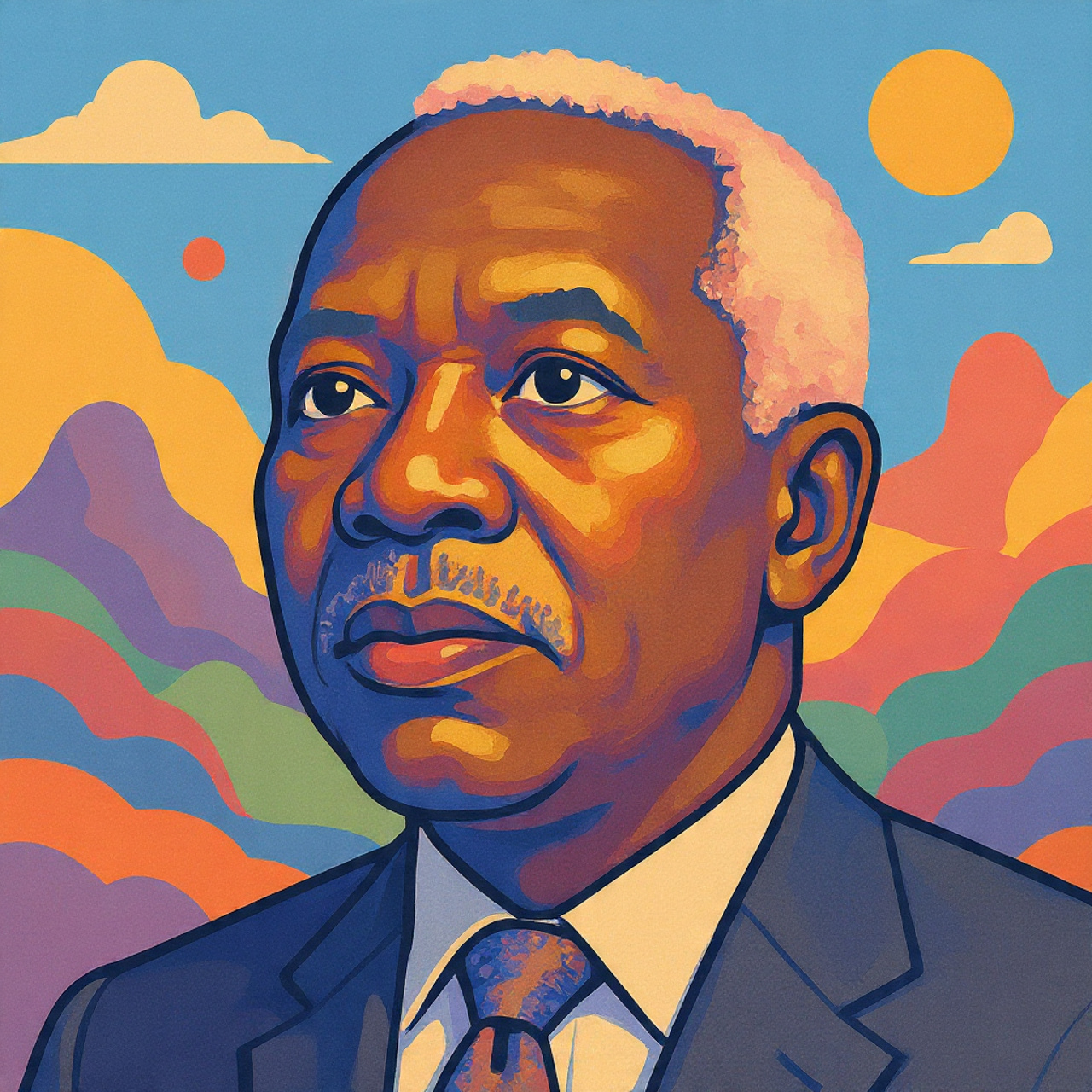
Character forms the moral foundation of leadership. In African political history, few leaders embodied moral character, humility, and service like Mwalimu Julius Kambarage Nyerere, the founding father of Tanzania. His leadership was not centred on power or personal glory but on service to humanity and moral responsibility. Nyerere’s servant leadership became a beacon of integrity, unity, and peace not only in Tanzania but also across Africa.
Understanding his approach helps today’s youth appreciate that peacebuilding begins with personal character and service-driven leadership, not force or authority.
Understanding Character as a Catalyst
A catalyst triggers transformation without being consumed in the process. In leadership, character acts as the catalyst—it drives social change, inspires others, and sustains peace.
Strong character traits such as:
Integrity
Empathy
Self-discipline
Justice
Humility
Empower leaders to influence others positively.
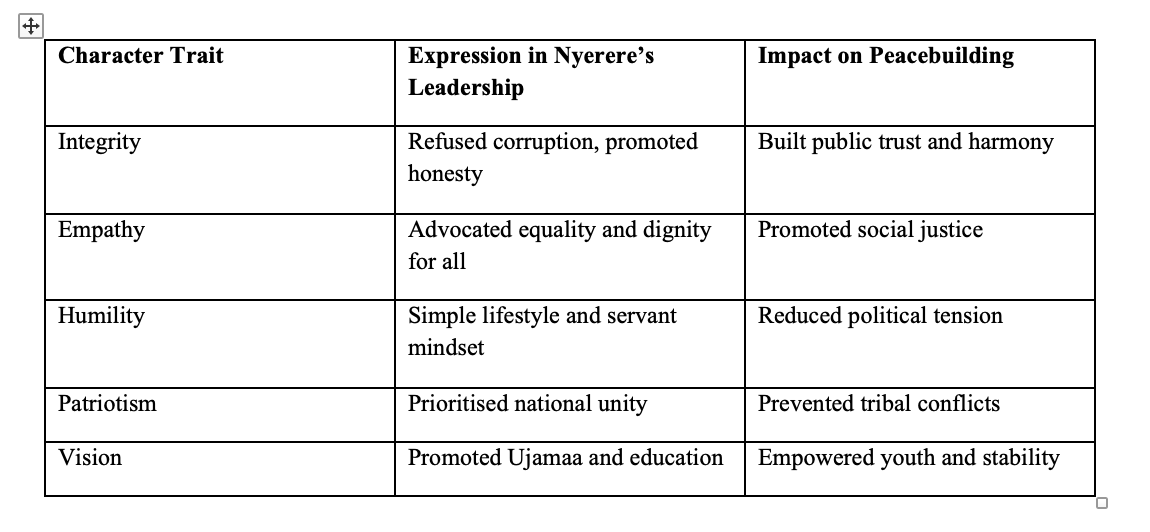
For Nyerere, leadership was not about dominance but about moral example. His unshakeable honesty, simplicity, and humility catalysed national unity and social development.
The Concept of Servant Leadership
Servant leadership is a philosophy where the leader’s primary goal is to serve others. Coined by Robert Greenleaf (1970), it emphasises that leaders exist to serve the people, not to rule them.
Key characteristics of servant leadership include:
Listening and empathy
Stewardship and accountability
Commitment to the growth of others
Community building
Ethical decision-making
Nyerere embodied these values in practice. He lived modestly, listened to citizens, and focused on education and collective progress rather than material wealth or political power.
Julius Nyerere’s Servant Leadership in Practice
(a) Humility and Simplicity
Nyerere’s nickname, Mwalimu (“Teacher”), reflected his humility. He refused to live a lavish life or accumulate wealth. His modest lifestyle inspired trust and credibility among Tanzanians.
(b) Vision for Equality and Unity
Through Ujamaa (African socialism), Nyerere promoted communal ownership, equality, and shared responsibility. His vision was rooted in African values of solidarity and brotherhood.
(c) Moral and Ethical Leadership
Nyerere insisted on honesty, patriotism, and integrity among public servants. He voluntarily stepped down from power in 1985—a rare act in African politics—demonstrating moral leadership.
(d) Education for Self-Reliance
He invested in youth education as a path to peace and national development. He believed that an informed and responsible youth would sustain democracy and peace.
(e) Pan-African Peace Advocate
Nyerere played a critical role in mediating African conflicts—notably in Uganda, Rwanda, and Mozambique—showing his commitment to continental peace.
Nyerere’s Influence on Youth-Led Peace Building
Nyerere believed the youth are the torchbearers of peace and progress. His leadership inspired generations of young Africans to build peace through moral conviction and service.
(a) Education as a Tool of Peace
Nyerere emphasised “Education for Liberation”, which empowered youth to think critically, cooperate, and reject violence.
(b) Value-based Youth Leadership
He taught that leadership begins with self-discipline, humility, and moral uprightness. Modern youth movements across Africa echo his principles—emphasising ethical leadership and volunteerism.
(c) Empowering Communities through Service
Nyerere’s servant philosophy urges youth to serve their communities first—through peace clubs, volunteerism, and civic education—as a foundation for sustainable peace.
(d) Pan-African Youth Unity
Nyerere envisioned an Africa united beyond tribal and national lines. His vision encourages youth today to bridge divisions and champion regional cooperation through initiatives like the African Union Youth Division and youth peace forums.
Character and Peace Building: The Nyerere Model
Lessons for Youth in Peacebuilding
From Nyerere’s legacy, African youth can learn that peacebuilding requires:
Moral Character: Peace begins with personal ethics and honesty.
Service orientation: Serving others builds harmony and trust.
Dialogue over Violence: Resolve conflicts through conversation and reconciliation.
Education and Awareness: Knowledge equips youth to resist manipulation.
Unity in Diversity: Embrace tolerance and Pan-African solidarity.
When youth integrate Nyerere’s servant leadership traits, they become peace catalysts—transforming societies through character-driven influence.
Conclusion
Julius Nyerere’s life exemplifies how character is the cornerstone of transformative leadership. His servant leadership model demonstrates that moral conviction, empathy, and humility can guide nations toward peace and justice. For Africa’s youth, Nyerere’s philosophy remains timeless—it challenges them to lead through service, integrity, and education, becoming the generation that sustains peace through character and unity.
References
1. Nyerere, J. K. (1968). Ujamaa: Essays on Socialism. Oxford University Press.
2. Greenleaf, R. K. (1970). The Servant as Leader. Greenleaf Centre for Servant Leadership.
3. Bjerk, P. (2017). Building a Peaceful Nation: Julius Nyerere and the Establishment of Sovereignty in Tanzania. Rochester University Press.
4. African Union Youth Division (2022). Youth as Agents of Peace in Africa.
5. Adebayo, A. G. (2009). “The Moral Imagination of Julius Nyerere.” African Studies Quarterly, 10(4).
About the author
My name is Abeson Alex, a student at St. Lawrence University, whose leadership journey reflects a deep commitment to service, integrity, and community transformation. I have held various leadership positions, including UNSA President of St. Charles Lwanga College Koboko, UNSA District Executive Council Speaker, UNSA Speaker for West Nile, and West Nile Representative to the UNSA National Executive Council. I also served as YCS Section Leader of St. Charles Lwanga College Koboko, YCS Federation Leader for Koboko District, and Koboko YCS Coordinator to the Diocese. In addition, I was a Peace Founder and Security Council Speaker for the peace agreement between St. Charles Lwanga College Koboko and Koboko Town College. I served as Debate Club Chairperson of St. Charles Lwanga College Koboko, District Debate Coordinator, and West Nile Debate Coordinator to the National Debate Council (NDC). All the above were in 2022-2023. My other leadership roles include Chairperson of the Writers and Readers Club, UNSA Representative in the District Youth Council, Students’ Advocate for Reproductive Health, and Students’ GBV Advocate for the District. Within the Church, I served as Chairperson of the Altarservers of Ombaci Chapel, Parish Altarservers Chairperson of Koboko Parish, and Speaker of the Altarservers Ministry in Arua Diocese. Current Positions: Currently, I serve as the Diocesan Altarservers Chairperson of Arua Catholic Diocese, Advisor of the Altarservers Ministry for both Ombaci Chapel and Koboko Parish, and Programs Coordinator of Destined Youth of Christ (DYC-UG). I am also a Finalist in the Global Unites Oratory Competition 2024, the current Debate Club Speaker and President of St. Lawrence University Koboko Students Association. Additionally, I am the Youth Chairperson of Lombe Village, Midia Parish, and Midia Sub-county in koboko district. I am one whose life has been revolving around ensuring that in our imperfections as humans, we can promote transparency, righteousness, and morality to attain perfection. I am inspired by the guiding words: Mobilization, Influence, Engagement, and Advocacy. I share my inspiration across the fields of Relationships, Career, Governance, Faith, Education, Spirituality, Anti-corruption, Environmental Conservation, Business & Self-Reliance, politics , Administration,Financial Literacy, Religion, and Human Rights. Thanks for the encounter.