Parliament by Populism? Competence vs. Celebrity in Uganda’s Elections. The dilemma in plain view
Uganda needs musicians, comedians, and entertainers — but Parliament is not their natural stage.
09 Oct, 2025
Share
Save
When a party or electorate prefers star power to proven craft, it risks “killing the doctor to save the cobbler.” The Aesop parable “The Cobbler Turned Doctor” warns precisely against mistaking applause for expertise: a cobbler wins fame as a healer until a simple test exposes his lack of skill. The moral is to beware those not trained in the craft they claim to practice.
Case set: how name-recognition displaced technocratic skill
Busiro East (2026 cycle): Incumbent lawyer-legislator Medard Lubega Sseggona lost the NUP flag to musician and mayor Mathias Walukagga. This is the clearest modern example of celebrity over legislative craftsmanship.
Jinja City: Radio presenter/comedian Peter Okocha “Kasolo” won mayor in 2021 (the Swengere choice) and even returned to radio while serving—proof of entertainment credentials overpowering technocratic competence.
Mbarara City: Robert Mugabe Kakyebezi, a Radio West presenter and comedian, was elected mayor, extending the same pattern.
Comedians & musicians in Parliament:
Kato Lubwama (comedian, MP 2016–2021).
Geoffrey Lutaaya (musician, MP since 2021).
Hillary “Dr Hilderman” Kiyaga (musician, MP since 2021).
Rachael Magoola (Afrigo singer, Woman MP since 2021).
Judith Babirye (gospel musician, Woman MP 2016–2021).
Peter Ssematimba (radio proprietor, Busiro South MP 2016–2021, seat later nullified).
Geoffrey Kayemba Ssolo (artist manager/promoter, MP since 2021).
High-profile contestants:
Robert Kyagulanyi (Bobi Wine)—musician → MP → 2021 presidential candidate.
Jose Chameleone (Joseph Mayanja)—musician, contested Kampala Lord Mayor (2021).
Ragga Dee (Daniel Kazibwe)—musician—contested Kampala Lord Mayor (2016).
Kalifah Aganaga (Mukiibi Sadat)—musician, contested Rubaga South MP (2021 primaries).
Patricko Mujuuka—actor/radio presenter, contested Nakifuma County MP (2021).
Eddy Yawe—musician/producer, contested Kira Municipality (2021).
Ronald Mayinja—musician, contested Gomba East.
Mechanism: Why this tilts Parliament toward performance, not policy
Low statutory bar to enter Parliament. The Constitution’s Article 80 requires only citizenship, voter registration, and an A-Level or equivalent — far below the technical demands of budgeting, oversight, and law-drafting.
Parties reward name recognition. Primary contests elevate those with pre-existing audiences (stage, radio, TV), substituting popularity for legislative competence. The Sseggona–Walukagga flag decision epitomises this.
Steep learning curve. New MPs often confess they need months to learn the procedure. When the House is stacked with novices, the collective effect is weak scrutiny and shallow debate.
Attendance and discipline issues. Chronic absenteeism forced the Speaker to threaten enforcement of the 15-sitting rule (Article 83) and adopt biometric clock-ins—a symptom of poor seriousness.
Has this produced “no legislative results”?
Not literally. The 11th Parliament processed over 75 laws by 2023, some of them high-impact. But throughput ≠ quality. Civil society and opposition argue that many laws lack depth or rights analysis.
Example: In May 2025, Parliament passed an amendment restoring military trials of civilians, despite the Supreme Court striking it down earlier. It was performative toughness, not careful legal craft.
So where’s the damage?
Oversight weakened. Watchdogs like the IGG regularly flag corruption leakages; committees reactively chase scandals rather than crafting preventive, enforceable law.
Executive dominance. Many sittings collapse for lack of business when the Executive delays bills — a paralysis worsened because MPs struggle to initiate strong private members’ bills.
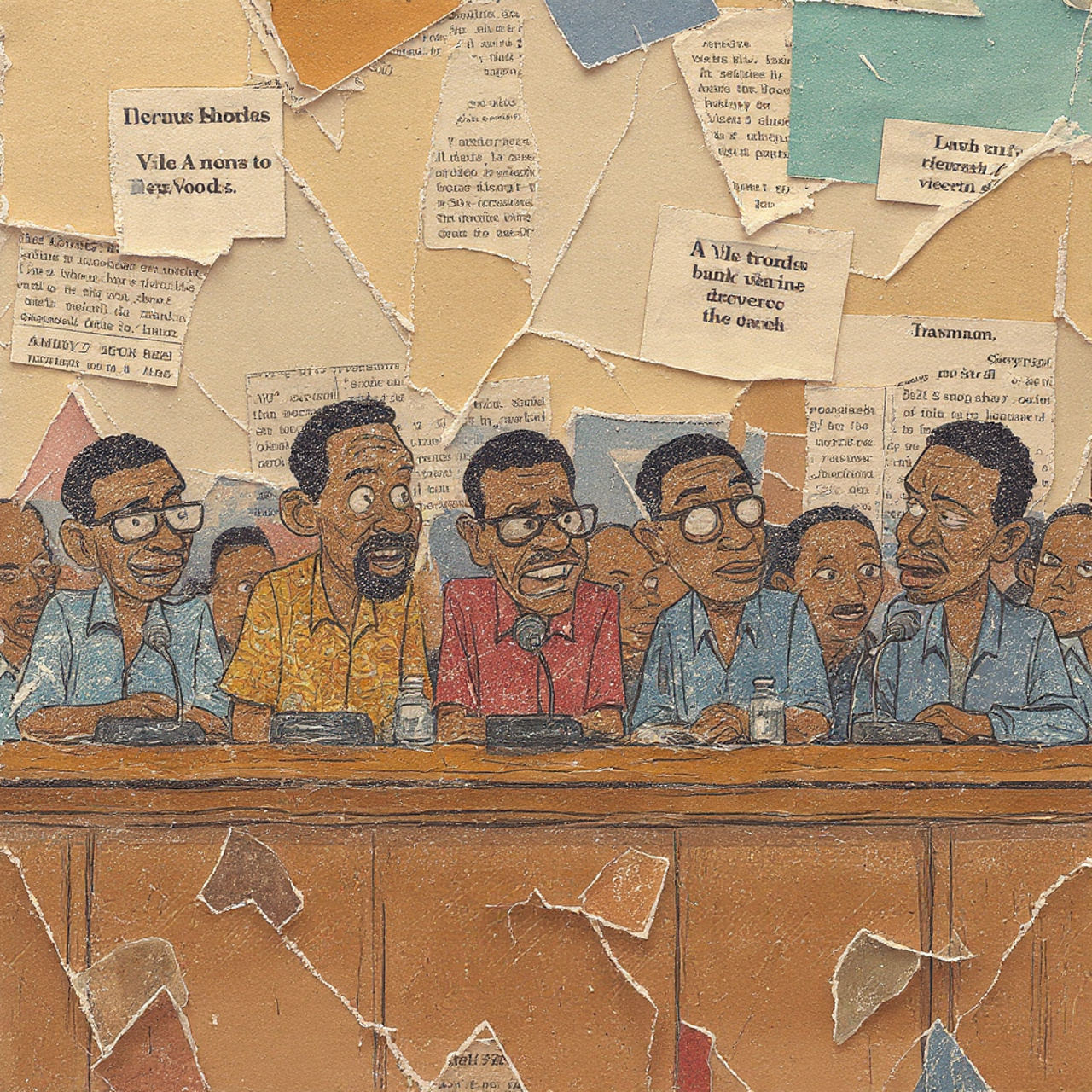
Spectacle replaces substance. Walkouts, slogans, and feuds dominate media coverage. Parliament is seen more as a theatre than a legislature.
What re-definition would actually help?
Raise entry requirements. Amend Article 80 to lift the minimum from A-Level to at least a Bachelor’s degree or professional equivalent.
Competency-based leadership. Only MPs with subject knowledge (finance, law, health) should chair committees.
Compulsory training. Induction plus annual CPD on lawmaking, budgeting, and oversight must be mandatory.
Strict enforcement of attendance. Article 83 must be applied without exception; publish attendance monthly and expel absentees.
Party reforms. Primaries should vet competence through policy submissions and mock legislative exercises, not crowd size.
Independent bill reviews. Every bill should undergo constitutional, fiscal, and rights impact notes before third reading.
Why this is not elitism but role-fit
Uganda needs musicians, comedians, and entertainers — but Parliament is not their natural stage. It is a craft. When entertainers enter, they must retool into legislators. Without that, the House becomes a circus. The doctor–cobbler parable holds: every time we elevate celebrity over competence, we trade real healing for shallow applause.
Bottom line
The electorate has repeatedly killed its doctors to save its cobblers. Parliament is weakened, oversight diluted, and laws too often shallow. The solution is not to reject popular leaders, but to raise the bar so that those who do win in the crowd are also fit to heal the body politic. Until eligibility is redefined, Uganda’s Parliament will remain a theatre of spectacle—and the patient, the nation, will continue untreated.
About the author
Arinaitwe Reagan is a Ugandan wordsmith, philosopher, and social activist. His existence is a testament to the transformative power of language, which he wields to challenge societal norms, spark meaningful conversations, and inspire positive change. A voracious reader and astute observer of human nature, Reagan's literary pursuits are informed by a deep-seated desire to understand the complexities of the human condition. His poetry and prose are infused with a sense of wonder, curiosity, and empathy, reflecting his commitment to exploring the intricacies of the human experience. As a passionate public speaker, Reagan has honed his ability to convey complex ideas with clarity, conviction, and charisma. His oratory skills are matched only by his capacity for active listening, which enables him to engage with diverse perspectives and foster inclusive dialogue. Through his writing, speaking, and activism, Reagan seeks to contribute to a more just, equitable, and compassionate world. His work is a testament to the enduring power of words to inspire, educate, and uplift humanity. He completed his primary level from St.Joseph's Preparartory School (2017)in greater Bushenyi in Western Uganda and later in 2018 he joined the most prestigious boys School in East Africa where he notably established himself as the class coucillor in 2019,moat informed student 2019,president Debate Club president Writer's Club,President Peace Club,as well as the school junior head prefect. He participated in Olympics Youth Camp in 2018 just as a young lad in form one,represented Uganda in Yale Young Africa's Scholar Program 2018,finalist in the Uganda World Bank Bank Debate Championship 2019,founding president Divine Mentorship Hub to train young breeds of leaders for Africa's next generation .He is a true Pan Africanist who participated in the Transformation Citizens Encyclopedia (TRACE),won National SESEMAT Science Competition 2022,awarded best studentt leader if the years 2019,2022 respectively, participated in the National Students Anti Corruption Challenge 2021,2022 respectively and Climate change dialogues as well as very many easy writing Competitions .He later joined CORNERSTONE LEADERSHIP ACADEMY-BOYS Ffor his A LEVEL Studies in 2023 where he was the school speaker ,president Debate Club,President Writer's club at school level and District level and was the president Executive Committee of Nakasongola District and National Level Secondary Scools Writers and Deabtors clubs respectively He served as the president of UGANDA NATIONAL STUDENTS ASSOCIATION (UNSA ) at District level as President DEC and national secretariat as 34th Secretary for Inter-School Affairs a role that mandated him to head all Secondary School students in the country. He featured in UNESCO documentary about literacy levels in Africa. Currently he volunters with Educate Uganda,Wananchi Youth Patriotic Forum, member of Africa Kwetu Studebts Association and agraduate of leadership and governance from KRUMBUKA LEADERSHIP SOLUTIONS in kigali Rwanda *land of a thousand hills*.Currently he is law scholar at ISLAMIC UNIVERSITY IN UGANDA. He believes it takes a revolution to create a solution