
Religion as a Political Tool under Museveni
President Museveni's blending of faith and politics further blurs the line between spiritual leadership and authoritarian control.
.png)
12 Sept, 2025
Share
Save
Religion has long been a central feature of Ugandan society, shaping its culture, politics, and education. While faith provides moral guidance and social cohesion, it has also been repeatedly instrumentalised by political elites to reinforce systems of power.
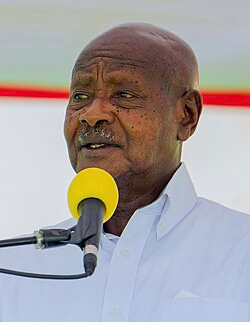
Under President Yoweri Museveni, who has ruled Uganda since 1986, religion has been strategically deployed as a tool of authoritarian resilience. By co-opting religious leaders, invoking divine legitimacy, and weaponising moral conservatism, Museveni has entrenched his grip on power and suppressed dissent. Instead of serving as a force for justice, religious institutions under Museveni have often been absorbed into the machinery of political control.
Museveni’s strategy begins with the co-optation of religious leaders across Uganda’s diverse faith landscape. Christianity is the majority religion, with Catholics, Anglicans, and Pentecostals making up over 80% of the population, alongside a significant Muslim minority (Pew Research Centre, 2010).
Museveni frequently engages with bishops, imams, and pastors at state functions, presenting himself as a God-fearing leader. Religious leaders who support him are rewarded with government recognition, resources, or access to political influence (Ward, 2015). This transactional relationship transforms faith leaders into agents of political legitimisation, portraying Museveni’s rule as divinely ordained. For many Ugandans, deeply rooted in religious belief, this narrative discourages resistance, as opposing Museveni can be framed as opposing God.
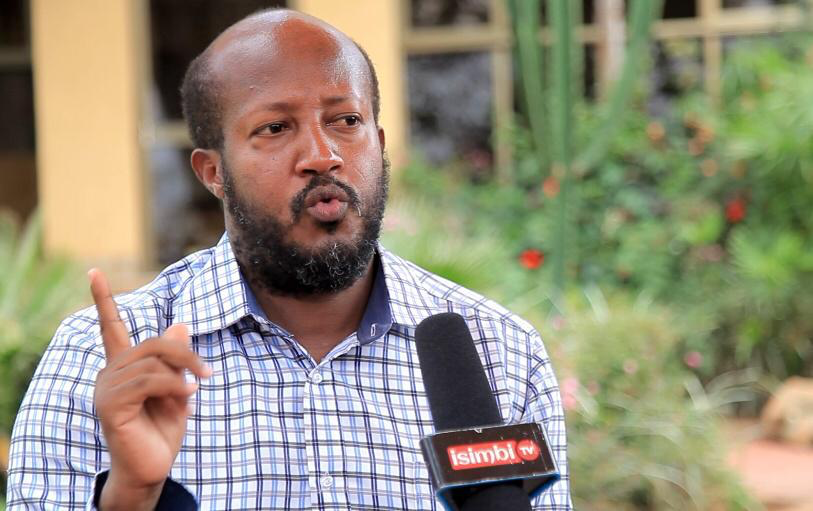
At the same time, Museveni uses religion as a tool to suppress dissent. Clerics who criticise corruption, repression, or election rigging often face state intimidation. For instance, Bishop Zac Niringiye, a vocal advocate for democracy, has repeatedly faced harassment and arrest for speaking against authoritarian practices (BBC, 2013). Meanwhile, more compliant religious leaders are elevated and celebrated by the regime, dividing the faith community into “loyalists” and “critics.” This strategy neutralises the prophetic voice of religion and ensures that churches and mosques often serve the state rather than challenge its excesses.
A particularly striking example of Museveni’s manipulation of religion is his role in advancing anti-LBGTQ+ legislation. The infamous Anti-Homosexuality Act of 2014, which proposed the death penalty for same-sex relations before being struck down by Uganda’s Constitutional Court, was strongly supported by Ugandan religious leaders and U.S. evangelical groups (Kaoma, 2009; Tamale, 2014). Museveni positioned himself as a defender of Ugandan cultural and religious values against “Western immorality,” using this stance to consolidate political support at home. Even after the law was annulled, similar legislation re-emerged, culminating in the harsh Anti-Homosexuality Act of 2023. By aligning himself with conservative religious morality, Museveni redirected public anger away from issues like corruption and economic inequality, channelling it instead toward the scapegoating of vulnerable minorities.
Religion’s influence is also entrenched in Uganda’s education system, where many schools are run by church or mosque authorities. Museveni’s government has maintained close ties with these institutions, ensuring that education remains infused with conservative religious values (Ward, 2015). This reliance on religious institutions for education fosters a culture of obedience and respect for religiously infused state authority, discouraging political activism among young Ugandans. By embedding religion into education, Museveni ensures that future generations are socialised into accepting his authority as morally legitimate.
During moments of political crisis, Museveni consistently invokes religious rhetoric. National prayers are organised around elections or protests, with Museveni urging citizens to seek God’s guidance for peace and stability. Opposition leaders, by contrast, are often portrayed as agents of chaos or even ungodliness (Mujaju, 1997). By framing his rule as aligned with divine will, Museveni justifies violent crackdowns on protesters as necessary to preserve order and morality. This blending of faith and politics further blurs the line between spiritual leadership and authoritarian control.
In conclusion, Museveni has transformed religion into a cornerstone of authoritarian resilience in Uganda. Through the co-optation of religious leaders, the silencing of dissent, the use of anti-LBGTQ+ laws, the embedding of faith into education, and the invocation of religious rhetoric in times of crisis, he has ensured that religion functions less as a force for justice and more as a mechanism of prolonged oppression. While faith remains deeply important to ordinary Ugandans, its capture by the state has turned it into a political instrument that sustains authoritarianism. As Sylvia Tamale (2014) argues, the Ugandan case demonstrates how religion, when entwined with political power, can be “a double-edged sword”—capable of liberation, but equally capable of legitimising repression.

References
• BBC. (2013). Uganda opposition cleric Zac Niringiye arrested at protest.
• Kaoma, K. (2009). Globalising the Culture Wars: U.S. Conservatives, African Churches, and Homophobia. Political Research Associates.
• Mujaju, A. (1997). “Religion and Politics in Uganda.” Transformation, 14(2), 1–12.
• Pew Research Centre. (2010). Tolerance and Tension: Islam and Christianity in Sub-Saharan Africa.
• Tamale, S. (2014). “Exploring the Contours of African Sexualities: Religion, Law and Power.” African Human Rights Law Journal, 14(1), 150–177.
• Ward, K. (2015). Religion, Politics and Society in Uganda. James Currey.
About the author
The Critique Magazine is an independent publication dedicated to critical thought, creative expression, and public debate. It serves as a platform where writers, journalists, and thinkers share perspectives on literature, politics, human rights, and social issues affecting society. The magazine encourages open dialogue and challenges conventional ideas through essays, commentary, and analysis.