
Some Animals Are More Equal Than Others
But when this wrong is wrong only when it applies to the inferior, then, perhaps, that wrong is half a wrong.
06 Apr, 2026
Share
Save
While Uganda is sick from dictatorship that has gnawed at her for about forty or more years under the leadership of the patriotic President Museveni, it is gradually dying from something totally different, and to call it for what it is, the selective application of the law.
Of course, it is sheer hypocrisy when the law that absolves one institution of an error reproves another of the same. In fact, without discrediting law enforcers, it is like chasing the wind or skinning a snake that one will not eat if authorities target certain individuals or institutions with a law, but slacken it when it applies to specific institutions.
With Uganda at the crossroads, wrong should nationally be wrong, even when such a wrong is tied to those in charge of executing the law. But when this wrong is wrong only when it applies to the inferior, then, perhaps, that wrong is half a wrong. For the law, if it is to be revered and regarded, should hold all institutions and individuals to account, regardless of their position in society. And if the same law insulates certain individuals from accountability while it snaps at others, then it is nothing but oppression, even when it is for the good of a society.
On Thursday, April 2, the despicable happened, when a 34-year-old bloodthirsty Christopher Okello Onyu, who had just returned from America, the so-called land of the free—free to murder, free to hurt others, free to teach others about morality, even when they themselves lack it—invaded a nursery school in Kampala, Uganda, and stabbed four children to death, injuring a few others.
Crimes of such nature incessantly soar in Kampala, Uganda, even with the best military in Africa, at least, as the Chief of Defence Forces, General Muhoozi Kainerugaba, claims. And this leaves a lot of questions unanswered, of which the most relevant is whether the National Resistance Army is still capable of protecting Ugandans and their properties.
According to the 2025 Annual Crime Report by the Criminal Investigations Directorate, about 4,328 people were deliberately killed by humans, and at least 25 people are killed daily—this is not just several lives lost, but a stern message to the Uganda government and a contradiction of President Museveni’s speech of January 29, 1986, in which he said that the people of Uganda should only die from natural causes beyond their control.
In a country where security operatives are like sand, uncountable, the Ugandan government is partly liable for the 25 daily deaths of Ugandans from murder, especially when the same government can deploy the whole military barracks at the homes of opposition leaders but cannot do the same for its people, especially in the lawless Kampala city.
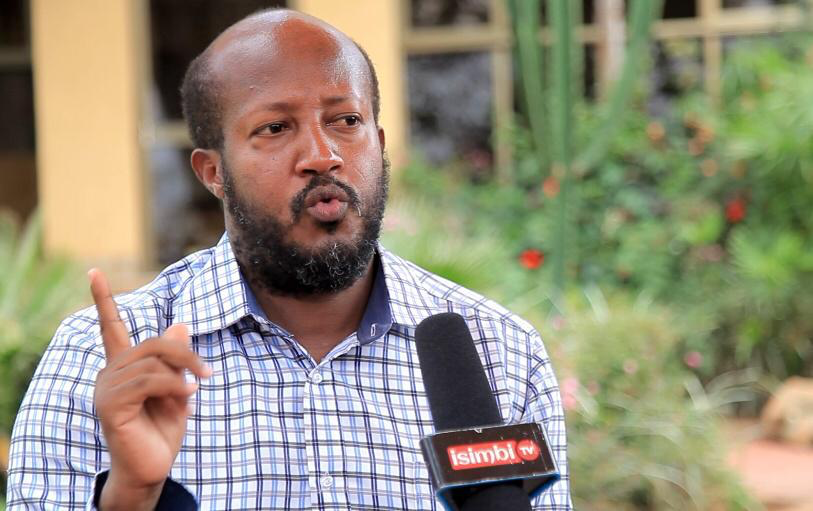
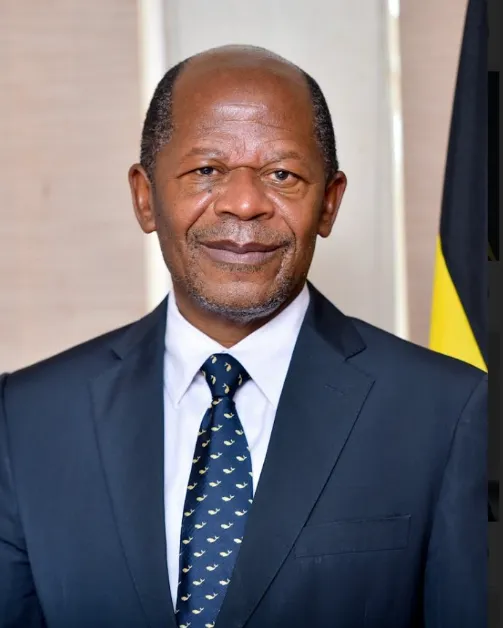
When Dr John Chrysestom Muyingo, the minister of state for higher education, visited the Ggaba Nursery and Daycare Centre, he opted to close down the school together with its other sister schools—Maranatha Christian School and Maranatha High School—citing security reasons.
“In line with guidance from security agencies and the Makindye Education Office, I direct that all parents must immediately collect their children from the nursery, primary, and secondary schools; daycare management must also submit a full report on the events leading to the children’s deaths while giving statements to police; and the centre must close immediately until further notice,” the minister said upon his visit to the crime scene on April 3.
How to help the learners and parents amidst the tribulation, especially with the abrupt closure of the schools, remains a mystery, especially in a dwindling economy where raising schools’ fees is akin to feeding five thousand people with five loaves of bread and two fish.
The abrupt closure of the schools, however, even with what happened to the children, has raised a lot of questions among Ugandans, who insist that it is a double standard, especially with Dr Muyingo’s schools, which have also encountered the same predicament, still operating.
Dr Muyingo is the director of Seeta High School in Uganda. In 2025, Mbalala Campus, Mukono district, a branch of Seeta High School, experienced two separate high-profile deaths of students alongside the murder of a teacher.
Kevin Nsamba (21), a student in senior six, drowned after he reportedly jumped into the deep end of the pool around 5:30 PM after a football match, while swimming lessons were taking place under a trainer. This whole incident is like a script—it contradicts itself. A student drowning under a trainer.
The second incident was that of Elishama Ssessaazi, a 16-year-old S3 student who was found dead in his dormitory. The cause of his death, the school reported, was suicide by hanging. However, the family of the deceased argued that Elishama’s death was more than meets the eye—there were inconsistencies in both the school’s and police’s reports. People made some noise, but it eventually died. Life continued. People forgot and moved on.
In the same year, Ivan Oloya, a 30-year-old teacher from the same school, was murdered near the gate of a neighbouring school. While critical questions were asked, this too died out, and there were no more questions to be heard of, not among Ugandans, not in the media.
Dr Muyingo, as the Minister of State for Higher Education, one would rightly argue, protected his institution from the same law he now subjects the Ggaba Early Childhood Development Centre to. Dr Muyingo’s Mbalala Campus was not closed when two of its learners and a teacher died mysteriously. Parents roared, but their roars faded away, not because the authorities did not hear them, but because the authorities were the institution's overseers. Also, the few voices died out as the rest of the parents were quiet, since their children were still alive. Somehow, the indifference of Ugandans also contributes to their suffering under President Museveni. As long as it is not their turn, Ugandans will never question injustice or vagueness.
The Ggaba Early Childhood Development Centre incident reeks of ambivalence, and it puts across the hard questions Ugandans ought to address: how come Dr Muyingo’s school was not closed down when its learners and a teacher died? And why are the sister schools of Ggaba Early Childhood Development Centre being closed down almost at the end of the term? Who is subject to the law? And why does such a law exclude others from accountability?
Photo Credit: Ministry of Education and Sports
About the author
The Critique Magazine is an independent publication dedicated to critical thought, creative expression, and public debate. It serves as a platform where writers, journalists, and thinkers share perspectives on literature, politics, human rights, and social issues affecting society. The magazine encourages open dialogue and challenges conventional ideas through essays, commentary, and analysis.