
The African mindset and financial poverty have led to the stagnation of African startups
Mindset and Financial Poverty as the Silent Killers of African Startups
24 Oct, 2025
Share
Save
“Africa's tech ecosystem has become a hotbed of innovation and opportunity, with startups addressing diverse industry challenges. From FinTech to EdTech, e-commerce to renewable energy, these companies are not just attracting investment but are also pushing boundaries with creative solutions tailored to the continent's unique needs.”
Breaking the Chains: Mindset and Financial Poverty as the Silent Killers of African Startups
Your Excellency, Distinguished Guests, Visionary Entrepreneurs, Ladies and Gentlemen, receive my fraternal greetings as I dignify you in your various dignities.
I am before you today not just to deliver a speech, but to sound an alarm—an alarm that we, as Africans, must urgently respond to. The alarm of mindset and financial poverty that has silently crept into our economies, our boardrooms, our policies, and even worse—into our dreams.
We gather here under a bold and urgent theme: “African economies have been stifled by colonial systems built for dependence by the West, leading to a mindset and funding poverty crisis that cripples African startups.” This isn’t just a provocative statement—it is a diagnosis of a deep-rooted illness that has paralysed the engine of innovation and prosperity in Africa.
Colonial systems were never designed to build African prosperity. They were designed to extract, to weaken, and to ensure that the continent remained a perpetual source of cheap labour and raw materials for the benefit of others. Infrastructure was built not for internal trade but to export commodities. Education systems were shaped not to create innovators but to produce clerks for colonial offices.
Even after independence, the economic models we inherited were structured for dependence: dependence on aid, on foreign investment, and on external validation. Today, decades later, that structure persists. We still export raw coffee beans and import Nescafé. We celebrate when foreign investors buy our startups—even when our local capital sits dormant or is too risk-averse to believe in our own people. This is not just a financial problem—it is a mindset problem.
Let us call it what it is: a colonial hangover—a belief that only solutions from outside are legitimate. A belief that capital from the West is smarter than money from the East or even from within Africa. A belief that “foreign” means “better.” This mindset has cost us billions—not just in lost opportunities, but in self-worth.
When young African entrepreneurs approach local investors, they are met with doubt, bureaucracy, and even ridicule. But when they walk in with a Western grant or Silicon Valley badge of honour, the same ideas suddenly become “viable.” The tragedy is that African minds build billion-dollar ideas, but African money doubts them—until it is too late, and foreign firms own our future.
We talk about a $2 billion yearly inflow of external funding. Impressive? Perhaps. But now consider this: Africa holds more than $40 billion in local funding potential each year—money locked in pension funds, banks, and public budgets. So why do our startups still fail? Because we have taught our institutions to fund buildings, not brains. To finance imports, not innovation. Because, too often, our financial systems wait for foreign validation before they back our own. This is not funding poverty because of a lack of capital—it is funding poverty due to a lack of conviction.
Because of this twin crisis—of mindset and money—Africa’s startups are dying at birth. The ideas are world-class, but the environments are toxic. We incubate dreams in accelerators and kill them in banks. We train youth to be job creators, but never dismantle the systems that starve their startups of funding. So, what happens? Startups stagnate. Talents emigrate. Innovation dies. And the cycle of dependency deepens. We remain beggars sitting on golden stools—rich in resources, ideas, and people, yet poor in belief and execution.
Let me be clear: we are not doomed. But we must disrupt this cycle. We need a revolution of mindset—a radical awakening that African problems require African solutions, backed by African capital and belief, as said by the President of the Republic of Rwanda, H.E. Paul Kagame. We must educate our investors to see startups not as risks, but as revolutions in the making. We must build financial instruments tailored for early-stage innovation—not just credit lines for consumption. We must reimagine education systems to birth problem-solvers, not job seekers. And most importantly, we must believe—deeply and fiercely—that we are enough.
Africa is not poor. Africa is not dependent. Africa is not helpless. But Africa must choose to reclaim its narrative—by shaking off the inherited mindset of inferiority and by unlocking its own financial firepower. Let us stop waiting for saviours. Let us stop exporting our dreams for cheap. Let us fund ourselves, believe in ourselves, and build an Africa where startups don’t just survive—they soar.
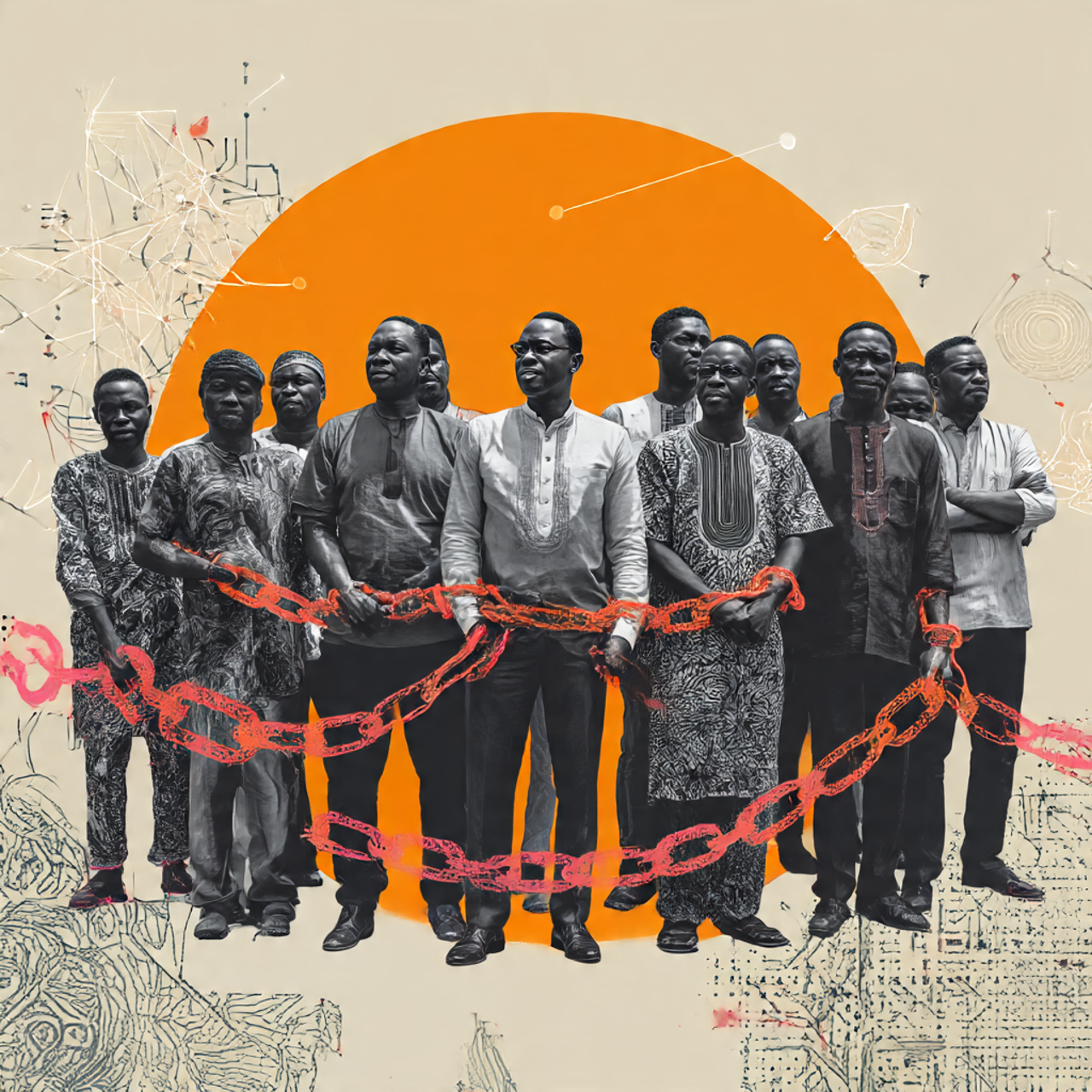
The chains are in our minds and in our money. It is time to break both.
Thank you.
About the author
My name is Abeson Alex, a student at St. Lawrence University, whose leadership journey reflects a deep commitment to service, integrity, and community transformation. I have held various leadership positions, including UNSA President of St. Charles Lwanga College Koboko, UNSA District Executive Council Speaker, UNSA Speaker for West Nile, and West Nile Representative to the UNSA National Executive Council. I also served as YCS Section Leader of St. Charles Lwanga College Koboko, YCS Federation Leader for Koboko District, and Koboko YCS Coordinator to the Diocese. In addition, I was a Peace Founder and Security Council Speaker for the peace agreement between St. Charles Lwanga College Koboko and Koboko Town College. I served as Debate Club Chairperson of St. Charles Lwanga College Koboko, District Debate Coordinator, and West Nile Debate Coordinator to the National Debate Council (NDC). All the above were in 2022-2023. My other leadership roles include Chairperson of the Writers and Readers Club, UNSA Representative in the District Youth Council, Students’ Advocate for Reproductive Health, and Students’ GBV Advocate for the District. Within the Church, I served as Chairperson of the Altarservers of Ombaci Chapel, Parish Altarservers Chairperson of Koboko Parish, and Speaker of the Altarservers Ministry in Arua Diocese. Current Positions: Currently, I serve as the Diocesan Altarservers Chairperson of Arua Catholic Diocese, Advisor of the Altarservers Ministry for both Ombaci Chapel and Koboko Parish, and Programs Coordinator of Destined Youth of Christ (DYC-UG). I am also a Finalist in the Global Unites Oratory Competition 2024, the current Debate Club Speaker and President of St. Lawrence University Koboko Students Association. Additionally, I am the Youth Chairperson of Lombe Village, Midia Parish, and Midia Sub-county in koboko district. I am one whose life has been revolving around ensuring that in our imperfections as humans, we can promote transparency, righteousness, and morality to attain perfection. I am inspired by the guiding words: Mobilization, Influence, Engagement, and Advocacy. I share my inspiration across the fields of Relationships, Career, Governance, Faith, Education, Spirituality, Anti-corruption, Environmental Conservation, Business & Self-Reliance, politics , Administration,Financial Literacy, Religion, and Human Rights. Thanks for the encounter.