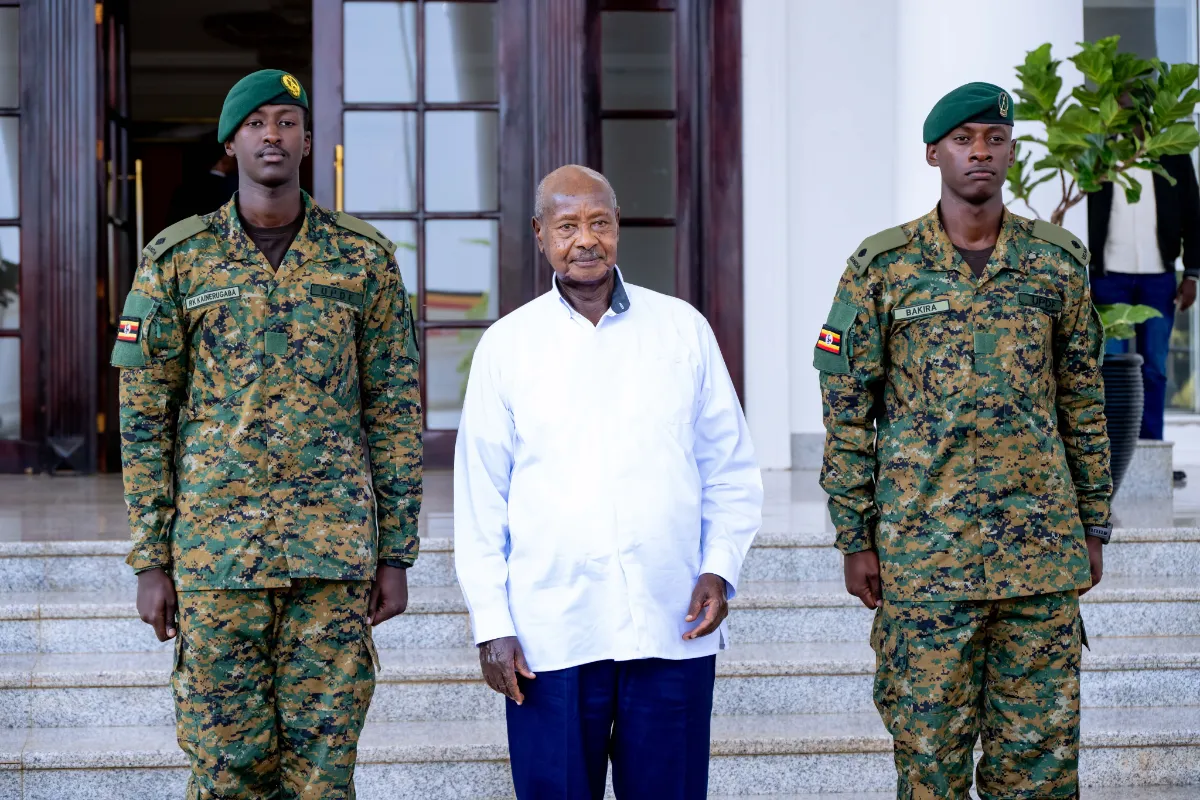

The Construction of the Museveni Dynasty: How Did Ruhamya Join the UPDF and Sandhurst?
Museveni, like many rulers before him, appears to have mistaken fear for approval.
23 Aug, 2026
Share
Save
There must be a genuine feeling of self-actualisation and triumph within Mr Yoweri Museveni’s family, and I think rightly so. They have accomplished, in one generation, things that many families would require three generations, or several lifetimes, to achieve. Daughter Patience Kokundeka Rwabwogo is set to be consecrated Episcopal Bishop of Covenant Nations Church on August 23. I must confess that my knowledge of how Pentecostal churches are organised, nationally and internationally, is limited. I cannot, therefore, establish where this new rank places her among the leaders of other faiths in Uganda.
Will she now rank alongside my Supreme Mufti and the archbishops of the Catholic and Anglican churches? In UPDF language, I suspect this would make her something like a Lieutenant General, one rank below Gen. Muhoozi Kainerugaba. Those conversant with ecclesiastical ranks should please help us understand the order of precedence.
My only advice is that, if the family wants to give her church some historical clout, the father should find it some martyrs similar to those of Namugongo. A site could be identified somewhere in Kiruhura, and pilgrims encouraged to walk there every year. Perhaps some of those who died during the Luwero War could be canonised for the purpose. Anyway, I leave church matters to the believers. What I cannot leave to the believers is this month’s graduation of Ruhamya Kainerugaba from the prestigious Royal Military Academy Sandhurst in Britain. While we congratulate the young man, we have a duty to establish whether this particular recruitment into our army, if it is still accurate to call it our army, complied with both the Constitution and the UPDF Act.
Articles 208, 209 and 210 of the Constitution proclaim the UPDF as a national army whose membership should reflect Uganda’s national character. The UPDF Act also establishes procedures and institutions governing recruitment. Section 51 of the UPDF Act assigns recruitment responsibilities to the Army Council. The Commissions Board, under section 19, deals with matters concerning officers, including selection for courses and recommendations relating to professional advancement. So, let us ask the elementary questions. Did Ruhamya apply to join the UPDF? When did he apply? Under which recruitment exercise was he admitted? What procedure was followed? And what about Andrew Bakyira Ruyondo of Kazo District, who accompanied him to Sandhurst?
Did the Army Council sit and approve both Ruhamya and Ruyondo, two young men from almost the same corner of the country, for this training? If it did, how was the constitutional requirement of a national army considered? If it did not, who recruited them? These should not be difficult questions in a republic. They become difficult only when ordinary institutions begin developing special doors through which extraordinary surnames can enter.
All these things are happening because we have been subdued. Museveni, like many rulers before him, appears to have mistaken fear for approval. Silence is convenient that way. If you frighten everybody into keeping quiet for long enough, you may eventually begin congratulating yourself on the national consensus.
When there was still meaningful space to speak, Ruhamya’s recruitment into the army and his journey to Sandhurst would have generated serious national debate. When Muhoozi Kainerugaba joined the army, MPs raised questions about the circumstances of his recruitment. Museveni responded, as he often does when confronted with an inconvenient question, by saying that his son had simply enrolled in the Local Defence Unit, the LDU. Well, Uganda has now had enough time to observe what became of that particular LDU recruit.
The recruit rose through the institution until he took command of the army his father commands as Commander-in-Chief. Critics now accuse the institution of increasingly behaving as an instrument of political coercion rather than the national army contemplated by the Constitution. It is these apparently small things that, one after another, have brought us here. Republics rarely disappear in one spectacular afternoon. They are dismantled in instalments while citizens are repeatedly assured that each instalment is too small to worry about.
Recently, I saw images of Muhoozi representing Uganda at a state function in Gabon. I found myself wondering what had happened to the Vice President, the Prime Minister and the other constitutional officeholders ordinarily available for such assignments. Perhaps they were all busy. These days, The New Vision appears to have developed another constitutional difficulty of its own. Its front page frequently requires either Museveni or Muhoozi Kainerugaba. Now that Maama Janet has fully recovered, I sympathise with the editors. Imagine the morning conference. Who gets the front page today? Maama? Taata? The son? Or Bishop Kokundeka? At some point they may need four front pages.
Photo Credit: Yoweri K. Museveni, X.
About the author
Ibrahim Ssemujju Nganda is a Ugandan journalist, political commentator and former Member of Parliament for Kira Municipality. He trained in Mass Communication at Makerere University and built his early career as a parliamentary reporter at Daily Monitor before joining The Observer, where he became political editor. He entered Parliament in 2011 and became known for sharp scrutiny of government expenditure, security institutions and executive power. His writing retains the instincts of the parliamentary reporter: documents, names, figures and uncomfortable questions, usually delivered with satire