
The Critique Magazine Logo
    • Popular
    • Latest
    The Critique MagazineThe Critique
    Login
    EDITOR'S CORNER

    From the Journalism School to the Media Field

    A Battle of Diverging Societal Needs
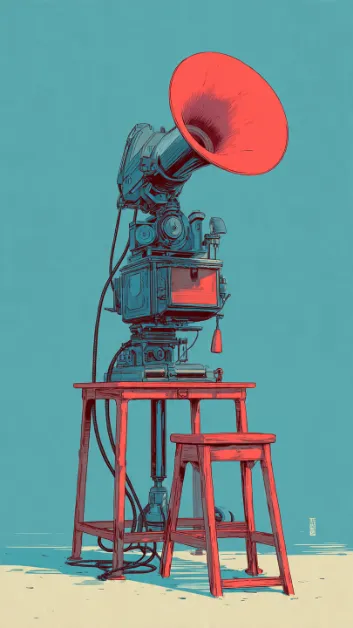
    By: Akampurira Agapito

    17 Feb, 2026

    Share
    Save

    A few days ago, I was in huge laughter about a close friend of mine who, immediately after picking up his graduation gown ahead of the next graduation ceremony, had no time to waste but to put it on and post pictures of himself clad in his prestigious cloth. In a joking manner, I had questioned his impatience, urging him to have waited for the big day.

    So, when my own time came, I couldn't help but do the exact thing I had earlier criticised him for, in a manner of eating my own words, going an extra mile by even posting videos, compared to his single shot. "Why is it that you, too, didn't wait?" the hopeful lad had questioned me, leaving me with no response. This haste signifies how frustrating education can be, thus the need to celebrate every victory.

    As I exit the gates of the journalism school, I leave with an intellectual mindset that I ought to share with the readers. According to the American Press Institute, journalism is "the activity of gathering, assessing, creating, and presenting news and information." Therefore, this is what is expected of me as I leap into the media wilderness, call it "the field."

    But how can I fulfil my role as a fresh graduate, given the hostile environment for members of the press in times of heated political moves within the country? From time to time, press freedoms are disregarded, even when it is our constitutional right, and some notable journalists have, on several occasions, been brutalised by security operatives, even when they were rightfully doing their work.

    There's a lot to mention about the peanut payment attributed to the profession as well. And let me be clear, not all journalists earn less. How about those who do? How will they keep their 'watchdog role' in times when a victim wants to oil their hands to kill a story of national concern because he fears going to prison once the story pinning them is published?

    Well, there’s also a positive remark about my profession and the environment we operate in. The availability of the Uganda Journalists Association (UJA) can act as a platform where our grievances can be addressed. The government has not been hesitant to grant practising licences to media stations that meet the qualifications. We boast of diverse media stations, which were not a thing in the past.

    Lastly, to be the reputable news writer I aspire to be, media ethics must be my daily bible. I must practise neutrality in all my publications, provide fact-checked information to the public, write the truth as the truth it ought to be, and refrain from being a servant to public officials.
    💬Comments(0)

    Sign in to join the conversation

    The Critique Magazine

    Copyright Notice: All rights reserved. All the material published on this website should not be reproduced or republished without prior written consent.

    Copyright to the material on this website is held by The Critique Magazine and the contributors. Any violation of this copyright will be subject to legal proceedings under intellectual property law.

    Navigation

    HomeGlobal WatchLatestPopularSubmissionsIssues

    Magazine

    AboutThe VerdictInner Reflection

    Copyright 2026 - The Critique Magazine

    Most popular

    1

    Monument of Pride

    A poetic reflection on how stories of past glory are passed down, while younger generations quietly carry the burdens and consequences left behind.

    Akoragye Edgar

    2

    Uganda’s Electoral Trajectory: Power, Legitimacy, and the Battle for the Democratic Future

    Uganda’s political and electoral history is not merely a record of elections held and winners declared.

    ABESON ALEX

    3

    Beyond Campaigns: Reclaiming Youth Leadership, Ethics, and the Future of Uganda’s Politics

    A generation mobilised but not empowered: The dangerous collapse of ethics and knowledge in youth leadership.

    ABESON ALEX

    4

    “Mama Lina” and the Charge That Turns Reality Upside Down

    Charging a peace mediator with incitement signals a justice system punishing dissent and protecting power, not public order, in Uganda’s politics.

    Konrad Hirsch

    5

    Dr Lina Zedriga Waru’s charge sheet reeks of legal errors: A case study in prosecutorial incompetence

    Uganda’s justice script now reads like satire: vanish a suspect, deny it under oath, then charge them anyway—law rewritten as theatre for power.

    Kakwenza Rukirabashaija

    6

    To Be Born Is to Die, and to Die Is to Be Born

    Birth and death aren’t opposites but mirrors: Every beginning kills an old self, and every ending gives rise to another form of becoming.

    Abdullatif Khalid Eberhard

    7

    The European Union Must Turn Rhetoric on Uganda into Action

    The EU's vote: a moral compass or just a gesture?

    Kakwenza Rukirabashaija

    8

    From the Journalism School to the Media Field

    A Battle of Diverging Societal Needs

    Akampurira Agapito

    9

    Too Late for Uganda

    Why Europe Is Only Now Acknowledging That the System It Relied on No Longer Holds

    Konrad Hirsch

    10

    In Conversation With Human Rights Lawyer Eron Kiiza on Dr Lina Zedriga's Disappearance and Prosecution

    Post-election abductions and prosecutions expose a justice system accused of shielding power while crushing opposition under the pretext of public order.

    The Critique Magazine